
CharqueKan
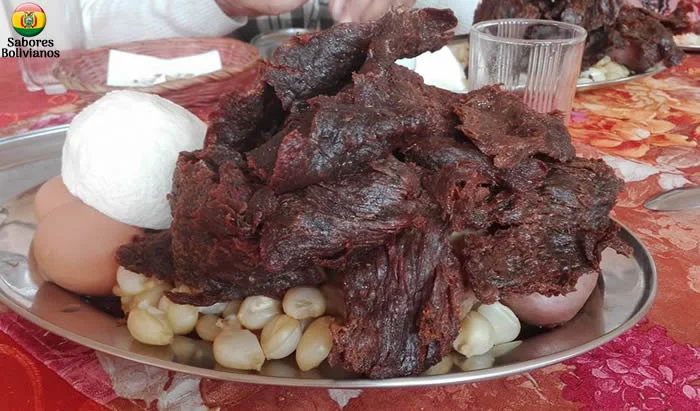
CharqueKan is a Bolivian plate of tenderised, fried dried beef served with potatoes, mote corn, boiled eggs, cheese and fresh sarsa. Its mix of savoury, crisp and fresh elements makes it a generous meal with several textures on one plate.
Ingredients
- al gustocharque deshidratado o seco (carne de vacuno seca)
- al gustoagua
- al gustopatatas
- al gustohuevos
- al gustomote de maíz
- al gustocebolla
- al gustotomates
- al gustozanahoria
- al gustosal
- al gustoaceite
- al gustoqueso
Instructions
- 1
Cook the charque
Cook the dried charque in water and remove it once it has softened.
- 2
Fry the beef
Pound the charque, then pull it into flat strips. Fry until toasted and tender, then set aside.
- 3
Boil the sides
Cook the potatoes, eggs and mote corn in separate pans. Once cooked, set them aside.
- 4
Make the sarsa
Slice the onion into julienne strips, cut the tomatoes into batons and finely grate the carrot. Season with salt and oil to taste in a separate dish.
- 5
Assemble the plate
Arrange the mote corn as the base of a flat plate, with the potatoes to one side. Place the boiled eggs and fried charque on top, garnish with cheese to taste and serve with the sarsa.
What is CharqueKan?
CharqueKan is a traditional Bolivian dish built around charque, or dried beef, served with potatoes, mote corn, eggs, cheese and sarsa. This version brings those cooked staples together with a fresh, simply dressed tomato and onion accompaniment.
The method works by giving each component its own place: the beef is softened before frying, while the sides are cooked separately and assembled at the end.
Nutrition and macros by portion
The nutrition label shows one serving as written: 215 calories, 0g protein, 0g carbs, 0g fat.
| Portion | Adjustment | kcal | Protein | Carbs | Fat |
|---|---|---|---|---|---|
| Lighter | More sarsa, less cheese | 151 kcal | 0g | 0g | 0g |
| This serving | As written | 215 kcal | 0g | 0g | 0g |
| Hungry | Larger portion of mote | 323 kcal | 0g | 0g | 0g |
The potatoes and mote corn supply most of the carbohydrates, while the charque, eggs and cheese contribute protein; the frying oil and cheese also add fat. For a more balanced plate, serve a generous portion of sarsa alongside the corn, potatoes and beef.
Choosing the ingredients
Charque: Dried beef is the defining ingredient, and simmering it first makes it easier to pound and shred. The recipe gives no quantities, so scale each component to suit the number of plates you are serving.
Mote and potatoes: These provide the substantial base of the meal. Cook them separately so each can be checked for doneness without overcooking the other.
Sarsa: Onion, tomato and grated carrot bring a fresh contrast to the fried beef and boiled sides. Add the salt and oil gradually, tasting as you season.
Softening and frying the charque
Softening first: Cook the dried beef in water until it feels tender enough to pound and pull apart. The method specifies no exact cooking time, so use the texture rather than a timer as your guide.
Frying: Pound the softened meat and separate it into flat strips before frying. Fry until toasted but still tender, then set it aside while the other components finish.
Checking when everything is ready
Potatoes: They are ready when a fork can pierce them easily. Keep them intact for serving rather than letting them break apart in the pan.
Eggs and mote: Cook both until done, using separate pans as the method directs. Drain them before plating so excess water does not collect around the other ingredients.
Charque: Look for toasted edges and a tender bite; avoid frying it until it becomes hard or brittle.
Getting the sarsa right
Cut the onion into thin julienne strips and the tomatoes into batons so they sit neatly alongside the other elements. Finely grated carrot distributes through the mixture without making the pieces bulky.
Dress the sarsa separately with salt and oil to taste. Keeping it apart until serving helps preserve its fresh texture.
Serving the plate
Use the mote corn as the base, place the potatoes to one side, and arrange the eggs and fried charque over the top. Finish with cheese and serve the sarsa alongside.
The recipe gives no additional side dish, but the sarsa already provides a fresh counterpoint to the hearty corn, potatoes and beef.
Recipe notes & tips
- Cook the charque until tender before pounding it into strips.
- Pound the softened beef before pulling it apart for frying.
- Use separate pans for the potatoes, eggs and mote corn as directed.
- Grate the carrot finely so it mixes easily into the sarsa.
- Season the sarsa gradually, tasting before adding more salt or oil.
- Assemble the plate just before serving to keep the sarsa fresh.
Variations
- Extra sarsa: Add a little more of the prepared onion, tomato and carrot mixture alongside each serving.
- Cheese finish: Adjust the amount of cheese to taste when garnishing the plate.
- More charque: Increase the share of fried beef for a meatier plate.
- Potato-forward: Serve a larger share of the cooked potatoes with the mote.
- Separate dressing: Keep the sarsa undressed until just before serving for a crisper texture.
Common mistakes to avoid
- Frying firm charque: Cook it in water until tender before pounding and frying.
- Over-frying the beef: Take it off the heat once toasted and tender so it does not become hard.
- Cooking the sides together: Use separate pans for potatoes, eggs and mote corn, as the method specifies.
- Coarsely grating the carrot: Grate it finely so it blends into the sarsa.
- Dressing too heavily: Add salt and oil to taste rather than pouring them in all at once.
- Mixing the plate too early: Keep the sarsa separate until serving to retain its fresh texture.
How to store
Store the cooked charque, potatoes, eggs, mote corn and sarsa separately in covered containers in the fridge and use within 3 days. Reheat the charque and cooked sides until hot, then add the sarsa and cheese when serving.
Frequently asked questions
What is charque?
Charque is dried beef. In this recipe it is softened in water, pounded into strips and fried.
What is mote corn?
Mote is cooked corn served as a substantial part of the plate. Cook it separately from the potatoes and eggs.
Can I prepare the components ahead?
Yes. Cook the charque and sides ahead, store them separately in the fridge, and reheat before assembling. Keep the sarsa separate until serving.
How do I know the charque is tender?
It should be soft enough to pound and pull into strips after cooking in water. Fry it until toasted while keeping the strips tender.
Can I make the sarsa in advance?
You can chop the vegetables ahead, but dress the sarsa close to serving time to keep it fresh.
Cook it from the original
This recipe comes from saboresbolivianos.com. Their page has the author’s own photos, notes and tips — the best place to cook it from.
Open the recipe on saboresbolivianos.com