
Silpancho
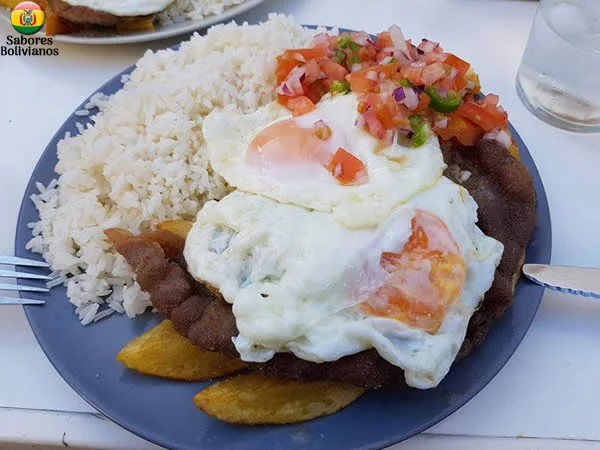
Silpancho is a Bolivian plate of thin, breaded beef served with rice, fried potatoes, a fried egg and a fresh tomato salsa. It brings crisp, savoury elements together with a sharp, uncooked topping.
Ingredients
- Amount not specifiedBeef
- As needed; amount not specifiedBreadcrumbs
- To tasteSalt
- To tasteBlack pepper
- Amount not specifiedPotatoes, cooked and sliced
- Amount not specifiedEggs
- Amount not specifiedTomato
- Amount not specifiedOnion
- Amount not specifiedLocoto chilli
- To tasteVinegar
- Amount not specifiedCooked rice
- As needed; amount not specifiedOil for frying
Instructions
- 1
Season and flatten
Season the beef with salt and pepper. Add breadcrumbs as you pound it out, using enough to help keep the meat from breaking, until it is broad and thin like a large steak.
- 2
Fry the components
Fry the cooked, sliced potatoes, the eggs and the breaded beef.
- 3
Make the salsa
Finely dice the tomato, onion and locoto. Mix them together and season with salt, pepper and vinegar.
- 4
Assemble the plates
Make a bed of rice on each plate and arrange some potatoes on it. Place the beef on top, add a fried egg and finish with the fresh salsa.
What is silpancho?
Silpancho is a Bolivian dish built around a wide, thin piece of breaded beef, served with rice, potatoes, a fried egg and fresh salsa. Its combination of fried components and bright, sharp topping makes for a substantial plate with contrasting textures.
This version follows that familiar arrangement: the beef is pounded thin with breadcrumbs, while the tomato, onion and locoto are mixed uncooked with vinegar. The recipe gives no quantities, so season and portion the components to suit the number of plates.
Nutrition and macros by portion
The nutrition label shows one serving as written: 215 calories, 0g protein, 0g carbs, 0g fat.
| Portion | Adjustment | kcal | Protein | Carbs | Fat |
|---|---|---|---|---|---|
| Lighter | Less rice and frying oil | 151 kcal | 0g | 0g | 0g |
| This serving | As written | 215 kcal | 0g | 0g | 0g |
| Hungry | Add more rice and beef | 323 kcal | 0g | 0g | 0g |
The rice and potatoes provide most of the carbohydrates; the beef and egg contribute protein, while frying adds fat. The salsa adds freshness, and serving it alongside a generous portion of vegetables can balance the plate. The supplied nutrition figures are retained separately, but the ingredient quantities are not provided, so the macros cannot be checked from the recipe.
Pounding the beef
Breadcrumbs as you pound: add them continually, as directed, so they coat and support the beef as it spreads. Work carefully towards a broad, thin piece rather than forcing the meat to stretch all at once.
Even thickness: aim for a piece that will cook consistently across its surface. If it starts to tear, stop pounding and add more breadcrumbs before continuing.
Frying the components
Cooked potatoes: the method starts with potatoes that are already cooked and sliced, then fries them for their crisp edges. Drain them briefly after frying so excess oil does not collect on the plate.
Breaded beef: fry the flattened meat until cooked through and browned. The recipe does not state a frying temperature or time, so use visual cues and adjust the heat to prevent the coating from darkening before the beef cooks.
Eggs: fry them separately and serve them on top. Keep the yolk as runny or firm as you prefer.
Making the fresh salsa
Small dice: cut the tomato, onion and locoto into small, even pieces so they are easy to spoon over the beef. Locoto is a chilli, so handle it with care and adjust its amount to your preferred heat.
Seasoning: mix the vegetables with salt, pepper and vinegar just before serving. Taste and adjust the seasoning; the salsa should bring a lively contrast to the fried elements.
Building the plate
Rice base: start with a bed of cooked rice, then distribute the fried potatoes over it. This creates a sturdy base for the large piece of beef.
Finish on top: add the breaded beef, then the fried egg and fresh salsa. Assemble just before eating to preserve the contrast between crisp fried components and juicy salsa.
Serving and timing
The stated total time is 45 minutes, but the method assumes the potatoes are already cooked and the rice is ready to serve. Have those components prepared before frying so the beef and eggs can go straight onto warm plates.
Serve immediately, while the beef and potatoes are freshly fried. The salsa can be mixed while the other components cook.
Recipe notes & tips
- Have the rice and cooked potatoes ready before you start frying.
- Add breadcrumbs gradually as you pound the beef to help prevent it tearing.
- Cut the salsa ingredients into small, even pieces for easy serving.
- Fry the potatoes, beef and eggs separately so each can be handled as needed.
- Taste the salsa after adding vinegar and adjust its salt and pepper before plating.
Variations
- Adjust the chilli: use less locoto for a milder salsa.
- Change the vinegar: use a mild vinegar if you prefer a softer tang.
- Set the egg: fry it to your preferred yolk consistency.
- Make smaller portions: divide the beef into individual pieces before breading and pounding.
- Serve the salsa separately: let each person add as much as they like.
Common mistakes to avoid
- Pounding too hard: the meat can split; add breadcrumbs as you work and use steady, controlled blows.
- Starting with raw potatoes: the method calls for potatoes that are already cooked; cook and slice them before frying.
- Dicing the salsa too coarsely: small pieces sit more neatly on the beef and are easier to eat.
- Frying everything at once: work in batches if needed so the components cook evenly.
- Assembling too early: add the salsa and fried egg just before serving to retain the intended contrast.
How to store
Refrigerate leftover beef, potatoes, rice, egg and salsa in separate airtight containers and use within 3 days. Reheat the beef, potatoes and rice until piping hot; the fried components are best reheated in a pan or oven, while the salsa is best served cold and freshly mixed.
Frequently asked questions
What is locoto?
Locoto is a chilli used in Bolivian cooking. The recipe does not specify an amount, so add it gradually and taste the salsa as you go.
Do the potatoes need to be cooked before frying?
Yes. The method specifies cooked potatoes, sliced before frying.
How thin should I pound the beef?
The recipe describes a broad, thin piece like a large steak. Add breadcrumbs as you pound to help keep the meat from breaking.
Can I make the salsa ahead?
You can chop the ingredients ahead, but mix and season them close to serving for a fresher topping.
How should I serve silpancho?
Layer rice and fried potatoes on the plate, then add the beef, fried egg and fresh salsa.
Cook it from the original
This recipe comes from saboresbolivianos.com. Their page has the author’s own photos, notes and tips — the best place to cook it from.
Open the recipe on saboresbolivianos.com