
Paleo chicken korma
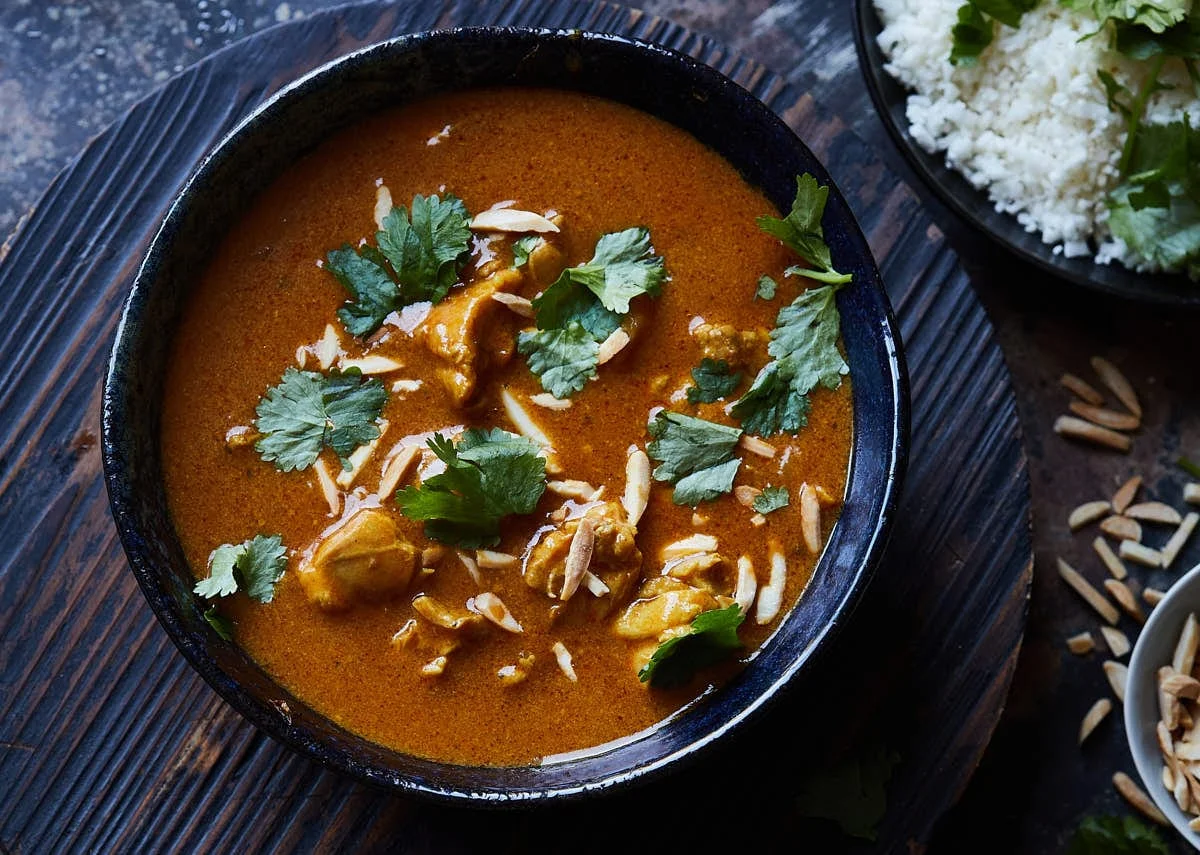
This paleo-style chicken korma simmers chicken thighs with warming spices, stock and coconut cream for a rich, gently spiced curry. It is ready in about 40 minutes and works well with cauliflower rice.
Ingredients
- 2garlic cloves
- 1 tbspoil
- 1onion, sliced
- 500 gchicken thigh fillets, diced
- 2 tbsptomato purée
- 1 tspground cumin
- 1 tsppaprika
- 1 tspground turmeric
- 1 tspground coriander
- 1/2 tspchilli
- 1 tspgaram masala
- 300 mlstock
- 1/2 cancoconut cream
- 1 tbsparrowroot, mixed with a little water
- to tastetoasted almonds
- to tastefresh coriander
- to tastecauliflower rice
Instructions
- 1
Fry aromatics
Heat the oil in a large pan. Add the onion and garlic and fry until softened and translucent. Stir in all the spices and cook until fragrant, then add the chicken and fry until cooked through and golden brown.
- 2
Simmer curry
Pour in the stock and simmer gently for about 30 minutes. Stir in the coconut cream towards the end and heat it through. If the curry is too thin, add 1 tablespoon of arrowroot mixed with a little water and let it cook briefly.
- 3
Serve the korma
Serve with cauliflower rice, toasted almonds and fresh coriander.
What is chicken korma?
Korma is a family of South Asian curries traditionally known for a gently spiced, rich sauce; recipes vary by region and household. This version takes the idea in a paleo direction, using coconut cream rather than a dairy-based finish.
Chicken thighs bring plenty of flavour to the short simmer, while the spices and stock make a savoury base. Cauliflower rice keeps the meal in the same spirit and takes on the creamy sauce.
Nutrition and macros by portion
The nutrition label shows one serving as written: 509 calories, 24g protein, 11g carbs, 42g fat.
| Portion | Adjustment | kcal | Protein | Carbs | Fat |
|---|---|---|---|---|---|
| Lighter | Use less coconut cream | 356 kcal | 17g | 8g | 29g |
| This serving | As written | 509 kcal | 24g | 11g | 42g |
| Hungry | Add more cauliflower rice | 764 kcal | 36g | 17g | 63g |
The chicken provides most of the protein, while the coconut cream and oil contribute much of the fat. The onion, tomato purée and cauliflower rice provide some carbohydrates; serve the curry with extra cauliflower rice or vegetables to round out the plate.
Build the flavour in the pan
Onion and garlic: fry them until translucent before adding the spices so they soften and form the aromatic base.
Spices: let them warm in the oil until fragrant, rather than leaving them raw in the finished sauce. Keep them moving so they do not catch on the bottom of the pan.
Chicken: diced thigh cooks in the pan and stays well suited to the gentle simmer. Give the pieces room to brown where possible.
Get the sauce consistency right
Stock: simmer the curry gently for about 30 minutes so the chicken cooks and the flavours mingle. A steady, quiet simmer is preferable to a hard boil.
Coconut cream: add it towards the end and warm it through, as the method directs. This keeps the creamy finish distinct from the longer simmer.
Arrowroot: mix it with a little water before adding it, then let the sauce cook briefly. Add it if the curry seems too thin; it is not needed if the sauce is already to your liking.
Choose the chicken thighs
Thigh fillets are the recipe's main source of protein and have a fuller flavour than a leaner cut. Cut them into even-sized pieces so they cook at a similar rate.
Check a larger piece before serving: it should be cooked through, with no raw-looking centre. Avoid extending the simmer unnecessarily once the chicken is done.
Serve with cauliflower rice
Cauliflower rice is a simple base for the creamy sauce and keeps the plate lighter than a grain-based accompaniment. Serve it alongside the curry rather than stirring it into the pan.
Finish with toasted almonds for crunch and fresh coriander for a bright, herbal contrast. Add them just before serving so the almonds retain their texture.
Make the timing work
The recipe takes about 40 minutes in total, including a simmer of roughly 30 minutes. Prepare the onion, garlic and spices before heating the pan so they can be added in sequence.
The simmer is a useful time to prepare the cauliflower rice and garnishes. Keep an eye on the sauce near the end, when the coconut cream and any arrowroot go in.
Recipe notes & tips
- Slice the onion and prepare the garlic before you start cooking, as the first stages move quickly.
- Cook the spices until fragrant, but stir often to stop them scorching.
- Cut the chicken into even-sized pieces for more consistent cooking.
- Keep the curry at a gentle simmer rather than letting it boil vigorously.
- Mix the arrowroot thoroughly with a little water before adding it to the sauce.
- Toast the almonds ahead of serving and add them at the end for crunch.
Variations
- Adjust the heat: use less chilli for a milder curry or more for extra warmth.
- Add vegetables: serve with extra roasted vegetables alongside the cauliflower rice.
- Change the garnish: use toasted flaked almonds for a delicate crunch.
- Make it thicker: add the arrowroot mixture only if the sauce needs thickening.
- Use fresh coriander: scatter it over the curry just before serving for a fresh finish.
Common mistakes to avoid
- Scorching the spices: stir them as they warm in the oil and take care not to leave them in a hot, dry patch.
- Boiling the curry hard: keep it at a gentle simmer so the sauce cooks steadily.
- Adding dry arrowroot: mix it with a little water first to help it blend into the sauce.
- Thickening too soon: check the sauce near the end and use the arrowroot only if it is too thin.
- Overcooking the chicken: check a larger piece and stop simmering once it is cooked through.
- Adding garnishes too early: finish with the almonds and coriander just before serving.
How to store
Cool leftovers promptly and refrigerate in a covered container for up to 3 days. Reheat gently in a pan until piping hot throughout, adding a splash of water if the sauce has thickened; store cauliflower rice separately if possible.
Frequently asked questions
Can I use chicken breast instead of thighs?
Yes, but breast is leaner and can dry out more easily. Cut it evenly and check it during the simmer so it does not cook longer than needed.
How can I tell when the chicken is cooked?
Check a larger piece: it should be cooked through with no raw-looking centre. If you use a food thermometer, follow local food-safety guidance for chicken.
Do I have to use arrowroot?
No. It is only included to thicken the sauce if it is too thin. Skip it if the sauce already has the consistency you want.
Can I make the curry less spicy?
Yes. Reduce the chilli or leave it out, while keeping the other spices as listed.
What can I serve with chicken korma?
The recipe serves it with cauliflower rice, toasted almonds and fresh coriander. Extra roasted vegetables also make a good accompaniment.
Can I freeze the leftovers?
The curry can be frozen in a sealed, freezer-safe container. Thaw it in the fridge and reheat gently until piping hot throughout; the texture of the sauce may change slightly.
Cook it from the original
This recipe comes from simoneskitchen.nl. Their page has the author’s own photos, notes and tips — the best place to cook it from.
Open the recipe on simoneskitchen.nl