
Cabbage soup with ribs
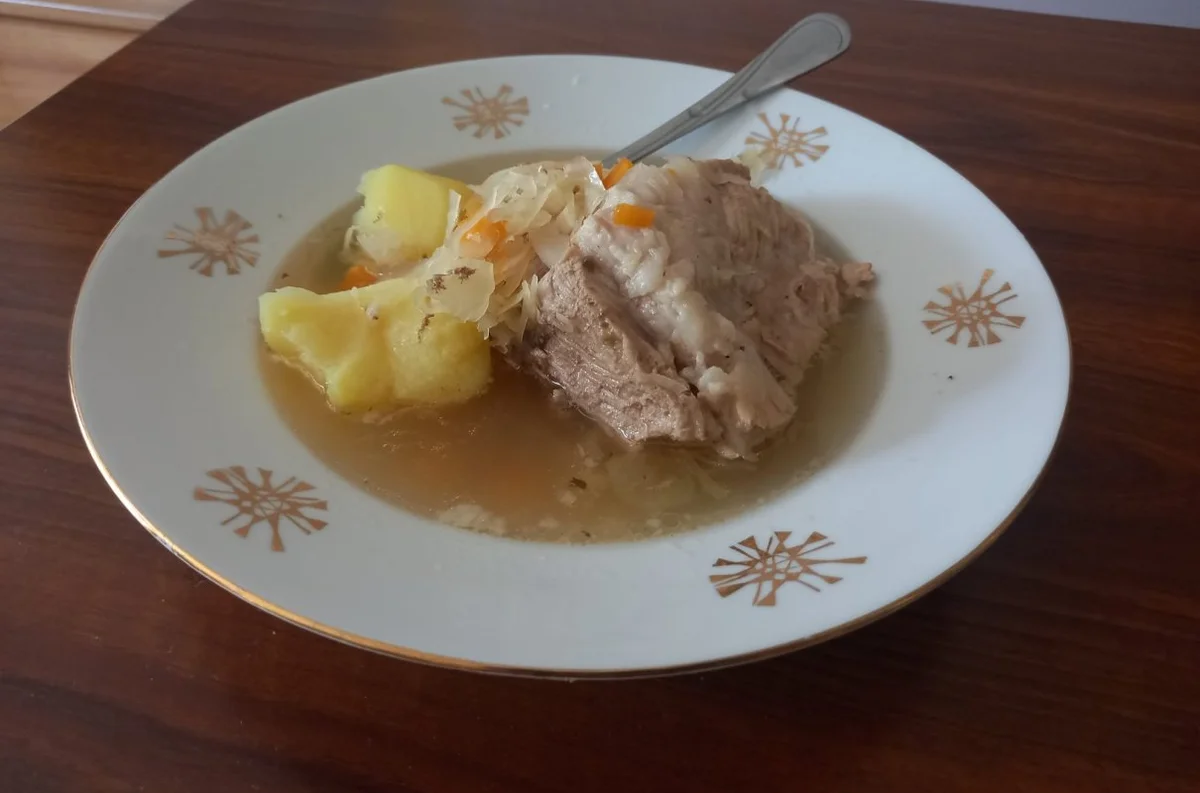
This Polish cabbage soup combines sauerkraut with a slow-simmered rib broth, vegetables and warming spices. It takes time, but the tender meat and tangy broth make it a hearty meal, especially served with cooked potatoes.
Ingredients
- 1.5 kgpork ribs, cut into strips
- 300 gsauerkraut
- to tastesauerkraut juice
- 2 smallcarrots
- 1 smallparsley root
- 1 smallonion
- 2–3 leavesbay leaves
- 5allspice berries
- 3–5peppercorns
- ½ teaspooncaraway seeds
- 1 teaspoonmarjoram
- to tastesalt and pepper
- to tastecooked potatoes
Instructions
- 1
Simmer the sauerkraut
Once the ribs are tender, lift them out of the broth, along with the vegetables. Add the sauerkraut to the broth, chopping it first if needed, and cook for about 30 minutes, until tender.
- 2
Finish the soup
Dice the carrot and parsley root. When the sauerkraut is tender, return the meat and vegetables to the soup, add sauerkraut juice and season to taste. Simmer for about 10 more minutes, then turn off the heat.
- 3
Serve with potatoes
Serve the finished cabbage soup with the potatoes, cooked beforehand.
- 4
Cook the ribs
Cut the ribs into portions and put them in a saucepan. Add enough water to cover the meat, then add the spices and peeled vegetables. Cover and bring to the boil, then lower the heat so the broth simmers gently. Cook for 60–90 minutes, until the meat is tender enough to come away from the bones.
What is Polish cabbage soup?
Kapuśniak is a Polish soup built around sauerkraut, often cooked in a meat-based broth. Its defining flavour is the balance of savoury stock and the fermented cabbage’s sharp, tangy taste.
This version gets its broth from pork ribs and is served with cooked potatoes. A long, gentle simmer gives the meat time to soften before the sauerkraut finishes cooking in the broth.
Nutrition and macros by portion
The nutrition label shows one serving as written: 2150 calories, 140g protein, 70g carbs, 155g fat.
| Portion | Adjustment | kcal | Protein | Carbs | Fat |
|---|---|---|---|---|---|
| Lighter | Use fewer ribs | 1505 kcal | 98g | 49g | 109g |
| This serving | As written | 2150 kcal | 140g | 70g | 155g |
| Hungry | Add more potatoes | 3225 kcal | 210g | 105g | 233g |
The ribs provide most of the protein and fat, while the potatoes supply most of the carbohydrates; the sauerkraut and root vegetables add smaller amounts of carbohydrate and fibre. As written, the recipe lists 1.5 kg of ribs for one serving and gives no potato quantity, so the nutrition estimate is especially rough; balance a bowl with a generous serving of vegetables and a moderate amount of meat and potatoes.
Build a full-flavoured broth
Ribs: Choose pieces with meat on the bone, which provide both the soup’s main protein and the base for its broth. Keep the water just high enough to cover them.
Spices: Bay leaves, allspice, peppercorns, caraway and marjoram season the broth with a warm, savoury character. The recipe adds them at the beginning so they have time to infuse.
Cook the sauerkraut until tender
Sauerkraut: Add it after removing the ribs and vegetables, then simmer for about 30 minutes. If the strands are long, chopping them beforehand makes the soup easier to eat.
Juice: Add sauerkraut juice near the end, a little at a time, and taste as you go. Its acidity and saltiness vary, so the amount is best adjusted to the cabbage and your preference.
Look for these doneness cues
Meat: Keep the broth at a gentle simmer for 60–90 minutes, rather than letting it boil vigorously. The ribs are ready when the meat comes away from the bones easily.
Cabbage: After its roughly 30-minute simmer, the sauerkraut should be tender but still have some texture. The final 10 minutes let the returned meat and vegetables warm through and the flavours come together.
Use the vegetables in the soup
Carrot and parsley root: The recipe cooks the peeled vegetables with the ribs, then calls for the carrot and parsley root to be diced before returning them to the soup. Cut them small for even pieces in each spoonful.
Onion: It goes into the initial broth with the other vegetables, adding savouriness as the ribs simmer. The method does not specify cutting it before cooking.
Serve it with potatoes
Potatoes: Cook them separately in advance and serve them with the finished soup, as the recipe directs. Add them to each bowl or serve them alongside, so they do not break down during the soup’s long cooking.
For a fuller table, offer rye bread and extra sauerkraut juice on the side. Taste the soup before serving and adjust its seasoning to suit the sharpness of the cabbage.
Recipe notes & tips
- Keep the broth at a quiet simmer so the ribs tenderise without the liquid boiling hard.
- Chop the sauerkraut if its strands are too long for comfortable spoonfuls.
- Add the sauerkraut juice gradually and taste before adding more.
- Cook the potatoes separately, as directed, to keep them from falling apart in the soup.
- Check that the ribs are tender before removing them from the broth.
Variations
- More tang: Add extra sauerkraut juice a little at a time after the cabbage is tender.
- Milder flavour: Rinse some of the sauerkraut before adding it to the broth.
- More vegetables: Add extra diced carrot or parsley root when returning the vegetables to the soup.
- Herb finish: Sprinkle a little extra marjoram into the pot just before serving.
- Meat-free bowl: Use a vegetable broth instead of rib broth, noting that this changes the recipe’s original character.
Common mistakes to avoid
- Hard boiling: The broth can become cloudy and the meat may cook unevenly; lower the heat to maintain a gentle simmer.
- Adding all the juice at once: The soup may turn too sharp or salty; add it gradually and taste.
- Rushing the ribs: Tough meat needs more time; simmer until it separates from the bones easily.
- Overcooking the cabbage: It can lose its texture; check it around the 30-minute mark.
- Cooking the potatoes in the soup: They may break down during the long simmer; cook them separately as instructed.
How to store
Refrigerate the soup in a covered container for up to 3 days, storing the potatoes separately if possible. Reheat gently on the hob until steaming hot throughout, adding a splash of water if the broth has thickened.
Frequently asked questions
Can I make the soup ahead?
Yes. Make the soup in advance and refrigerate it once cooled. Reheat it gently, and cook or store the potatoes separately so they keep their shape.
How do I know when the ribs are cooked?
After 60–90 minutes of gentle simmering, the meat should be tender enough to pull away from the bones. If it is still firm, continue cooking and check again.
Should I rinse the sauerkraut?
The method does not call for rinsing it. If you prefer a milder, less tangy soup, rinse some of the sauerkraut before adding it.
When should I add the sauerkraut juice?
Add it near the end, when you return the meat and vegetables to the pot. Start with a little, taste the broth, and add more if you want a sharper flavour.
Can I freeze this soup?
The soup can be frozen in an airtight container, though the texture of the sauerkraut and vegetables may soften after thawing. Freeze the cooked potatoes separately or make a fresh batch to serve.
What can I serve with cabbage soup?
Serve it with the cooked potatoes specified in the recipe. Rye bread is also a practical accompaniment.
Cook it from the original
This recipe comes from smaker.pl. Their page has the author’s own photos, notes and tips — the best place to cook it from.
Open the recipe on smaker.pl