
Sabudana Ladoo
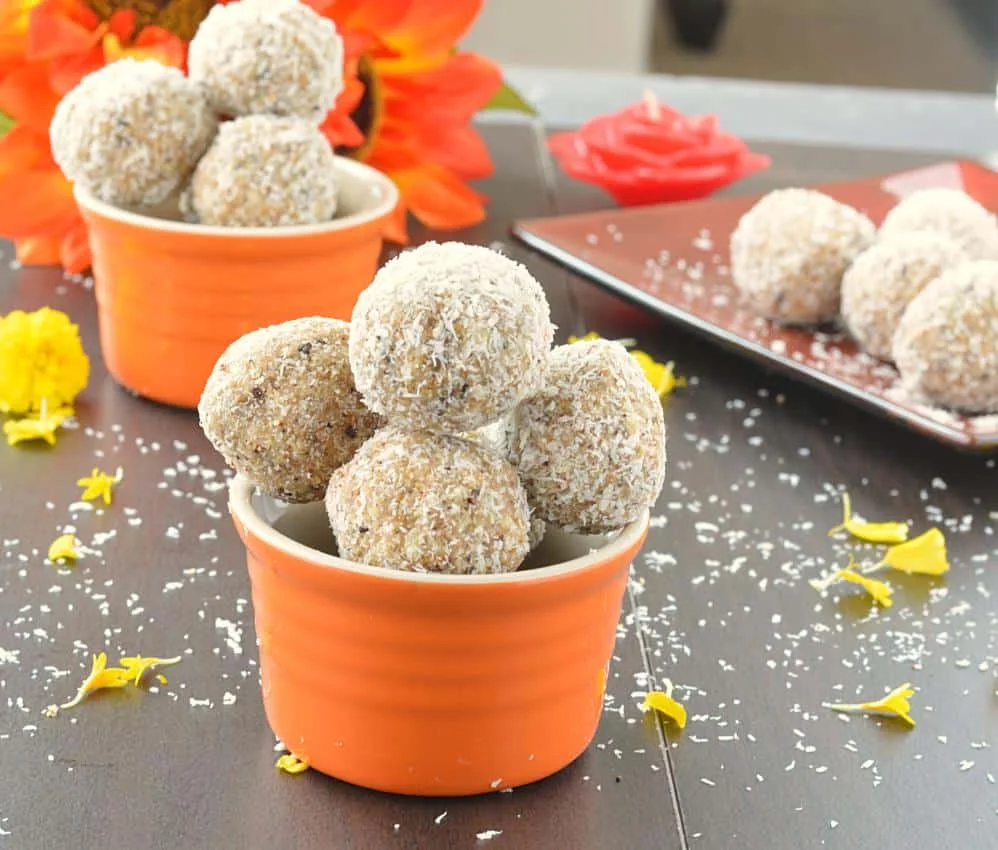
Sabudana ladoo are Indian sweet balls made with roasted tapioca pearls, khoya, coconut, sugar and nuts. They are a festive treat with a toasted, nutty flavour and can be shaped while the mixture is still warm.
Ingredients
- 190 g (1 cup)sabudana (sago pearls)
- 60 g (1/4 cup)crumbled khoya (mawa)
- 40 g (1/2 cup)unsweetened desiccated coconut
- 100 g (1/2 cup)caster sugar
- 45–60 ml (3–4 tablespoons)ghee
- 15–30 ml (1–2 tablespoons)milk
- 45 g (1/3 cup)mixed chopped pistachios and almonds
- to tastecardamom powder
Instructions
- 1
Measure the pearls
Measure out the sabudana.
- 2
Grind the sabudana
Transfer the pearls to a mixer and grind them into a powder.
- 3
Prepare the ingredients
Set out the remaining ingredients.
- 4
Heat the ghee
Heat the ghee in a kadai.
- 5
Roast the powder
Add the ground sabudana and roast it over a medium-low heat, stirring as you go.
- 6
Sauté briefly
Sauté for 1–2 minutes.
- 7
Add the khoya
Stir in the crumbled khoya.
- 8
Cook until golden
Keep stirring until the mixture begins to change colour and turns light brown.
- 9
Add the coconut
Take the pan off the heat and mix in the desiccated coconut.
- 10
Mix thoroughly
Stir until the coconut is evenly combined.
- 11
Stir in sugar
Add the sugar.
- 12
Add nuts and spice
Add the cardamom powder and nuts, then mix until everything is well combined.
- 13
Moisten the mixture
The mixture will be very dry at this stage. Add 1 tablespoon of milk and mix.
- 14
Shape a ladoo
Once the mixture starts to come together, take a little in your hand and shape it into a small ball.
- 15
Shape the rest
Repeat with the remaining mixture.
- 16
Finish shaping
The sabudana ladoos are ready.
- 17
Add a coconut coating
If you like, roll the ladoos in dry desiccated coconut, or serve them as they are.
- 18
Store the ladoos
Keep them in an airtight container; they will keep for 2–3 weeks.
What are sabudana ladoo?
Ladoo are Indian sweets shaped into small balls, with many regional and festive versions. This one uses sabudana, also called sago or tapioca pearls, ground into a powder and roasted with ghee.
Khoya adds a milky richness, while coconut, nuts and cardamom bring fragrance and texture. Roasting the powder before shaping gives this simple version its toasted flavour.
Nutrition and macros by portion
The nutrition label shows one serving as written: 145 calories, 2g protein, 20g carbs, 7g fat.
| Portion | Adjustment | kcal | Protein | Carbs | Fat |
|---|---|---|---|---|---|
| Lighter | Use less ghee | 102 kcal | 1g | 14g | 5g |
| This serving | As written | 145 kcal | 2g | 20g | 7g |
| Hungry | Have a larger portion | 218 kcal | 3g | 30g | 11g |
The sabudana and sugar provide most of the carbohydrates, while ghee, coconut and nuts contribute much of the fat; khoya and nuts provide some protein. Pair a ladoo with fruit or serve it after a meal with a protein-rich component to make the overall plate more balanced.
The key ingredients
Sabudana: Grind the pearls into a fine, even powder so the mixture holds together more consistently. A few coarser flecks are fine, but large pieces can make shaping difficult.
Khoya and coconut: Crumble the khoya before adding it, and use unsweetened desiccated coconut so the sugar level stays as intended.
Ghee and milk: Ghee helps roast and enrich the mixture; milk is added a little at a time at the end to bring it together.
Roasting for flavour
Keep the heat at medium-low and stir frequently as the ground sabudana roasts. The method calls for 1–2 minutes of sautéing before adding khoya, then continued stirring until the mixture turns light brown.
The colour change is the cue to take the pan off the heat. Avoid rushing the roasting with high heat, which can colour the mixture unevenly.
Getting the texture right
After the sugar, nuts and cardamom go in, the mixture may look dry; that is expected. Add 1 tablespoon of milk and mix, then check whether it starts to come together.
Shape a small ball to test it. If it holds, continue with the rest; if the mixture is still crumbly, use the remaining milk in small additions.
Shaping while warm
The method moves straight from mixing to shaping, so begin forming the ladoos while the mixture is still warm enough to handle and mould. Take a small amount and press it together before rolling it between your palms.
If the mixture cools and becomes harder to shape, gently warm it again until it is pliable. Take care not to overheat it.
Serving ideas
Serve the ladoos as a small sweet after a meal or as part of a festival spread. Their toasted, nutty flavour works well alongside tea or coffee.
For a little extra coconut flavour, roll the shaped ladoos in dry desiccated coconut, as suggested in the method. They can also be served without a coating.
Recipe notes & tips
- Grind the sabudana evenly so the mixture is easier to shape.
- Stir continuously while roasting to help the powder colour evenly.
- Take the pan off the heat before adding the coconut.
- Add milk gradually, beginning with the specified 1 tablespoon.
- Shape one ladoo first to check whether the mixture holds together.
- Roll the ladoos in dry desiccated coconut if you want a coated finish.
Variations
- Extra cardamom: Add more cardamom powder for a stronger aromatic note.
- Nut choice: Use more pistachios or almonds while keeping the same total quantity.
- Coconut coating: Roll each shaped ladoo in extra dry desiccated coconut.
- Finer texture: Grind the sabudana more finely for a smoother mixture.
- Milk adjustment: Add the remaining milk gradually if the mixture needs more help coming together.
Common mistakes to avoid
- High heat: The powder can brown unevenly; roast it over medium-low heat.
- Skipping the stirring: The mixture may colour unevenly; keep stirring as it roasts.
- Adding too much milk at once: The mixture may become difficult to shape; add it gradually.
- Shaping before testing: A crumbly mixture may fall apart; form one test ball first.
- Waiting too long to shape: The mixture may firm up as it cools; shape it while warm and pliable.
How to store
Store the ladoos in an airtight container. The recipe says they keep for 2–3 weeks; for best quality, keep them in a cool, dry place. If they become firm, let them come to room temperature before serving.
Frequently asked questions
Do I need to soak the sabudana first?
No soaking is described for this recipe. The pearls are ground dry into a powder before roasting.
How do I know when the mixture is roasted?
After adding the khoya, keep stirring until the mixture starts to change colour and becomes light brown.
Why is the mixture so dry?
It is expected to be very dry before the milk is added. Mix in 1 tablespoon first, then add the rest gradually only if needed for shaping.
Can I make these without khoya?
Khoya is part of this recipe and gives the ladoos a milky richness. Leaving it out will change the texture and flavour.
Can I coat the ladoos in coconut?
Yes. Once shaped, roll them in dry desiccated coconut, or leave them uncoated.
How long do sabudana ladoos keep?
The recipe states 2–3 weeks in an airtight container. Store them in a cool, dry place.
Cook it from the original
This recipe comes from ruchiskitchen.com. Their page has the author’s own photos, notes and tips — the best place to cook it from.
Open the recipe on ruchiskitchen.com