
Basic Vinaigrette
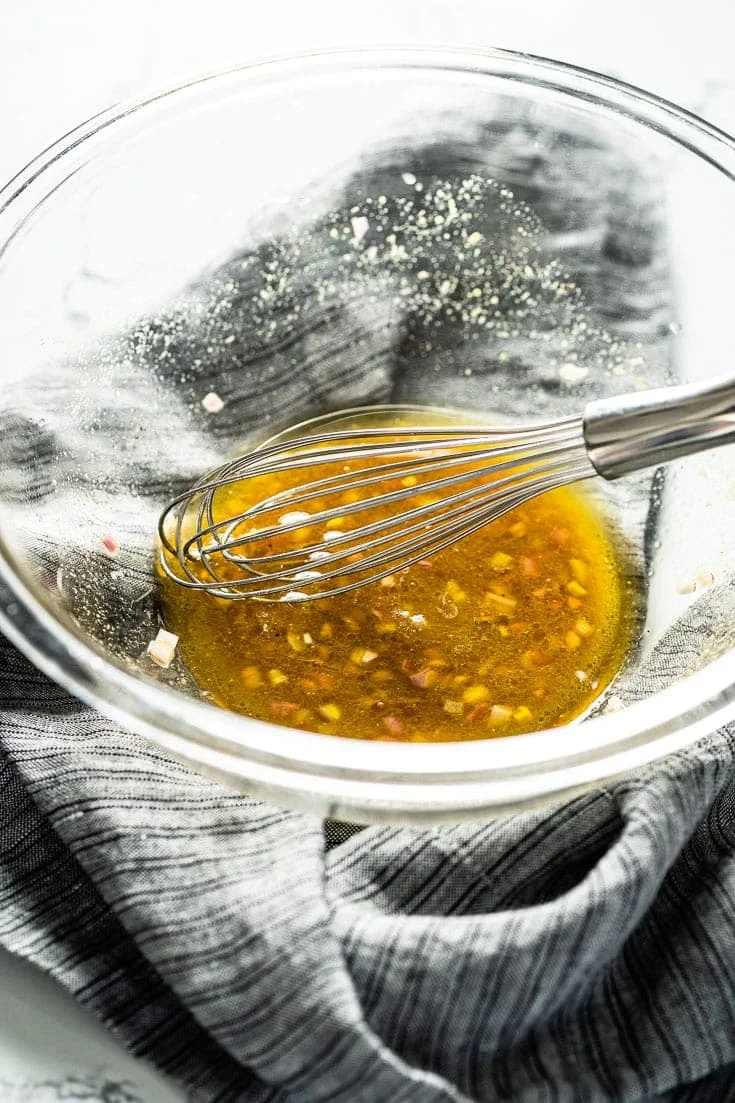
This French-style vinaigrette brings vinegar, shallot, Dijon mustard and a touch of sweetness together with extra-virgin olive oil. Whisk it in minutes for a versatile dressing you can adjust to suit your salad.
Ingredients
- 60 ml (¼ cup)vinegar
- 15 ml (1 tbsp)finely minced shallot
- 10 ml (2 tsp)Dijon mustard
- 15 ml (1 tbsp)sugar or honey
- 1.25 ml (¼ tsp)kosher salt
- 0.625 ml (⅛ tsp)freshly ground black pepper
- 180 ml (¾ cup)extra-virgin olive oil
Instructions
- 1
Mix the base
In a bowl, whisk together all the vinaigrette ingredients except the olive oil until combined and the sugar or honey and salt have dissolved.
- 2
Emulsify the dressing
While whisking continuously, slowly drizzle the olive oil into the bowl until the vinaigrette emulsifies.
- 3
Taste and adjust
Taste the vinaigrette for acidity, sweetness and salt, then adjust as needed.
What is vinaigrette?
Vinaigrette is a French-style dressing built around vinegar and oil, often with mustard to help bring the mixture together. This version adds shallot for a mild savoury note and sugar or honey to soften the vinegar.
The proportions make a full-bodied dressing with plenty of olive oil. Whisking the oil in gradually helps create a temporarily smooth emulsion rather than leaving the ingredients in separate layers.
Nutrition and macros by portion
The nutrition label shows one serving as written: 1460 calories, 1g protein, 13g carbs, 164g fat.
| Portion | Adjustment | kcal | Protein | Carbs | Fat |
|---|---|---|---|---|---|
| Lighter | Use less olive oil | 1022 kcal | 1g | 9g | 115g |
| This serving | As written | 1460 kcal | 1g | 13g | 164g |
| Hungry | Double the dressing | 2190 kcal | 2g | 20g | 246g |
Most of this serving’s energy and fat come from the extra-virgin olive oil, while the sugar or honey contributes carbohydrates. The shallot and mustard add small amounts of carbohydrate and protein; serve the dressing with plenty of vegetables and a protein-rich component to make a more balanced plate.
Choosing the ingredients
Vinegar: Use a vinegar whose flavour you enjoy, since it provides the dressing’s main sharp note. A gentler vinegar gives a milder result, while a sharper one makes the acidity more pronounced.
Shallot and mustard: Minced shallot disperses through the dressing, and Dijon adds savoury depth as well as helping the oil and vinegar emulsify.
Sweetener: Sugar or honey rounds out the acidity. Start with the listed amount, then taste before adding more.
Whisking a smooth emulsion
Start by whisking the ingredients other than the oil until the salt and sweetener dissolve. This gives the oil a well-mixed base to incorporate into.
Add the oil in a slow, steady drizzle while whisking without stopping. If the oil goes in too quickly, the dressing may separate instead of turning evenly cloudy and lightly thickened.
Balancing the flavour
Taste the finished dressing before serving, as vinegar brands and sweeteners can vary in intensity. Adjust the acidity, sweetness and salt in small increments, tasting again after each change.
The dressing should taste lively but not harsh, with the olive oil smoothing the vinegar and the shallot and mustard still discernible.
Serving the vinaigrette
Toss the dressing with leafy salads just before serving so the leaves are coated without sitting in the liquid for too long. It also works with crisp vegetables or spooned over cooked vegetables once they have cooled slightly.
Because the recipe makes one serving, dress the food gradually rather than pouring it all on at once; you can stop when everything is lightly coated.
A note on timing
The listed preparation time is 5 minutes, and the method needs no cooking. Have the ingredients measured before you start so you can whisk the oil in steadily.
The vinaigrette may separate if left standing. Give it another whisk just before serving.
Recipe notes & tips
- Mince the shallot finely so it distributes evenly throughout the dressing.
- Whisk the vinegar mixture until the salt and sweetener dissolve before adding the oil.
- Pour the olive oil in slowly to give the emulsion time to form.
- Taste the dressing before serving and make small adjustments rather than changing several flavours at once.
- Whisk again immediately before use if the dressing has separated.
Variations
- Use red wine vinegar: It gives the dressing a deeper, more assertive tang.
- Choose a milder vinegar: A gentler variety makes a softer-tasting vinaigrette.
- Swap the sweetener: Use honey instead of sugar, or sugar instead of honey.
- Add fresh herbs: Whisk in finely chopped parsley or chives for a fresh herbal note.
- Add garlic: Mix in a small amount of finely minced garlic for a more savoury dressing.
Common mistakes to avoid
- Adding oil too quickly: The dressing may split; drizzle it in slowly while whisking continuously.
- Skipping the dissolve: Undissolved salt or sugar can leave the base uneven; whisk before adding the oil.
- Using coarse shallot pieces: They can overwhelm each bite; mince the shallot finely.
- Overcorrecting the flavour: Too much vinegar, sweetener or salt can throw off the balance; adjust in small amounts and retaste.
- Serving after it has separated: Whisk it again just before dressing the salad.
How to store
Keep leftover vinaigrette in a sealed container in the fridge and use within about 5 days. The oil may firm up when chilled, so let it stand briefly at room temperature and whisk well before serving.
Frequently asked questions
Can I make this vinaigrette without a whisk?
Yes. Put the ingredients in a jar with a tight-fitting lid and shake vigorously until combined. Add the oil gradually if you want to follow the same emulsifying approach.
Why has my vinaigrette separated?
Oil and vinegar naturally separate if the emulsion breaks or stands for a while. Whisk or shake it again just before serving.
Can I use a different vinegar?
Yes. Different vinegars change the sharpness and flavour, so taste the finished dressing and adjust the sweetness or acidity as needed.
Should I use sugar or honey?
Either works. Honey adds its own flavour, while sugar gives a more neutral sweetness; dissolve either into the vinegar mixture before adding the oil.
How much dressing should I put on a salad?
Add it gradually and toss as you go. Stop once the leaves are lightly coated rather than saturated.
Can I prepare it ahead?
Yes. Store it covered in the fridge, then whisk or shake it again before serving.
Cook it from the original
This recipe comes from saltpepperskillet.com. Their page has the author’s own photos, notes and tips — the best place to cook it from.
Open the recipe on saltpepperskillet.com