
Spinach Goat Cheese Pasta
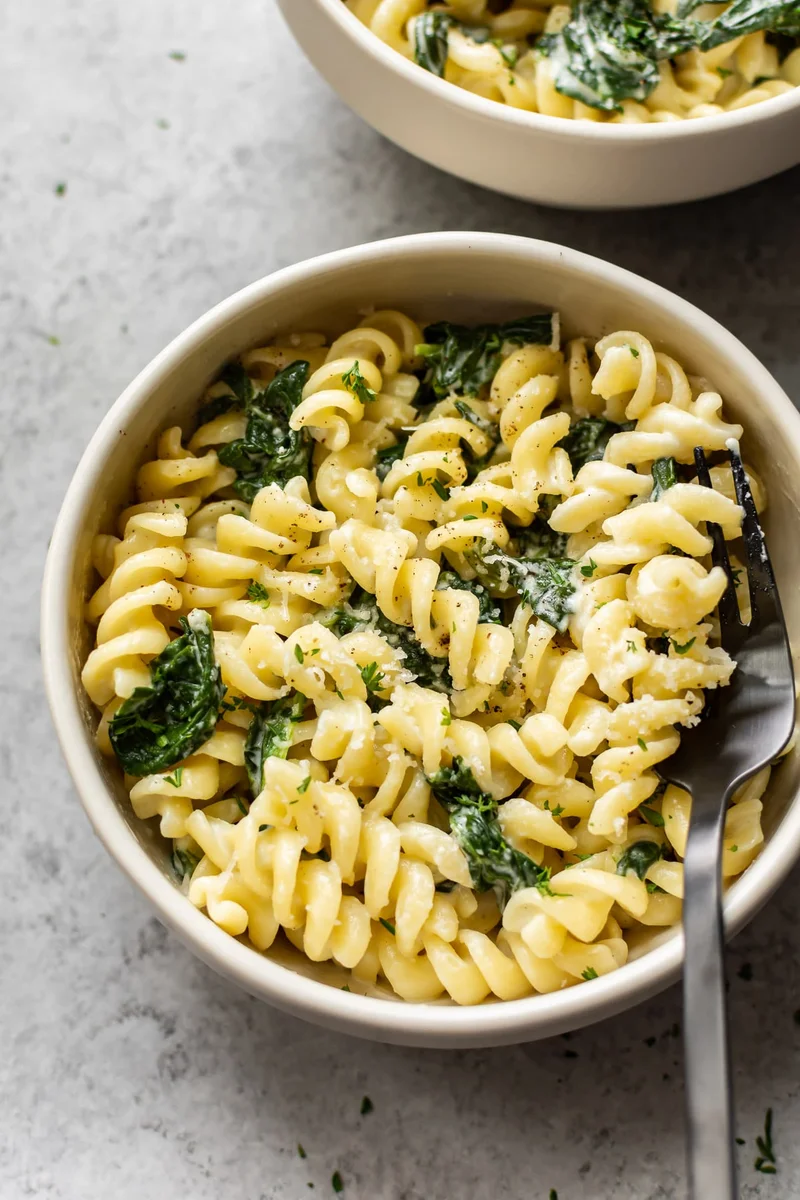
This quick pasta combines tender baby spinach with creamy goat cheese, Parmesan and a little lemon. It is a straightforward weeknight meal, ready in about 30 minutes.
Ingredients
- 225 g (8 ounces)uncooked pasta
- 115 g (4 ounces)goat cheese, crumbled
- 50 g (½ cup)freshly grated Parmesan cheese
- 5 ml (1 teaspoon)fresh lemon juice
- 15 g (1 tablespoon)butter
- 1 clovegarlic, minced
- 60 g (2 cups, packed)fresh baby spinach
- 1 tablespoonfresh basil, chopped (optional)
- to tastesalt and pepper
Instructions
- 1
Cook the pasta
Bring a pot of salted water to the boil and cook the pasta al dente according to the packet directions. Before draining, reserve about 240 ml (1 cup) of the pasta water. Drain the pasta and set it aside.
- 2
Cook the garlic
Using the same pot, melt the butter over a medium heat. Stir in the garlic and cook for about 1 minute.
- 3
Make it creamy
Turn the heat down to medium-low and return the cooked pasta to the pot. Stir in the goat cheese, Parmesan and lemon juice. Add a splash of reserved pasta water a little at a time, stirring or tossing until the sauce is creamy.
- 4
Wilt the spinach
Add the spinach and, if using, the basil, then toss them with the pasta. Cover the pot for 1–2 minutes to help the spinach wilt.
- 5
Season and serve
Taste and add salt and pepper as needed. Serve straight away.
What is spinach goat cheese pasta?
This American-style pasta dish pairs pasta with fresh spinach and a tangy, soft goat cheese sauce. The lemon brightens the rich cheese, while Parmesan adds a savoury edge.
The method keeps things simple: the sauce comes together in the pasta pot, using a little starchy cooking water to help the cheeses coat the pasta.
Nutrition and macros by portion
The nutrition label shows one serving as written: 369 calories, 18g protein, 44g carbs, 13g fat.
| Portion | Adjustment | kcal | Protein | Carbs | Fat |
|---|---|---|---|---|---|
| Lighter | Less cheese, extra spinach | 258 kcal | 13g | 31g | 9g |
| This serving | As written | 369 kcal | 18g | 44g | 13g |
| Hungry | Larger pasta portion | 554 kcal | 27g | 66g | 20g |
The pasta supplies most of the carbohydrates, while goat cheese, Parmesan and butter contribute much of the fat; the cheeses also provide protein. Pair a serving with a generous salad or extra vegetables for a more balanced plate.
Choosing the ingredients
Pasta: Short shapes such as penne or fusilli are easy to toss with the spinach and sauce, but the recipe works with other pasta shapes too.
Cheese: Crumbled goat cheese melts into the warm pasta, and freshly grated Parmesan brings a firmer, savoury flavour. Baby spinach wilts quickly, while fresh basil is an optional herbal finish.
Use pasta water gradually
The reserved cooking water helps loosen the cheese into a coating sauce. Add it in small splashes while stirring, rather than pouring it all in at once.
The sauce may look loose at first, but tossing helps it cling to the pasta. Stop adding water when it looks creamy and coats the noodles.
Keep the spinach tender
Add the spinach after the cheeses have been mixed through the pasta. A covered minute or two lets the leaves soften in the residual heat without needing a separate pan.
Check after a minute; baby spinach wilts quickly. If the leaves still look firm, cover briefly again.
Watch the heat
After returning the pasta to the pot, keep the heat at medium-low while adding the cheeses. This gives them time to soften without needing a fierce boil.
Have the reserved pasta water ready before draining, as the sauce comes together quickly once the pasta is back in the pot.
What to serve alongside
A crisp green salad or sliced tomatoes make a fresh contrast to the creamy pasta. Crusty bread is useful for mopping up any sauce left in the bowl.
Serve the pasta immediately, while the sauce is smooth and the spinach is just wilted.
Recipe notes & tips
- Salt the pasta water before adding the pasta.
- Reserve the pasta water before draining, not after.
- Grate the Parmesan finely so it mixes readily into the sauce.
- Add the pasta water in small splashes and check the texture as you toss.
- Serve as soon as the spinach has wilted and the sauce is creamy.
Variations
- Add mushrooms: Sauté sliced mushrooms in the butter before cooking the garlic.
- Use a different green: Stir in chopped kale and allow extra time for it to soften.
- Add chilli: Sprinkle in chilli flakes with the garlic for a little heat.
- Try another herb: Swap the basil for chopped parsley.
- Add toasted walnuts: Scatter them over the pasta just before serving for crunch.
Common mistakes to avoid
- Forgetting the pasta water: Reserve about 240 ml before draining so you can adjust the sauce.
- Adding all the water at once: Pour in small splashes and stop when the sauce coats the pasta.
- Using high heat for the cheese: Keep the pot at medium-low so the cheese softens into the sauce.
- Overcooking the spinach: Cover for 1 minute, check, then give it another minute only if needed.
- Waiting too long to serve: Dish up promptly while the sauce is creamy and warm.
How to store
Refrigerate leftovers in an airtight container for up to 3 days. Reheat gently in a pan or microwave with a small splash of water to loosen the sauce.
Frequently asked questions
Can I make this with a different pasta shape?
Yes. Use any pasta shape you like, and cook it according to its packet directions until al dente.
What can I use instead of fresh baby spinach?
You can use another tender leafy green, though tougher leaves may need longer to soften. Add them early enough to cook through.
Can I leave out the basil?
Yes. The basil is optional, so you can omit it or use another fresh herb if you prefer.
Why does the sauce need pasta water?
A little starchy pasta water helps loosen the cheese and gives the sauce a smooth, coating texture. Add it gradually so the sauce does not become too thin.
Can I prepare it ahead?
It is best served as soon as it is made, when the sauce is creamy and the spinach has just wilted. Leftovers can be refrigerated and reheated gently with a splash of water.
Cook it from the original
This recipe comes from saltandlavender.com. Their page has the author’s own photos, notes and tips — the best place to cook it from.
Open the recipe on saltandlavender.com