
Spaghetti Arrabbiata- it’s spicy!
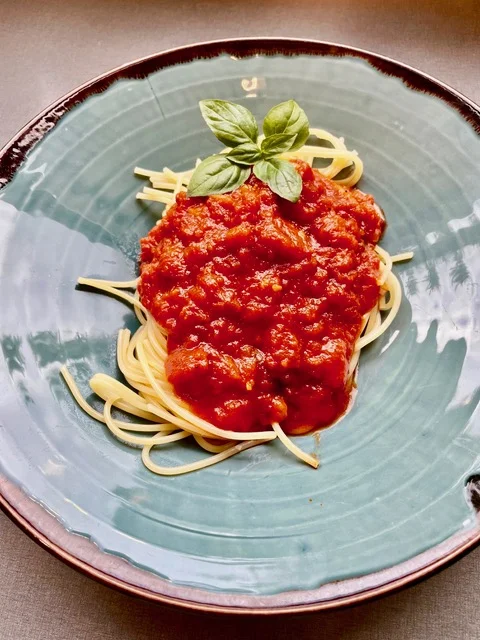
Spaghetti arrabbiata pairs a punchy tomato sauce with chilli, garlic and basil. This version simmers the sauce for 30 minutes, giving the flavours time to come together while you cook the pasta.
Ingredients
- 2 canschopped tomatoes
- 1onion, cut into small cubes
- 3garlic cloves, thinly sliced
- 2chillies
- 1 sprigfresh basil, roughly chopped
- 20 mlolive oil
- 1 tbspsalt
- 1pepper
- 1 pinchsugar
Instructions
- 1
Chop the aromatics
Cut the onion and garlic into small brunoise-style cubes.
- 2
Prepare the chillies
Remove the seeds and chop the chillies into small pieces. Wear gloves while handling them.
- 3
Choose the heat
For a much spicier sauce, leave the chilli seeds in.
- 4
Sauté the aromatics
Heat the olive oil and sauté the onion, garlic and chilli.
- 5
Add the tomatoes
Once the ingredients have taken on a little colour, add both cans of chopped tomatoes.
- 6
Season the sauce
Add salt and pepper to taste.
- 7
Add basil and sugar
Stir in a pinch of sugar and the roughly chopped basil.
- 8
Simmer the sauce
Simmer for 30 minutes with the lid resting loosely on top of the pot.
- 9
Cook the pasta
While the sauce simmers, cook the pasta according to its packet instructions.
- 10
Taste and adjust
Taste the sauce and adjust the seasoning as needed.
- 11
Plate and finish
Serve the pasta with the sauce and add freshly grated Parmesan.
What is spaghetti arrabbiata?
Arrabbiata is a spicy tomato sauce associated with Rome and the Lazio region of Italy; its name means “angry”, a nod to the chilli heat. It is commonly served with pasta.
This version builds flavour from onion, garlic and fresh chilli, then simmers the tomatoes for 30 minutes. Basil and a small pinch of sugar round out the sauce.
Nutrition and macros by portion
The nutrition label shows one serving as written: 480 calories, 0g protein, 0g carbs, 0g fat.
| Portion | Adjustment | kcal | Protein | Carbs | Fat |
|---|---|---|---|---|---|
| Lighter | Less oil, more vegetables | 336 kcal | 0g | 0g | 0g |
| This serving | As written | 480 kcal | 0g | 0g | 0g |
| Hungry | Larger pasta portion | 720 kcal | 0g | 0g | 0g |
The tomatoes supply most of the carbohydrates in the sauce, while the olive oil contributes most of its fat; the pasta served with it will add further carbohydrates. For a more balanced plate, serve it with a side of vegetables and keep the Parmesan to your preferred amount.
The key ingredients
Chopped tomatoes: two cans form the body of the sauce. Their quantity is given without a can size, so use the stated two cans rather than assuming a particular weight.
Chilli: removing the seeds keeps the heat gentler, while leaving them in makes the sauce spicier. Gloves help avoid transferring chilli oils to your eyes or skin.
Basil: roughly chopped leaves bring a fresh, herbal note. Add them before simmering, as directed, so they infuse the sauce.
Build the flavour gently
A brief sauté gives the onion, garlic and chilli a little colour before the tomatoes go in. Keep the heat controlled and stir regularly so the garlic does not catch.
Once the tomatoes are added, the sauce can simmer without needing a high heat. A loosely placed lid helps limit splashes while allowing some steam to escape.
Check the sauce as it simmers
The stated simmer is 30 minutes. Look for a sauce that has thickened slightly and tastes less raw and sharp than it did at the start.
Taste near the end and adjust the seasoning. The ingredient list gives salt and pepper, but the method leaves the final amount to taste.
Cook and serve the pasta
Cook the pasta separately according to its packet instructions while the sauce simmers. Drain it when it is ready, then serve with the sauce as the method directs.
The method also suggests freshly grated Parmesan at the end, although pasta and Parmesan are not quantified in the supplied ingredient list.
Make the chilli work for you
For a milder result, remove the seeds and start with less chilli if you prefer; for more heat, retain the seeds as the method suggests. Handle cut chillies carefully and wash your hands and tools afterwards.
The pinch of sugar is intended as a seasoning adjustment, not a dominant flavour. Taste the tomato sauce before adding more.
Recipe notes & tips
- Wear gloves when chopping the chillies, especially if you plan to keep the seeds.
- Keep the heat moderate while sautéing so the garlic colours without burning.
- Rest the lid loosely over the pot during the 30-minute simmer to reduce splashes.
- Cook the pasta while the sauce simmers to coordinate the timing.
- Taste the sauce before serving and adjust the seasoning gradually.
Variations
- More heat: leave some or all of the chilli seeds in the sauce.
- Milder sauce: remove the seeds and use less chilli.
- Extra herbs: add more fresh basil at the end for a brighter finish.
- Cheese finish: grate Parmesan over each serving, as suggested in the method.
- Chunkier texture: keep the chopped tomatoes as they are rather than blending the sauce.
Common mistakes to avoid
- Burning the garlic: sauté over moderate heat and stir before it darkens.
- Touching your face after chopping chilli: wear gloves and wash your hands and tools carefully.
- Adding all the chilli seeds without tasting: start with fewer seeds if you are unsure about the heat.
- Boiling the sauce hard: keep it at a gentle simmer for the stated 30 minutes.
- Skipping the final taste: check the seasoning before serving and adjust to taste.
How to store
Cool leftover sauce promptly, store it in a covered container in the fridge and use within 3 days. Reheat it in a pan until steaming hot, adding a little water if it has thickened; store cooked pasta separately where possible.
Frequently asked questions
How spicy is arrabbiata?
The heat depends on the chillies and whether their seeds are included. Remove the seeds for a milder sauce or leave them in for more heat.
Can I make the sauce ahead?
Yes. Make the sauce and refrigerate it in a covered container for up to 3 days, then reheat it until steaming hot.
Why add sugar to tomato sauce?
The recipe uses a pinch as a seasoning adjustment. Taste the sauce first, then add it and check the flavour again.
When should I cook the pasta?
The method says to cook it while the sauce simmers, following the packet instructions. This helps the pasta and sauce finish at around the same time.
Is Parmesan included in the ingredient list?
No. The method suggests freshly grated Parmesan for serving, but the supplied ingredient list does not give an amount.
How much pasta should I use?
The method calls for pasta but the supplied ingredient list does not specify a quantity. Use the amount you need for four servings and follow its packet instructions.
Cook it from the original
This recipe comes from sabrinastable.com. Their page has the author’s own photos, notes and tips — the best place to cook it from.
Open the recipe on sabrinastable.com