
Lamingtons (Ystervarkies)
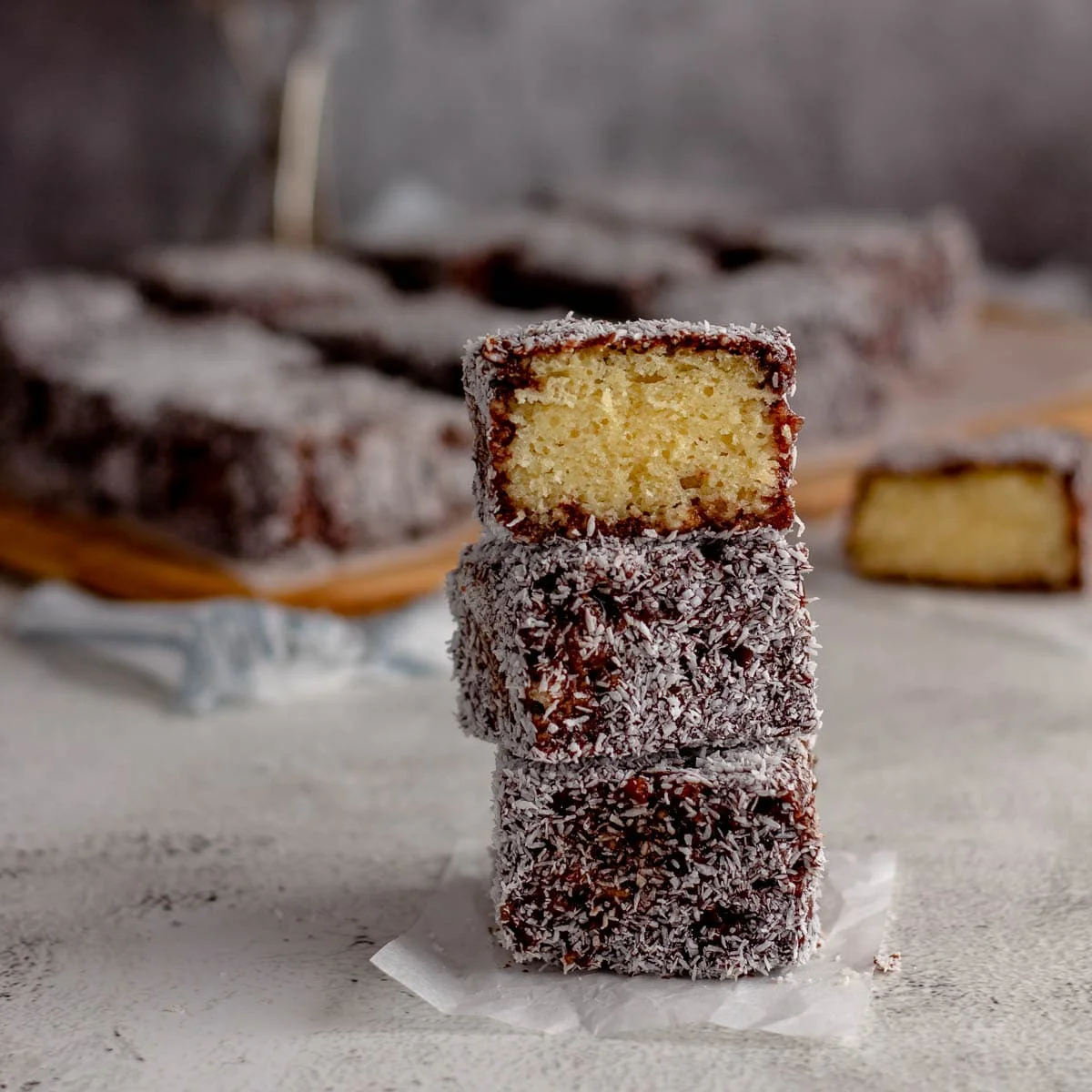
Lamingtons, also known as Ystervarkies, are cubes of soft vanilla sponge coated in chocolate icing and desiccated coconut. They take a little hands-on dipping, but make a classic Australian treat for sharing.
Ingredients
- 125 gbutter, softened
- 220 gwhite granulated sugar
- 2 largeeggs
- 225 gplain flour
- 3 tspbaking powder
- ½ tsptable salt
- 250 mlmilk
- 1 tspvanilla extract
- 500 gicing sugar, sifted or whisked to remove lumps
- 30 gunsweetened Dutch-process cocoa powder
- 15 gbutter
- 125 mlboiling water
- 160–240 g (2–3 cups)desiccated coconut
Instructions
- 1
Bring ingredients to room temperature
Let all the ingredients come to room temperature, which takes about 30 minutes.
- 2
Prepare the tin
Grease and line a 23 cm × 23 cm square tin or a 20 cm × 30 cm rectangular tin with baking paper.
- 3
Preheat the oven
Heat the oven to 180°C (355°F).
- 4
Cream butter and sugar
Beat the butter and sugar together until light and fluffy.
- 5
Add the eggs
Beat in the eggs one at a time, mixing until combined after each addition.
- 6
Mix the dry ingredients
Combine the flour, salt and baking powder in a bowl, mixing to distribute the baking powder.
- 7
Combine milk and vanilla
Stir the vanilla extract into the milk.
- 8
Add half the mixtures
Add half the flour mixture and half the milk mixture to the butter mixture. Mix just until combined.
- 9
Finish the batter
Add the remaining flour and milk mixtures and mix just until combined. If using a stand mixer, scrape down the bowl and fold the batter to incorporate any unmixed ingredients.
- 10
Bake the sponge
Transfer the batter to the prepared tin and bake for 30–35 minutes, or until a cake tester comes out clean.
- 11
Cool the cake
Leave the cake in the tin for 10–15 minutes, then transfer it to a wire rack to cool completely.
- 12
Chill the cake
Once cool, put the cake in the fridge or freezer for 20–30 minutes.
- 13
Cut into pieces
Cut the cake into 16 or more squares or fingers.
- 14
Mix the icing dry ingredients
Put the sifted icing sugar and cocoa powder in a mixing bowl.
- 15
Melt the butter
Put the butter in a cup or jug and pour the boiling water over it, letting the butter melt. Add the vanilla extract.
- 16
Make the chocolate icing
Pour the boiling water mixture into the icing sugar and mix until well combined. The icing will be runny.
- 17
Prepare the coconut
Pour some of the coconut onto a plate, adding more as needed.
- 18
Dip the sponge
Use two forks to lift a piece of cake and dip it into the icing, turning it to coat every side.
- 19
Drain excess icing
Lift the iced cake out and let the excess icing drip off.
- 20
Coat in coconut
Use the forks to lower the cake into the coconut and roll it until all sides are covered. Set it on a plate or back on the wire rack to let excess icing and coconut drip off.
- 21
Set the lamingtons
Once all the pieces are coated, chill them for 10–15 minutes to set.
What are lamingtons?
Lamingtons are Australian sponge cakes cut into portions, coated in chocolate icing and rolled in desiccated coconut. They are often called Ystervarkies as well, and are made to serve as individual, hand-held cakes.
This version uses a vanilla sponge and a loose icing that can coat each side before the coconut goes on. Chilling the cake before cutting and dipping helps it hold together during the coating process.
Nutrition and macros by portion
The nutrition label shows one serving as written: 460 calories, 4g protein, 74g carbs, 17g fat.
| Portion | Adjustment | kcal | Protein | Carbs | Fat |
|---|---|---|---|---|---|
| Lighter | Smaller lamingtons | 322 kcal | 3g | 52g | 12g |
| This serving | As written | 460 kcal | 4g | 74g | 17g |
| Hungry | Larger portion | 690 kcal | 6g | 111g | 26g |
The sponge's flour and sugar provide most of the carbohydrates, while butter contributes much of the fat; eggs and milk provide some protein. For a more balanced plate, enjoy a lamington alongside plain yoghurt or fresh fruit.
Build a light sponge
Butter and sugar: Cream them until light and fluffy to start the sponge with an even, airy base.
Eggs: Add them individually and beat until combined, rather than adding them all at once.
Flour and milk: Add these mixtures in two batches and stop mixing as soon as the batter comes together; overmixing can make the sponge less tender.
Why chill the cake?
A fully cooled sponge is less likely to break when you cut and lift it. The additional 20–30 minutes in the fridge or freezer firms it up further, making the pieces easier to dip.
Cut the cake into evenly sized pieces so they are manageable with forks and take a similar amount of time to coat.
Getting the icing right
Consistency: The recipe's icing is runny, which helps it cover the sponge. Let excess drip back off before moving each piece into the coconut.
Handling: Use two forks to lower and turn the cake without squeezing it. Work over the bowl so any excess icing falls back in.
Coating without a mess
Coconut: Start with some coconut on a plate and top it up as needed. Rolling the iced cake gently helps cover the sides without crushing the sponge.
Setting: Put each coated piece on a plate or rack, then chill all the lamingtons for 10–15 minutes once they are finished.
Serving and timing
The cake needs time to come to room temperature, cool completely and chill before coating, so allow for those pauses as well as the 30–35 minutes of baking. The full recipe takes about 75 minutes according to the listed total time.
Serve the lamingtons as a sweet snack or dessert. Their coconut coating makes them easy to pick up and share without cutting them at the table.
Recipe notes & tips
- Bring the ingredients to room temperature before mixing, as the method directs.
- Mix the batter only until the flour and milk are incorporated.
- Let the sponge cool completely before chilling and cutting it.
- Use two forks to turn each piece in the icing without pressing on the sponge.
- Add coconut to the plate in batches so you can top it up as you work.
- Allow the finished pieces to chill for 10–15 minutes before serving.
Variations
- Smaller pieces: Cut the sponge into more than 16 portions for bite-sized lamingtons.
- Larger pieces: Cut the sponge into fewer portions for more substantial squares.
- Extra coconut: Add more desiccated coconut to the plate as needed for coating.
- Cake fingers: Cut the sponge into fingers instead of squares for a different shape.
Common mistakes to avoid
- Warm sponge: It can be harder to handle; cool it completely, then chill it for 20–30 minutes before cutting.
- Overmixed batter: The sponge may turn less tender; stop mixing as soon as the ingredients come together.
- Uneven pieces: They can be awkward to coat consistently; cut the cake into similarly sized squares or fingers.
- Squeezing the cake: It can crumble during dipping; turn each piece gently with two forks.
- Skipping the final chill: The coating may not be set; refrigerate the finished lamingtons for 10–15 minutes.
How to store
Store the lamingtons in an airtight container in the fridge. Bring them out shortly before serving; the recipe does not specify a storage duration or reheating method.
Frequently asked questions
Can I make the sponge ahead?
Yes. Once it has cooled completely, keep it covered and chill it for 20–30 minutes before cutting and coating.
How do I know when the sponge is baked?
Bake it for 30–35 minutes and check that a cake tester comes out clean.
Why is the icing runny?
The recipe describes the icing as runny so it can coat the sponge pieces. Let the excess drip off before rolling each piece in coconut.
Can I cut the cake into more than 16 pieces?
Yes. The method allows for 16 or more squares or fingers; smaller pieces will need careful handling when dipped.
Do lamingtons need to be chilled after coating?
Yes. Chill them for 10–15 minutes after coating to let the icing set.
Cook it from the original
This recipe comes from saltyginger.com. Their page has the author’s own photos, notes and tips — the best place to cook it from.
Open the recipe on saltyginger.com