
Easy Pasta Puttanesca
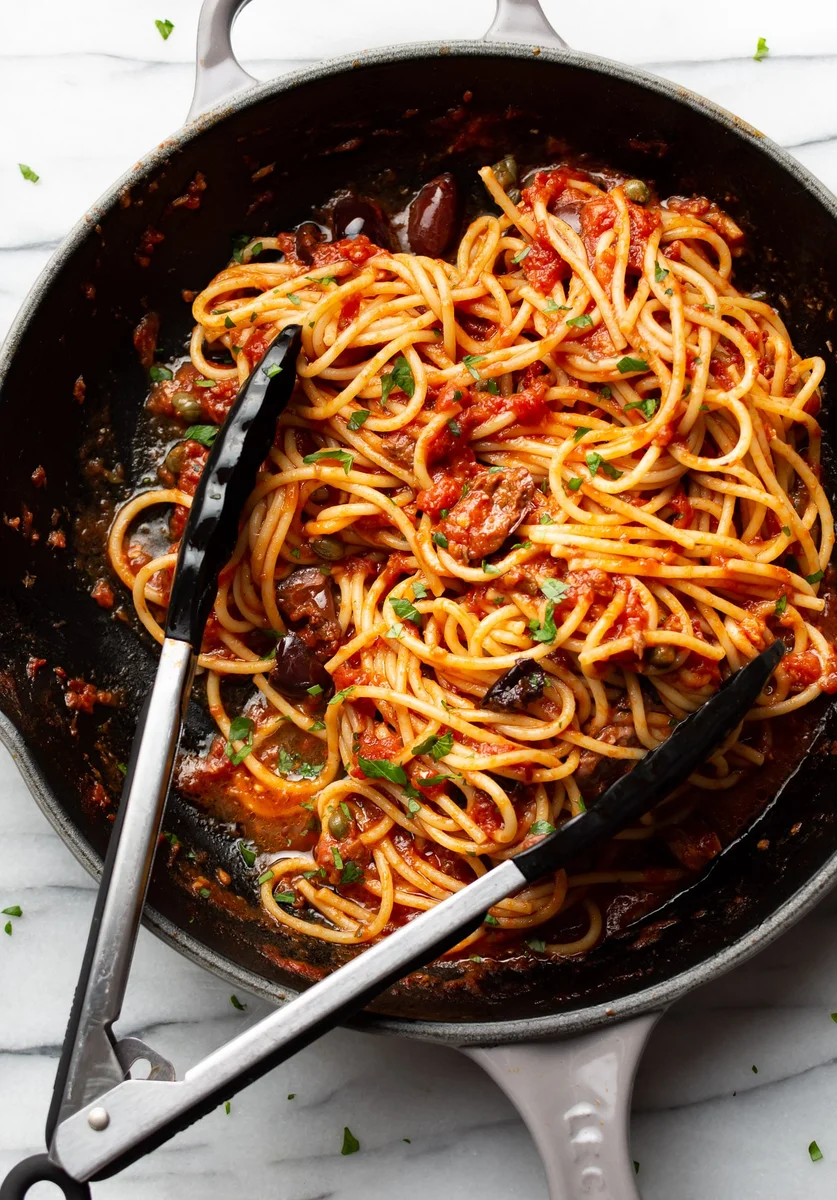
Pasta puttanesca is a quick Italian pasta dish with a punchy tomato sauce flavoured with garlic, anchovies, capers and olives. It makes a satisfying weeknight meal from a short list of pantry staples.
Ingredients
- 225 g (8 oz)uncooked pasta, such as spaghetti
- 794 g (28 oz)whole tinned tomatoes with their juice
- 60 ml (¼ cup)olive oil
- 6 clovesgarlic, minced
- 2.5 ml (½ teaspoon), or to tastecrushed red pepper flakes
- 4–5anchovy fillets, cut into small pieces
- 30–45 ml (2–3 tablespoons)capers, drained
- 75 g (½ cup)Kalamata olives, pitted and halved
- to tastesalt and pepper
- to taste, optionalfresh parsley, chopped
Instructions
- 1
Cook the pasta
Bring a large pan of salted water to the boil. Cook the pasta until al dente, following the packet directions.
- 2
Crush the tomatoes
While the pasta cooks, tip the tinned tomatoes and their juice into a bowl and crush them with your hands or a fork.
- 3
Cook the aromatics
Warm the olive oil in a frying pan over medium heat. Add the garlic, red pepper flakes and anchovies, and cook for 3–4 minutes, taking care not to burn the garlic.
- 4
Simmer the sauce
Stir in the crushed tomatoes, capers and olives. Lower the heat and simmer gently for 15–20 minutes, stirring now and then, until the sauce has thickened and the flavours have come together.
- 5
Toss and serve
Taste the sauce and add salt and pepper as needed. Drain the pasta and toss it with the sauce; if you like, reserve a splash of pasta water and stir it in before draining to loosen the sauce. Finish with parsley if desired.
What is pasta puttanesca?
Pasta puttanesca is an Italian pasta dish known for its savoury tomato sauce, with olives, capers, garlic and anchovies bringing a salty, briny edge. It is often associated with southern Italy, particularly Naples.
This version keeps the method simple: the sauce simmers while the pasta cooks, making it well suited to a weeknight meal. Whole tinned tomatoes give it a chunky base that can be crushed by hand.
Nutrition and macros by portion
The nutrition label shows one serving as written: 401 calories, 10g protein, 53g carbs, 17g fat.
| Portion | Adjustment | kcal | Protein | Carbs | Fat |
|---|---|---|---|---|---|
| Lighter | Less oil, more greens | 281 kcal | 7g | 37g | 12g |
| This serving | As written | 401 kcal | 10g | 53g | 17g |
| Hungry | Larger pasta portion | 602 kcal | 15g | 80g | 26g |
The pasta supplies most of the carbohydrates, while olive oil contributes much of the fat; the anchovies add some protein. Pair a serving with green vegetables or salad for a more varied plate.
Building the savoury sauce
Anchovies: they soften in the warm oil and add depth to the sauce rather than making it taste overtly fishy.
Capers and olives: these contribute sharp, salty notes. Drain the capers and halve the olives so they mix through the sauce.
Keep the garlic gentle
Garlic: cook it with the anchovies and oil for 3–4 minutes over medium heat. Watch the pan closely; burnt garlic can turn bitter and take over the sauce.
Chilli: the recipe allows for red pepper flakes to taste, so use less for a milder sauce or more for extra heat.
Let the sauce thicken
Tomatoes: crushing them before they go into the pan gives the sauce a varied, rustic texture. Simmer gently for 15–20 minutes, stirring occasionally.
Doneness: the sauce is ready when it has thickened and its flavours have melded. Keep the heat low enough for a gentle simmer rather than a rapid boil.
Get the pasta texture right
Al dente: cook the pasta according to the packet directions and check it near the end of the suggested time. It should be tender but still have a slight bite.
Pasta water: reserve a splash before draining if you want to loosen the sauce. Toss the pasta with the sauce while both are hot so it is evenly coated.
Plan the timing
Start the pasta water first, then crush the tomatoes and begin the sauce while the pasta cooks. The sauce's 15–20-minute simmer fits alongside the pasta preparation, though the pasta should be drained when it is al dente.
If the sauce finishes before the pasta, keep it over very low heat and stir it occasionally. Add a little pasta water when tossing if it has become thicker than you like.
What to serve alongside
A simple green salad or steamed green vegetables make a fresh contrast to the rich, salty sauce. Crusty bread is also useful for scooping up any sauce left on the plate.
The recipe is finished with parsley if desired; add it just before serving for a fresh herbal note.
Recipe notes & tips
- Use a large pan of well-salted water so the pasta has room to cook evenly.
- Crush the tomatoes in a bowl to keep their juices contained.
- Keep the garlic moving in the oil and take care not to let it brown too much.
- Taste the sauce before adding salt, as the anchovies, capers and olives are already salty.
- Save a splash of pasta water before draining if you may want to thin the sauce.
- Cook the pasta until al dente rather than letting it soften in the water.
Variations
- More chilli: increase the red pepper flakes for a hotter sauce.
- Milder sauce: leave out the red pepper flakes or use just a pinch.
- Extra parsley: add a little more chopped parsley for a fresher finish.
- Different pasta: use another pasta shape if you do not have spaghetti.
- Chunkier sauce: crush the tomatoes less thoroughly for larger pieces.
Common mistakes to avoid
- Burning the garlic: keep the heat at medium and watch it closely during the 3–4-minute cook.
- Over-salting the sauce: taste it first, because the anchovies, capers and olives bring plenty of saltiness.
- Boiling the sauce hard: lower the heat and keep it at a gentle simmer for 15–20 minutes.
- Overcooking the pasta: follow the packet directions and check for a slight bite.
- Draining all the pasta water: reserve a splash first if you want to loosen the sauce.
How to store
Refrigerate leftover pasta in an airtight container for up to 3 days. Reheat gently in a pan or microwave, adding a splash of water if the sauce has thickened; the pasta is best freshly cooked.
Frequently asked questions
Can I make the sauce less salty?
Use fewer capers or anchovies, and taste the sauce before adding any extra salt. You can also rinse the capers before using them.
Can I use a different pasta shape?
Yes. Use a pasta shape you have on hand and cook it al dente according to its packet directions.
How do I know when the sauce is ready?
After 15–20 minutes of gentle simmering, it should have thickened and the flavours should taste melded together.
Can I make the sauce ahead?
You can prepare the sauce ahead and refrigerate it in an airtight container. Reheat it gently, then cook and toss with freshly cooked pasta.
Do I have to add parsley?
No. Parsley is optional, so you can leave it out or add it as a fresh garnish if you have some.
What can I serve with puttanesca?
A green salad or green vegetables work well alongside it. Crusty bread is another option for serving with the sauce.
Cook it from the original
This recipe comes from saltandlavender.com. Their page has the author’s own photos, notes and tips — the best place to cook it from.
Open the recipe on saltandlavender.com