
Roast Pork Shoulder
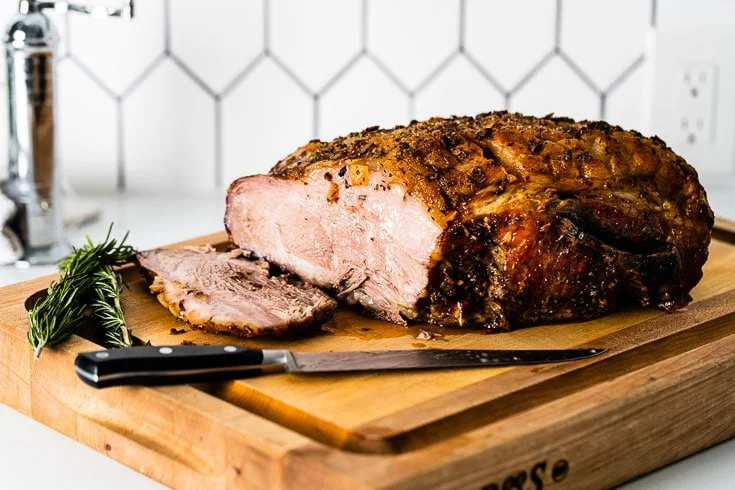
This American-style roast pork shoulder is coated with garlic, rosemary and thyme, then cooked slowly for tender meat and crisp, savoury crackling. It makes a generous centrepiece, with plenty left for later meals.
Ingredients
- 2.72–5.44 kg (6–12 lb; this shoulder is 5.26 kg/11.6 lb)bone-in pork shoulder
- 4garlic cloves, chopped
- 30 ml (2 tbsp)fresh rosemary, chopped
- 15 ml (1 tbsp)fresh thyme, chopped
- 15 ml (1 tbsp)olive oil
- 30 ml (2 tbsp)Diamond kosher salt
- 10 ml (2 tsp)sugar
- 10 ml (2 tsp)ground black pepper
Instructions
- 1
Mix the rub
Combine the rub ingredients in a small bowl, or use a mortar and pestle to work them into a paste.
- 2
Prepare the pork
Pat the pork shoulder dry with paper towels and trim away excess fat. With a very sharp knife, score the fat in a 1.3 cm crosshatch pattern, cutting through the fat but not into the meat.
- 3
Combine the herbs
Mix all the rub ingredients together in a small bowl to make the garlic and herb rub.
- 4
Coat the shoulder
Spread the rub evenly over the pork. For the best flavour, refrigerate it uncovered overnight or leave it to marinate at room temperature for a few hours.
- 5
Heat the oven
Preheat the oven to 135°C (275°F).
- 6
Roast the pork
Set the pork on a double layer of foil on a rimmed baking sheet or in a roasting pan, then place it in the oven. Alternatively, set it on a wire rack so air can circulate all around it.
- 7
Check the temperature
When the centre of the roast reaches 79°C (175°F), take it out of the oven. Check the temperature with an instant-read probe thermometer.
- 8
Rest the meat
Leave the roast uncovered to rest for at least 30 minutes. Its temperature will rise by a further 3–6°C (5–10°F).
- 9
Crisp the skin
For an optional extra sear, use this step if the skin is not crisp enough. After the 30-minute rest, heat the oven to 230°C (450°F), return the pork to the oven and rotate it about every 5 minutes so all sides sear. This takes 10–20 minutes in total, depending on your oven.
- 10
Slice and serve
Slice the pork against the grain or shred it, then serve warm.
What is roast pork shoulder?
Roast pork shoulder is a substantial cut cooked until the meat is tender enough to slice or shred. This American-style version uses a simple garlic-and-herb coating and a low oven to develop browned, crisp edges while the inside softens.
Shoulder is well suited to slow roasting because it has plenty of connective tissue and fat. Scoring the fat and roasting uncovered help the outside take on texture.
Nutrition and macros by portion
The nutrition label shows one serving as written: 133 calories, 16g protein, 1g carbs, 7g fat.
| Portion | Adjustment | kcal | Protein | Carbs | Fat |
|---|---|---|---|---|---|
| Lighter | Trim excess surface fat | 93 kcal | 11g | 1g | 5g |
| This serving | As written | 133 kcal | 16g | 1g | 7g |
| Hungry | Serve a larger portion | 200 kcal | 24g | 2g | 11g |
The pork supplies most of the protein and fat, while the small amount of sugar contributes to the carbohydrate count. Pair a serving with vegetables and a suitable portion of potatoes or another starchy side to round out the plate.
The garlic and herb coating
Garlic: Chopped cloves give the rub its savoury base and sit alongside the fresh herbs.
Rosemary and thyme: These aromatic herbs bring a woodsy, savoury flavour that suits rich pork.
Oil, salt, sugar and pepper: Oil helps the chopped ingredients cling to the meat, while salt and pepper season it. Sugar rounds out the rub and contributes to browning.
Scoring the fat
Dry the surface first so the knife can make clean cuts. Score a crosshatch about 1.3 cm wide, cutting through the fat layer without slicing into the flesh.
The cuts expose more of the fat surface to the oven. Take care not to cut too deeply, which can leave the meat exposed and less evenly protected as it roasts.
Slow roasting and doneness
Low heat: The recipe uses an oven at 135°C (275°F) and directs you to cook until the roast reaches 79°C (175°F) internally. Cooking time will vary with the size and shape of the shoulder, so use the thermometer rather than relying on the clock.
Resting: Leave the roast uncovered for at least 30 minutes before slicing or shredding. The temperature will continue to rise by about 3–6°C (5–10°F) during the rest.
Getting crisp crackling
A dry surface and scored fat give the oven a better chance to crisp the outside. If the skin is still not crisp enough after roasting and resting, the recipe offers a short sear at 230°C (450°F).
Turn the roast about every 5 minutes during the optional sear, and watch it closely. The stated 10–20 minutes is a guide because ovens differ.
How to serve it
Slice the meat against the grain for more tender-looking pieces, or shred it for a looser serving. Serve it warm as the main dish.
Roast potatoes or a simple vegetable side make a good match for the rich pork. Leftover meat can also be used in sandwiches or added to another meal.
Recipe notes & tips
- Use a sharp knife to score the fat without cutting into the meat.
- Pat the shoulder thoroughly dry before adding the rub.
- For deeper seasoning, leave the rubbed roast uncovered in the fridge overnight.
- Place a thermometer probe in the thickest part of the meat, away from the bone.
- Rest the pork uncovered so the surface does not steam under a cover.
- Rotate the roast regularly if you use the optional high-heat sear.
Variations
- Extra garlic: Add another chopped clove to the rub for a stronger garlic note.
- Herb swap: Use a different mix of fresh herbs while keeping the total amount similar.
- Peppery crust: Increase the black pepper slightly for a more pronounced bite.
- Shredded pork: Pull the rested meat apart with forks for a softer, looser serving.
- Crispier finish: Use the optional hot-oven sear, rotating the roast every few minutes.
Common mistakes to avoid
- Cutting into the meat: Score only through the fat so the flesh is not exposed.
- Skipping the thermometer: Check the centre reaches 79°C (175°F) rather than guessing from appearance.
- Covering during the rest: Rest the roast uncovered to avoid trapping steam around the crust.
- Slicing straight away: Allow at least 30 minutes for the juices to settle before cutting.
- Leaving the sear unattended: Rotate every 5 minutes and watch closely because the high heat can brown the outside quickly.
How to store
Refrigerate leftover pork in an airtight container within 2 hours and use within 3–4 days. Reheat portions until piping hot, or serve chilled in sandwiches.
Frequently asked questions
Can I prepare the pork the night before?
Yes. Apply the rub and refrigerate the shoulder uncovered overnight, as the method recommends.
How long should I roast the shoulder?
The method gives a doneness temperature rather than a roasting duration. Cook at 135°C (275°F) until the centre reaches 79°C (175°F), checking with an instant-read thermometer.
Can I skip the optional sear?
Yes. The sear is optional and is intended for a roast whose outside is not crisp enough after the initial cook.
Should I cover the pork while it rests?
No. Rest it uncovered for at least 30 minutes, as directed in the method.
Is it better to slice or shred the pork?
Either works. Slice against the grain for pieces, or shred the rested meat for a pulled texture.
Can I use a wire rack?
Yes. The recipe suggests setting the roast on a wire rack to allow air to circulate around it.
Cook it from the original
This recipe comes from saltpepperskillet.com. Their page has the author’s own photos, notes and tips — the best place to cook it from.
Open the recipe on saltpepperskillet.com