
Spaghetti alla puttanesca
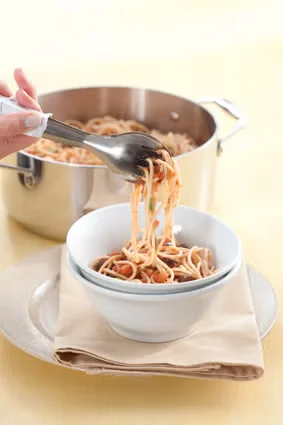
Spaghetti alla puttanesca pairs pasta with a punchy tomato sauce of anchovies, black olives, capers and basil. It makes a satisfying meal from pantry-friendly ingredients, with salty, savoury flavours balanced by fresh tomato.
Ingredients
- 30 ml (2 tablespoons)olive oil
- 3 clovesgarlic, crushed
- 1onion, chopped
- 500 gfresh tomatoes, peeled, deseeded and chopped
- 75 ml (5 tablespoons)anchovy fillets
- 240 ml (1 cup)large black olives, sliced
- 1 tinready-made tomato sauce
- 1 sachetMAGGI Seasoning and Flavour for Pasta and Sauces
- 15 ml (1 tablespoon)basil
- 45 ml (3 tablespoons)capers
- ½ packet (about 250 g if the packet is 500 g)spaghetti
- About 2 litres, plus salt to tastewater
Instructions
- 1
Soften the aromatics
Heat the olive oil in a pan. Add the garlic and onion and cook until the onion has softened.
- 2
Simmer the sauce
Add the fresh tomatoes and cook for about 5 minutes. Stir in the anchovies, olives, tomato sauce and MAGGI seasoning, then simmer for about 10 minutes to reduce and develop the flavour.
- 3
Finish the sauce
Take the pan off the heat and stir in the basil and capers. Keep the sauce warm.
- 4
Boil the water
Bring about 2 litres of salted water to the boil in a pan.
- 5
Cook the spaghetti
Cook the spaghetti until al dente. Drain it in a colander and serve with the sauce.
What is spaghetti alla puttanesca?
Spaghetti alla puttanesca is an Italian pasta dish known for a bold tomato sauce with olives, anchovies and capers. Its name and origin are associated with Naples, though the precise story behind the dish is disputed.
This version layers fresh tomatoes with ready-made tomato sauce, then adds savoury, briny ingredients for a sauce that clings well to spaghetti.
Nutrition and macros by portion
The nutrition label shows one serving as written: 403 calories, 15g protein, 62g carbs, 11g fat.
| Portion | Adjustment | kcal | Protein | Carbs | Fat |
|---|---|---|---|---|---|
| Lighter | Use less olive oil | 282 kcal | 11g | 43g | 8g |
| This serving | As written | 403 kcal | 15g | 62g | 11g |
| Hungry | Serve a larger portion | 605 kcal | 23g | 93g | 17g |
The spaghetti and tomatoes provide most of the carbohydrates, while olive oil contributes much of the fat. Anchovies add protein, with smaller contributions from the other ingredients. Pair a serving with a generous portion of greens or salad to round out the plate.
Building the sauce
Aromatics: gently cook the garlic and onion in olive oil until the onion softens. This starts the sauce with a mellow savoury base rather than a sharp raw-allium flavour.
Tomatoes: the fresh chopped tomatoes cook briefly before the ready-made sauce goes in. Simmering the combined sauce gives the ingredients time to meld.
Anchovies, olives and capers
Anchovies: stir them into the simmering sauce so they can disperse and season it throughout. Their savouriness helps give the tomato base depth.
Briny finish: olives join the sauce during simmering, while capers are added off the heat. That late addition keeps their tangy character distinct.
Getting the pasta right
Water: use about 2 litres and salt it before bringing it to the boil. Add the spaghetti once the water is boiling.
Doneness: cook until al dente, following the packet timing as a guide and tasting near the end. Drain promptly so the pasta does not keep softening in the hot water.
Bringing pasta and sauce together
The method serves the drained spaghetti with the warm sauce. Tossing them together just before serving helps coat the strands evenly.
If the sauce has cooled while the pasta cooks, warm it gently before serving; avoid boiling it hard after adding the basil and capers.
What to serve alongside
A simple green salad or steamed greens make a fresh contrast to the salty, concentrated sauce. Crusty bread is useful for any sauce left in the bowl.
The dish is already rich in savoury flavours, so a lightly dressed side is usually a better match than another heavily seasoned component.
Recipe notes & tips
- Chop the onion and tomatoes before heating the oil so the sauce can be assembled without pauses.
- Keep the heat moderate while softening the garlic to prevent it from browning too quickly.
- Taste the sauce before adding any extra salt, as anchovies, olives, capers and seasoning can all be salty.
- Use the spaghetti packet instructions as a timing guide, but taste a strand to judge doneness.
- Drain the pasta when it is still al dente, rather than leaving it in the colander to soften.
- Add the basil and capers after taking the sauce off the heat, as directed.
Variations
- Add chilli: stir in a little dried chilli while cooking the garlic and onion for a hotter sauce.
- Use fresh herbs: replace the basil with chopped parsley for a different fresh finish.
- Try another pasta shape: use another long pasta if spaghetti is unavailable.
- Add extra vegetables: serve with cooked greens on the side for a more substantial plate.
- Adjust the brininess: use fewer capers or olives if you prefer a milder, less salty sauce.
Common mistakes to avoid
- Burning the garlic: cook it gently with the onion and remove the pan from the heat if it starts to colour too quickly.
- Overcooking the sauce: keep to the stated simmer of about 10 minutes after adding the sauce ingredients.
- Adding extra salt too soon: taste first, because the anchovies, olives and capers season the sauce.
- Overcooking the spaghetti: check it near the end of the packet timing and drain as soon as it is al dente.
- Letting the sauce cool: keep it warm while the pasta cooks, as the method directs.
How to store
Refrigerate leftover sauce and pasta separately in covered containers for up to 3 days. Reheat the sauce gently in a pan and warm the pasta with a splash of water, or combine them in the pan until hot.
Frequently asked questions
Can I make the sauce ahead?
Yes. Make the sauce ahead and refrigerate it in a covered container, then reheat it gently while the spaghetti cooks. Stir in the basil and capers at the end.
How do I know when the spaghetti is al dente?
Taste a strand near the end of the packet's suggested cooking time. It should be tender but still have a slight firmness at the centre.
Should I rinse the spaghetti after draining?
No. Drain it and serve it with the sauce without rinsing; rinsing can wash away the starchy surface that helps sauce cling.
Can I use tinned tomatoes instead of fresh?
The recipe specifies peeled, deseeded fresh tomatoes. Tinned tomatoes can be used as a practical substitute, though the sauce's texture and flavour may differ.
Is this dish very salty?
Anchovies, olives, capers and the seasoning sachet all contribute saltiness. Taste the sauce before adding any extra salt.
Cook it from the original
This recipe comes from receitasnestle.com.br. Their page has the author’s own photos, notes and tips — the best place to cook it from.
Open the recipe on receitasnestle.com.br