
Simple Date Scone Recipe
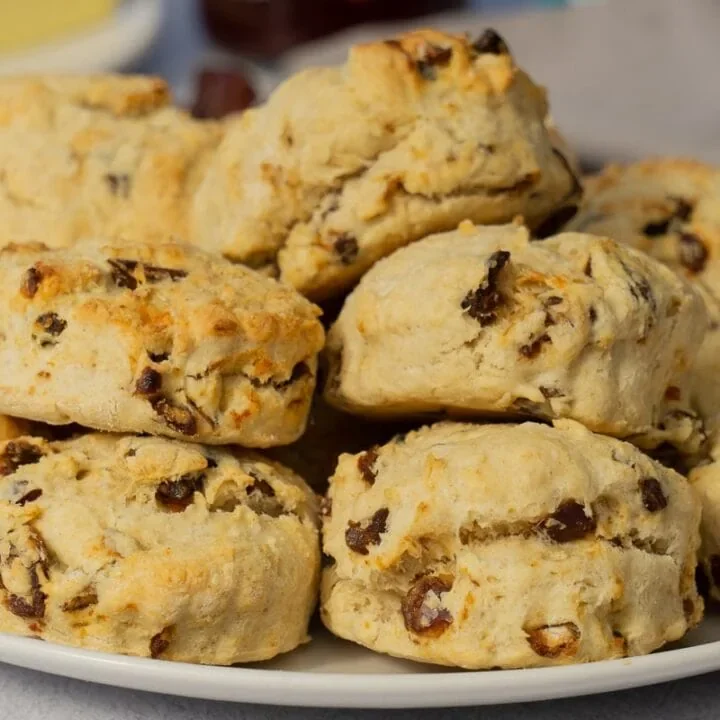
These Scottish date scones swap the usual sultanas for chopped dates, bringing a sweet, caramel-like flavour and a slightly sticky bite. They are quick to make and are lovely warm from the oven, with or without butter.
Ingredients
- 500 g (4 cups)self-raising flour
- 4 tspbaking powder
- 100 g (¼ cup)cold butter, cubed
- 350 ml (1½ cups)milk
- 175 g (1 cup)chopped dates
- 1 tspcinnamon (optional)
Instructions
- 1
Heat the oven
Preheat the oven to 180°C fan or 200°C conventional.
- 2
Sift dry ingredients
Sift the flour and baking powder into a large bowl.
- 3
Rub in butter
Rub the cold butter into the flour with your fingertips until the mixture resembles breadcrumbs. Alternatively, start with a pastry cutter and finish with your fingertips once the butter is cut through and the mixture resembles large breadcrumbs.
- 4
Add dates
Stir in the chopped dates and, if using, the cinnamon. Alternatively, combine the dates with the flour and butter mixture in a food processor for smaller date pieces spread through the scones.
- 5
Mix in milk
Make a well in the centre and add the milk. Use a butter knife to bring the mixture together as far as possible.
- 6
Shape the dough
Turn the mixture onto a lightly floured surface and use your fingertips to finish bringing it together into a dough. Gently press it out to about 2.5–5 cm thick, depending on how large you want the scones.
- 7
Cut the scones
Cut circles from the dough with a scone cutter or a glass dipped in flour.
- 8
Arrange on tray
Set the scones evenly spaced on a baking tray lined with baking paper or lightly floured. Brush the tops with milk if you like.
- 9
Bake until done
Bake for approximately 12–15 minutes, until a scone sounds hollow when tapped on the bottom.
- 10
Cool or serve
Transfer the scones to a wire rack to cool, or serve them warm with butter.
What are date scones?
Scones are a familiar feature of British baking, and this Scottish-style version gives the classic fruit scone a different character by using dates instead of sultanas. Dates bring a richer, caramel-like sweetness and can make the crumb a little sticky.
Here, a simple flour-and-butter base keeps the method approachable. The dates provide the main flavour, while optional cinnamon adds a gentle warmth.
Nutrition and macros by portion
The nutrition label shows one serving as written: 199 calories, 4g protein, 33g carbs, 6g fat.
| Portion | Adjustment | kcal | Protein | Carbs | Fat |
|---|---|---|---|---|---|
| Lighter | Smaller scone portions | 139 kcal | 3g | 23g | 4g |
| This serving | As written | 199 kcal | 4g | 33g | 6g |
| Hungry | Larger scone portion | 299 kcal | 6g | 50g | 9g |
The flour supplies most of the carbohydrates, while butter contributes much of the fat and milk adds some protein alongside the flour. Pair a scone with fruit or yoghurt for a more balanced plate.
The flour and butter base
Self-raising flour and baking powder: sifting them together distributes the raising agent through the flour before the butter is added.
Cold butter: rubbing it into the flour creates the breadcrumb-like mixture that forms the scones' base. Work with your fingertips, or begin with a pastry cutter and finish by hand.
Dates and cinnamon
Chopped dates: stir them through the flour mixture so the pieces are spread across the dough. A food processor makes the date pieces smaller and distributes them more finely.
Cinnamon: this is optional, so leave it out if you want the date flavour to stand on its own.
Bring the dough together gently
Milk: make a well in the dry mixture and use a butter knife to bring it together before turning it out. Finish mixing with your fingertips rather than working the dough more than needed.
Thickness: press the dough to about 2.5–5 cm. A thicker round makes larger scones; a thinner one gives smaller rounds.
Cut and bake
Floured cutter: dipping the cutter or glass in flour helps it pass through the dough. Cut the circles and place them evenly spaced on the prepared tray.
Doneness: bake for approximately 12–15 minutes and use the hollow sound when tapped on the bottom as the recipe's cue. The tops can be brushed with milk before baking if desired.
Serving and timing
These scones take 27 minutes in total, so they work well for a quick bake to serve warm. Let them cool on a wire rack if you want to eat them later.
Butter is the suggested accompaniment. They can also be served plain, with tea or as part of a simple afternoon spread.
Recipe notes & tips
- Keep the butter cold so it rubs into the flour without melting.
- Use your fingertips lightly when rubbing in the butter.
- Dip the cutter or glass in flour before cutting each round.
- Leave space between the scones on the baking tray.
- Brush the tops with milk if you want to use the optional finish.
- Check the scones at 12 minutes and listen for the hollow sound when tapped underneath.
Variations
- Skip the cinnamon: leave it out for a simpler date-led flavour.
- Use finer date pieces: pulse the dates with the flour and butter mixture in a food processor.
- Make smaller rounds: press the dough thinner before cutting.
- Serve with butter: split a warm scone and add butter to taste.
Common mistakes to avoid
- Warm butter: it can blend too thoroughly into the flour; start with cold, cubed butter.
- Overworking the dough: it can become less tender; finish mixing gently with your fingertips.
- Uneven thickness: the scones may bake at different rates; press the dough to an even thickness.
- Unfloured cutter: the dough may stick; dip the cutter or glass in flour before cutting.
- Guessing doneness by colour alone: use the recipe's hollow-sounding tap on the bottom as the cue.
How to store
Cool the scones completely, then store them in an airtight container at room temperature and eat within 2 days. Warm them briefly in a low oven or microwave until heated through.
Frequently asked questions
Can I leave out the cinnamon?
Yes. Cinnamon is optional, and the scones will still have their sweet date flavour without it.
Can I use a food processor?
Yes. The recipe suggests using one to mix the dates into the flour and butter mixture; this gives smaller date pieces spread throughout the scones.
How thick should I make the dough?
Press it to about 2.5–5 cm thick. The chosen thickness affects how large the cut scones will be.
How do I know when the scones are baked?
Bake for approximately 12–15 minutes, then tap the bottom of a scone. It should sound hollow.
Do I have to brush the tops with milk?
No, it is optional. The recipe also works without this finish.
Can I serve these scones warm?
Yes. They can be served warm with butter, or cooled on a wire rack first.
Cook it from the original
This recipe comes from scottishscran.com. Their page has the author’s own photos, notes and tips — the best place to cook it from.
Open the recipe on scottishscran.com