
Lao Blackened Rice Cake
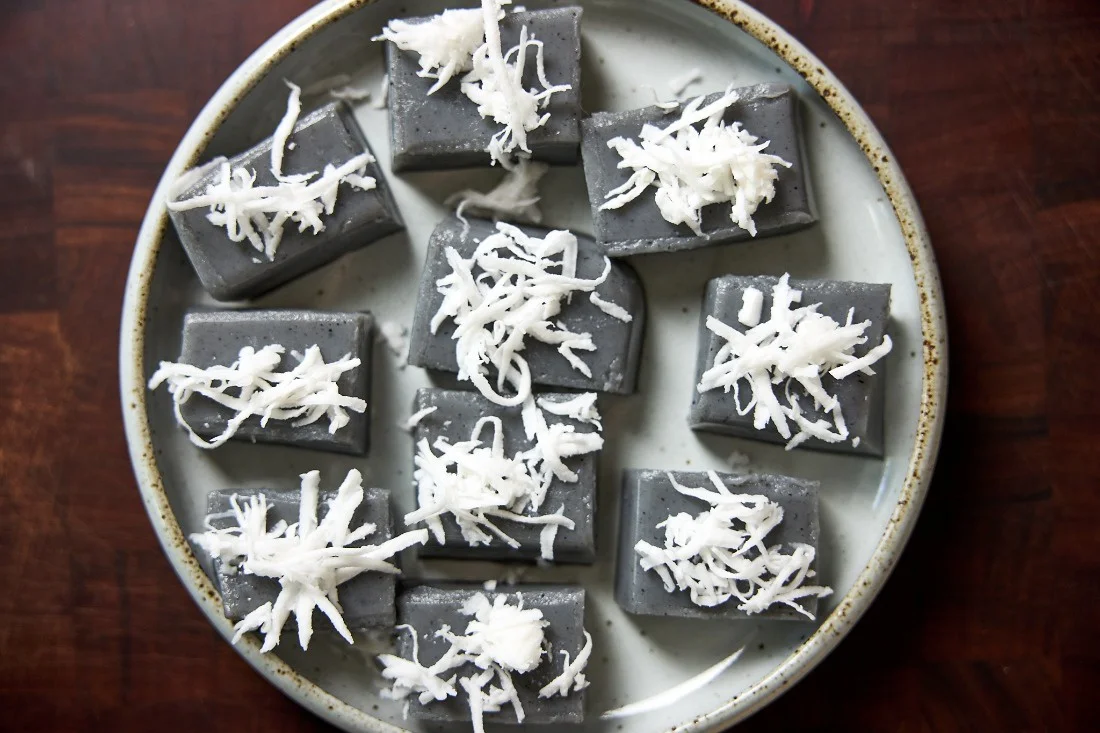
Khanom piek boun is a Lao rice cake with a distinctive charcoal-black colour, a gently smoky note and a soft, set texture. Coconut milk and a fresh coconut topping bring sweetness and a creamy, fragrant finish.
Ingredients
- 7.5 ml (1/2 tablespoon)white limestone
- 1.2 litres (5 cups), dividedwater
- 20 ml (4 teaspoons)burnt coconut husk charcoal powder
- 360 ml (1 1/2 cups)coconut milk
- 60 g (1/2 cup)tapioca flour
- 80 g (1/2 cup)jasmine rice flour
- 64 g (1/2 cup)cornflour
- 2.5 ml (1/2 teaspoon)salt
- 100 g (1/2 cup)sugar
- To garnishfresh coconut meat, grated
Instructions
- 1
Prepare lime water
Crush the limestone in a large bowl, adding a little water to help dissolve it. Add the remaining water and leave the mixture for 1½ hours. Carefully pour the clear liquid into another bowl, keeping the sediment behind.
- 2
Char the husk
Remove the husk from a coconut and put it in a fire-safe bowl. Set it alight and let it burn completely to charcoal. Once cool, crush it into a fine powder.
- 3
Blend the liquid
Blend 4 cups of the lime water with the charcoal powder until combined. Strain it through a sieve into a large bowl, add the coconut milk and whisk until smooth.
- 4
Mix the flours
In a separate large bowl, whisk together the tapioca flour, jasmine rice flour, cornflour, salt and sugar. Pour in the blackened lime-and-coconut mixture and stir until evenly combined.
- 5
Cook and set
Transfer the mixture to a large non-stick pot and cook over high heat, stirring constantly for 20 minutes, until smooth. Pour it into a cake tin and leave to set for about an hour.
- 6
Cut and serve
When firm, cut the cake into 2-inch cubes. Garnish with freshly grated coconut meat and serve.
What is khanom piek boun?
Khanom piek boun is a Lao sweet made from a flour mixture cooked until thick, then left to set into a soft, jelly-like cake. Its dark appearance comes from coconut husk burned to charcoal, a striking contrast to the coconut-rich flavour.
This version combines tapioca flour, jasmine rice flour and cornflour for a tender, cohesive set. Coconut milk lends richness, while grated fresh coconut adds a cool, lightly textured finish.
Nutrition and macros by portion
The nutrition label shows one serving as written: 300 calories, 2g protein, 53g carbs, 11g fat.
| Portion | Adjustment | kcal | Protein | Carbs | Fat |
|---|---|---|---|---|---|
| Lighter | Smaller cake portion | 210 kcal | 1g | 37g | 8g |
| This serving | As written | 300 kcal | 2g | 53g | 11g |
| Hungry | Larger cake portion | 450 kcal | 3g | 80g | 17g |
Most of the carbohydrates come from the sugar and the tapioca, rice and corn flours; coconut milk supplies much of the fat, with a smaller contribution from the grated coconut topping. The flours and coconut milk contribute a little protein. For a more balanced serving, pair a modest piece with fresh fruit or serve it after a meal that includes a protein-rich dish.
The charcoal and lime water
Slaked lime water: Leave the crushed limestone to settle for the full 1½ hours, then use only the clear liquid. Avoid disturbing the sediment when you pour it off.
Charcoal: The husk needs to burn completely and cool before crushing. Blend the fine powder into the measured lime water, then strain out any coarse pieces for a smoother mixture.
Why use three flours?
Tapioca flour: It helps give the cake its characteristic springy, jelly-like texture. Jasmine rice flour and cornflour round out the blend and help the cooked mixture hold together.
Even mixing: Whisk the dry ingredients together before adding the black liquid. This distributes the salt and sugar and helps prevent pockets of flour in the batter.
Stirring to the right texture
Constant movement: Stir the mixture continuously over high heat for the full 20 minutes, scraping across the base and into the corners of the pot. This helps it cook evenly and reduces the chance of sticking.
Doneness: The mixture should look smooth when it is ready to pour into the tin. It firms up as it rests, so allow about an hour for setting before cutting.
Cutting and serving
Clean cubes: Let the cake become firm before cutting it into 2-inch pieces. A sharp knife makes neater edges through the set mixture.
Fresh topping: Add the grated coconut just before serving for a fresh contrast to the dense, sweet cake. Serve the pieces on their own or as part of a selection of desserts.
Planning the timing
The lime water needs 1½ hours to settle, and the cake then takes about an hour to set. The recipe lists 110 minutes total, so allow additional time if you are preparing the lime water from the beginning.
Recipe notes & tips
- Use a fire-safe bowl and let the charcoal cool completely before crushing it.
- Pour off the clear lime water slowly so the settled limestone stays in the bowl.
- Strain the charcoal mixture to catch any coarse husk fragments.
- Keep the mixture moving as it cooks, scraping the bottom of the pot.
- Wait until the cake is firm before cutting it into cubes.
- Add the grated coconut shortly before serving for the freshest texture.
Variations
- Coconut topping: Use finely grated fresh coconut for a delicate finish.
- Smokier note: Make sure the husk burns fully to charcoal before grinding it.
- Smaller bites: Cut the set cake into bite-sized pieces for a dessert platter.
- Chilled serving: Refrigerate the cake after it sets for a firmer, cool texture.
- Less topping: Use a light sprinkle of grated coconut to keep the charcoal cake in focus.
Common mistakes to avoid
- Using the sediment: Pour only the clear lime water into the next bowl and leave the settled material behind.
- Coarse charcoal: Crush the cooled husk finely and strain the blended liquid before adding the coconut milk.
- Lumpy batter: Whisk the flours, salt and sugar together before pouring in the liquid.
- Leaving the pot unstirred: Stir continuously over high heat for the full 20 minutes to prevent sticking.
- Cutting too soon: Give the cake about an hour to set and check that it is firm before slicing.
- Adding coconut early: Garnish just before serving so the fresh topping keeps its texture.
How to store
Cover and refrigerate leftover cake for up to 3 days. Serve chilled or let it soften briefly at room temperature; the set texture is best enjoyed without reheating.
Frequently asked questions
Can I use ready-made charcoal powder?
The recipe calls for 4 teaspoons of charcoal powder made from burnt coconut husk. Use coconut-husk charcoal powder if available, and strain it into the liquid as directed.
Why does the lime water need to settle?
The settling time allows the limestone sediment to fall to the bottom. Only the clear liquid is used in the cake mixture.
How do I know when the mixture has cooked enough?
Cook it over high heat, stirring constantly for 20 minutes, until the mixture is smooth. It will continue to firm as it cools and sets.
How long should the cake take to set?
Leave it in the cake tin for about an hour, as directed. Make sure it feels firm before cutting it into cubes.
Can I make the cake ahead?
Yes. Let it set, cover it and refrigerate it, then add the freshly grated coconut when you are ready to serve.
What should I serve with it?
Serve the cubes with the grated fresh coconut specified in the recipe. Fresh fruit can also make a simple accompaniment.
Cook it from the original
This recipe comes from saengskitchen.com. Their page has the author’s own photos, notes and tips — the best place to cook it from.
Open the recipe on saengskitchen.com