
Pastel with api
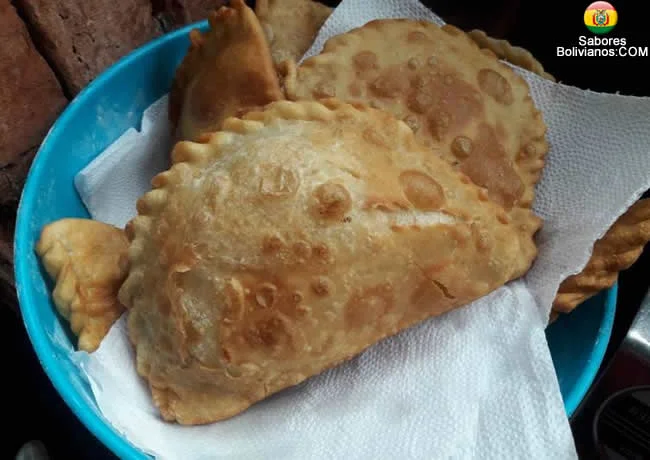
This Bolivian-style pastel is a simple, folded pastry filled with cheese and fried in hot oil. It is a practical choice when you want a crisp-edged snack made from a short list of ingredients.
Ingredients
- 500 g (4 cups)flour
- 56 g (4 tablespoons)softened margarine
- 13 g (1 tablespoon)sugar
- 4 g (¼ tablespoon)salt
- as neededwarm water
- as neededoil
- as neededgrated cheese, in large pieces
Instructions
- 1
Make a well
Put the flour on your work surface and shape it into a mound with a well in the centre.
- 2
Add seasonings
Place the softened margarine, salt and sugar in the centre of the flour.
- 3
Bring together
Add warm water and use your hands to bring everything together into an even dough.
- 4
Roll and fill
Roll the dough out with a rolling pin, then place the cheese on one side.
- 5
Seal the edge
Fold the dough over the filling and crimp the edge as you would for an empanada, sealing in the cheese.
- 6
Fry the pastel
Place the pastry in a frying pan with hot oil.
What is a Bolivian pastel?
Here, pastel refers to a folded pastry filled with cheese and cooked in hot oil. The recipe is presented as Bolivian food, though it does not give a more specific regional origin.
The dough uses flour, margarine and a little sugar and salt, while the folded, crimped edge helps keep the filling inside as it cooks.
Nutrition and macros by portion
The nutrition label shows one serving as written: 215 calories, 0g protein, 0g carbs, 0g fat.
| Portion | Adjustment | kcal | Protein | Carbs | Fat |
|---|---|---|---|---|---|
| Lighter | Use less frying oil | 151 kcal | 0g | 0g | 0g |
| This serving | As written | 215 kcal | 0g | 0g | 0g |
| Hungry | Serve an extra pastel | 323 kcal | 0g | 0g | 0g |
The flour supplies most of the carbohydrates, while the margarine and frying oil contribute much of the fat; the cheese contributes protein and some fat. Serve a pastel with vegetables or salad for a more balanced plate.
The dough and filling
Dough: add the warm water gradually, bringing the flour and margarine together by hand until the mixture forms an even dough.
Cheese: the recipe gives no quantity, so use enough to fill the pastry without making it difficult to fold and seal.
Rolling and sealing
Roll the dough with a rolling pin before adding the cheese to one side. Folding it over gives the pastel its half-moon shape.
Crimp the edge firmly, following the empanada-style seal described in the method. A secure seam is important because the cheese can escape during frying.
Frying in hot oil
The method calls for hot oil in a frying pan but does not specify an oil temperature or frying time. Keep the pastry supported as you transfer it to the pan.
Watch the pastry as it cooks and remove it when it is cooked through and browned to your liking; the recipe does not give a more precise doneness cue.
Plan the 45 minutes
The stated total time is 45 minutes. The recipe does not divide that time between making the dough, filling the pasteles and frying them.
Have the cheese ready before rolling the dough so you can fill and seal each piece without leaving the dough exposed for long.
Serving ideas
Serve the pasteles soon after frying, while the pastry is at its freshest. The title mentions api, but the recipe does not provide instructions or ingredients for making it.
For a fuller plate, pair a pastel with a fresh salad or vegetables; these are serving suggestions rather than ingredients in the original recipe.
Recipe notes & tips
- Soften the margarine before mixing it into the flour.
- Add warm water gradually so you can bring the dough together without making it overly wet.
- Roll the dough evenly so the folded pastry cooks consistently.
- Keep the cheese away from the edge to leave room for a firm seal.
- Crimp the entire edge carefully to help prevent cheese escaping into the oil.
- Use care when placing the pastry into the hot oil.
Variations
- Cheese choice: use a cheese that can be grated or broken into pieces for the filling.
- Smaller pasteles: divide the dough into smaller portions and adjust the amount of filling to suit.
- Api accompaniment: serve with api if you have a separate recipe for the drink.
- Fresh side: add a simple salad alongside the fried pastry.
- Savoury dough: omit the sugar for a less sweet dough.
Common mistakes to avoid
- Adding too much water: the dough can become difficult to handle, so add it gradually.
- Overfilling: excess cheese makes the pastry harder to close; use a manageable amount.
- Leaving gaps in the seam: crimp the full edge so the filling is less likely to escape.
- Using dough that is too thick: roll it out before filling so it can fold around the cheese.
- Crowding the pan: leave room to handle each pastel safely in the hot oil.
How to store
For the best texture, eat the pasteles soon after frying. If you have leftovers, refrigerate them in a covered container and reheat in a pan or oven until hot; the pastry may soften during storage.
Frequently asked questions
What does “uslero” mean?
It means a rolling pin, used here to roll out the dough.
What is a repulgue or simba?
It is the crimped edge used to seal the folded pastry, similar to the edge of an empanada.
How much cheese should I use?
The recipe does not give a quantity. Add enough to fill each pastry while leaving room to seal the edges securely.
How long should I fry the pasteles?
No frying time is specified. Watch them as they cook and remove them when the pastry is cooked through and browned to your liking.
Is api included in this recipe?
No api ingredients or preparation steps are provided, despite the title. The method covers only the cheese-filled pastry.
Cook it from the original
This recipe comes from saboresbolivianos.com. Their page has the author’s own photos, notes and tips — the best place to cook it from.
Open the recipe on saboresbolivianos.com