
Spaghetti with tomato and meat sauce
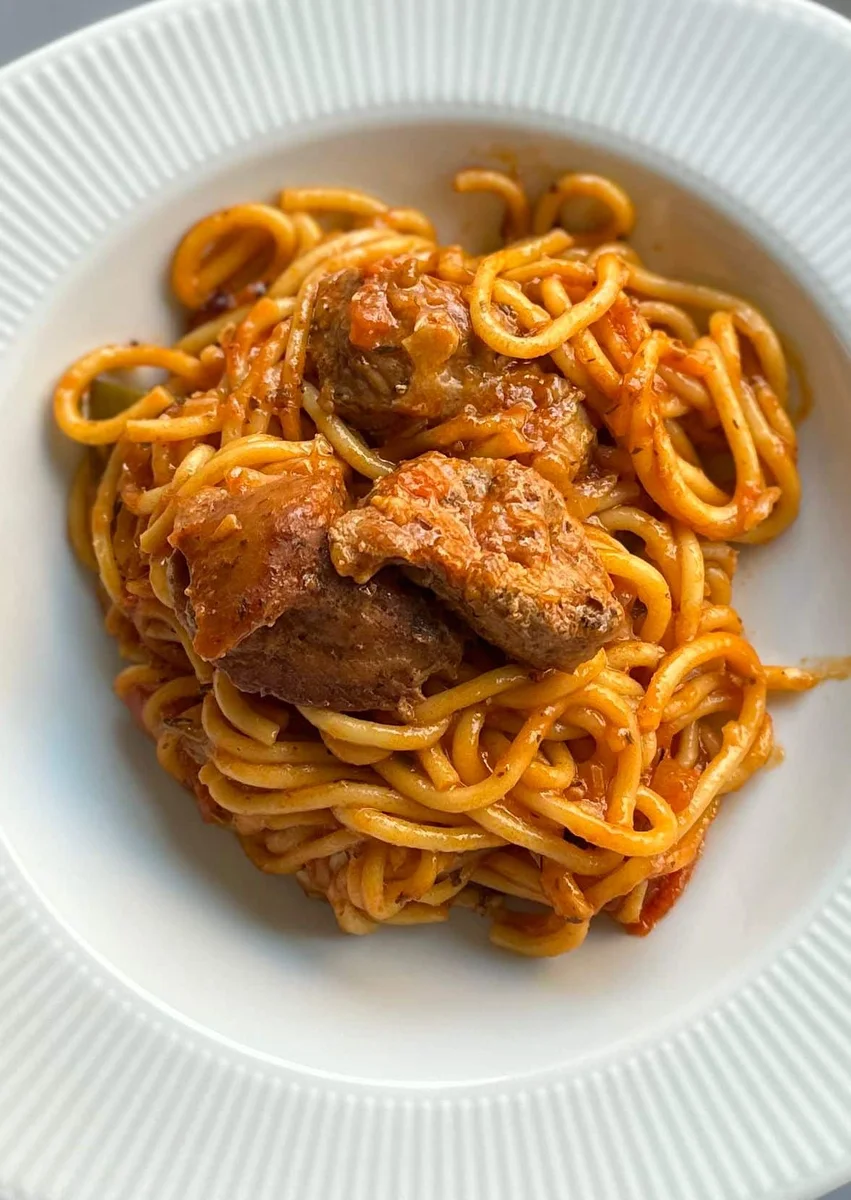
Spaghetti with tomato and meat sauce is a comforting Italian-style pasta dish with tender meat in a rich, tomatoey sauce. It makes a satisfying shared meal from straightforward ingredients and is ready in about 45 minutes.
Ingredients
- 400 gspaghetti
- 300–400 gbeef or lamb, cut into pieces
- 1onion, finely sliced
- 2 clovesgarlic
- 2–3fresh tomatoes, or 200 ml tomato passata
- 1 tablespoontomato purée
- 1stock cube
- To tastesalt, pepper, paprika and thyme
- As neededoil for cooking
Instructions
- 1
Brown the meat
Heat a little oil in a saucepan and add the meat, sliced onion, garlic, salt, pepper and a little paprika. Cook gently for 5–10 minutes.
- 2
Simmer the sauce
Blend the fresh tomatoes, if using, then add them and the tomato purée to the meat. Cover with water and simmer until the meat is tender and the sauce is smooth and thick.
- 3
Cook the spaghetti
Meanwhile, cook the spaghetti in a large pan of salted water according to the packet instructions. Drain and set aside.
- 4
Combine and finish
Add the spaghetti to the sauce and mix well so it is coated. Simmer over a low heat for 2–3 minutes to bring the flavours together.
What is spaghetti with tomato and meat sauce?
This is a home-style Italian-inspired pasta dish: spaghetti is coated in tomato sauce simmered with pieces of beef or lamb. Tomato-based pasta sauces are a familiar part of Italian cooking, while recipes and meat choices vary from kitchen to kitchen.
Here, browning the meat with onion and garlic builds a savoury base, and simmering the tomatoes with it gives the sauce time to soften and thicken. Tossing the pasta in the sauce at the end helps every strand pick up its flavour.
Nutrition and macros by portion
The nutrition label shows one serving as written: 600 calories, 34g protein, 80g carbs, 17g fat.
| Portion | Adjustment | kcal | Protein | Carbs | Fat |
|---|---|---|---|---|---|
| Lighter | Use lean beef, less oil | 420 kcal | 24g | 56g | 12g |
| This serving | As written | 600 kcal | 34g | 80g | 17g |
| Hungry | Add more spaghetti | 900 kcal | 51g | 120g | 26g |
The spaghetti supplies most of the carbohydrates, while the meat contributes much of the protein and fat; oil adds further fat. Serve with a generous portion of salad or vegetables alongside to round out the plate.
Choosing the meat and tomatoes
Meat: Beef gives the sauce a classic savoury flavour, while lamb makes it richer and more distinctive. Cut the pieces to a similar size so they cook evenly.
Tomatoes: Use fresh tomatoes blended smooth or the stated 200 ml of passata. Tomato purée adds concentrated flavour, so stir it into the meat and tomatoes rather than leaving it in a lump.
Building flavour in the pan
A little oil is enough to start the meat, onion and garlic cooking; avoid letting the garlic scorch, as it can taste bitter. The paprika adds warmth, while salt and pepper season the meat from the beginning.
The stock cube is listed among the ingredients, though the method does not specify when to add it. Crumble it into the sauce with the tomatoes, then taste before adding more salt, since stock cubes can be salty.
Getting tender meat and a smooth sauce
Low heat: Let the meat simmer gently rather than boil hard. The method gives no exact simmering time after adding water, so use tenderness as your guide.
Sauce texture: Add enough water to cover the meat, as directed, and let the liquid reduce until the sauce looks smooth and coats a spoon. If it thickens too much before the meat is tender, add a little water.
Cooking the spaghetti
Pasta water: Use a large pan of well-salted water and follow the packet timing for the spaghetti. Drain it once cooked, keeping in mind that it will spend another 2–3 minutes in the sauce.
Thyme: It is included in the ingredient list but not specified in the method. Add a little to the sauce while it simmers if you want its herbal flavour in the finished dish.
Serving the finished dish
Mix the drained spaghetti thoroughly into the sauce so it is evenly coated, then give it the brief final simmer. Serve straight away while the pasta is hot and the sauce is clinging to it.
A crisp green salad or simply cooked vegetables make a fresh contrast to the rich sauce. Pass extra black pepper at the table if desired.
Recipe notes & tips
- Cut the meat into evenly sized pieces to help it cook at a similar rate.
- Keep the heat low while the meat simmers so the sauce reduces gently.
- Blend fresh tomatoes before adding them to the pan for a smoother sauce.
- Taste the sauce before adding extra salt, especially if using a stock cube.
- Drain the spaghetti well before mixing it through the sauce.
- Have the pasta ready to combine as soon as the sauce is tender and thick.
Variations
- Use lamb: Choose lamb instead of beef for a deeper, richer flavour.
- Add vegetables: Stir diced carrot or courgette into the pan with the onion.
- Bring the heat: Add a pinch of chilli flakes with the paprika.
- Use passata: Replace the fresh tomatoes with the specified 200 ml of passata.
- Finish with herbs: Add a little extra thyme while the sauce simmers.
Common mistakes to avoid
- Boiling the sauce hard: A rolling boil can make it reduce unevenly; keep it at a gentle simmer.
- Adding too much water: The sauce can turn thin; add only enough to cover the meat, then let it reduce.
- Scorching the garlic: It can become bitter; cook it gently with the onion and meat.
- Overcooking the spaghetti: It will soften further in the sauce; follow the packet timing and finish with the stated 2–3-minute simmer.
- Salting before tasting: The stock cube may already season the sauce; check it before adding more.
How to store
Cool leftovers promptly and refrigerate in an airtight container for up to 3 days. Reheat in a saucepan over a low heat, adding a splash of water if the sauce has thickened; stir until piping hot.
Frequently asked questions
Can I use beef or lamb?
Yes. The recipe allows either; beef gives a familiar savoury sauce, while lamb has a stronger, richer flavour.
Can I use passata instead of fresh tomatoes?
Yes. Use 200 ml of passata in place of the 2–3 fresh tomatoes.
How much water should I add to the sauce?
The method says to cover the meat, but does not give a measured quantity. Add enough to cover it and simmer until the meat is tender and the sauce has thickened.
When should I add the stock cube?
The ingredient list includes a stock cube, but the method does not say when to use it. Crumble it into the sauce when you add the tomatoes, and taste before seasoning further.
How do I know when the meat is tender?
Check a piece with a fork: it should be easy to bite through. The simmering time depends on the size and type of meat, so use tenderness rather than a fixed time.
Can I make the sauce ahead?
Yes. Cook the sauce ahead and refrigerate it, then reheat it gently while you cook the spaghetti. Combine them and simmer together for 2–3 minutes before serving.
Cook it from the original
This recipe comes from saveursdeoumy.com. Their page has the author’s own photos, notes and tips — the best place to cook it from.
Open the recipe on saveursdeoumy.com