
Garlic and herb tear ‘n’ share bread
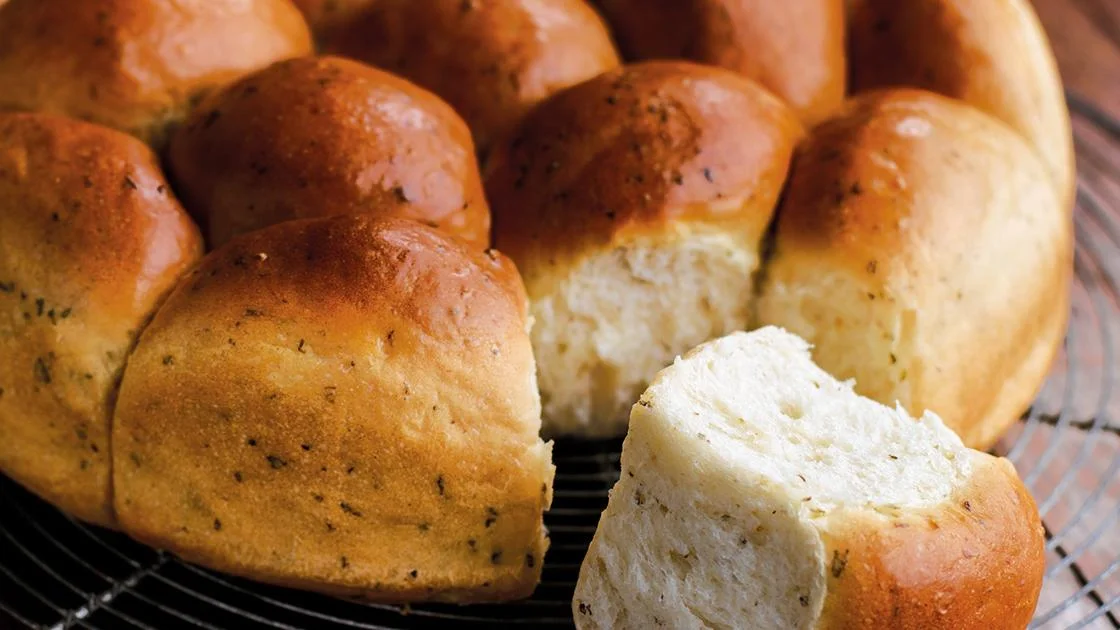
This tear-and-share loaf is made from a garlic and herb bread mix, olive oil and water, then baked as 16 soft rolls joined together. It takes time to prove, but the shaping is simple and makes a warm centrepiece for sharing.
Ingredients
- 1 xPaul Hollywood Garlic & Herb Tear ‘n’ Share Bread Mix
- 50 mlolive oil
- 320 mlcool water
Instructions
- 1
Mix the dough
Tip the bread mix into a large bowl. Add the olive oil and 250 ml of the cool water, then mix with an electric mixer fitted with a dough hook or by hand. Add a little more water at a time until the dough is soft and sticky.
- 2
Knead and prove
Turn the dough onto an oiled work surface and knead for 10 minutes, until it feels smooth and silky and is less sticky. Put it in a lightly oiled bowl, cover and leave until doubled in size, about 1–2 hours.
- 3
Add optional seeds
For extra texture, sprinkle sesame and poppy seeds over each segment before baking.
- 4
Shape the rolls
Turn the dough onto a lightly floured surface and knock it back to remove the air. Divide it into 16 equal pieces and roll each piece into a ball.
- 5
Arrange and prove
Place one ball in the centre of a baking tin and arrange the remaining balls around it. Cover with a clean plastic bag and leave to prove until doubled in size, about 1 hour.
- 6
Bake the bread
Preheat the oven to 220°C, 200°C fan or gas mark 6. Bake the loaf on the middle shelf for 20–25 minutes. Leave it to cool for a few minutes before turning it onto a wire rack, then brush with melted butter and serve warm.
What is tear-and-share bread?
Tear-and-share bread is shaped as individual rolls that bake together into one loaf, so each person can pull off a piece. This version uses a prepared garlic and herb mix for its flavour and keeps the shaping straightforward.
The method follows a familiar enriched-bread rhythm: knead the dough, let it rise, shape it, then prove it again before baking.
Nutrition and macros by portion
The nutrition label shows one serving as written: 1900 calories, 48g protein, 335g carbs, 51g fat.
| Portion | Adjustment | kcal | Protein | Carbs | Fat |
|---|---|---|---|---|---|
| Lighter | Smaller bread portion | 1330 kcal | 34g | 234g | 36g |
| This serving | As written | 1900 kcal | 48g | 335g | 51g |
| Hungry | Larger bread portion | 2850 kcal | 72g | 503g | 77g |
Most of the carbohydrates come from the bread mix, while the olive oil contributes most of the fat; the mix also supplies some protein. Serve a piece with vegetables or salad, and add a protein-rich accompaniment such as beans or cheese to make a more balanced plate.
The mix and the water
Bread mix: the garlic and herb seasoning is already included, so the mix provides the loaf’s main flavour.
Water: start with 250 ml, then add the rest gradually as needed. The dough should be soft and sticky rather than stiff.
Kneading and the first rise
Kneading: work the dough for the full 10 minutes, by hand or with a dough hook. It is ready when it feels smoother and silkier and sticks less to the work surface.
First prove: cover the dough and let it rise until doubled, which may take 1–2 hours. The stated time is a guide; use the dough’s size as the cue.
Shaping 16 rolls
Even pieces: divide the dough into 16 similar portions so the rolls bake at roughly the same rate.
Arrangement: set one ball in the middle of the tin and place the others around it. Leave them covered for the second prove, until they have doubled in size.
How to tell it is baked
Oven: bake on the middle shelf at 220°C, 200°C fan or gas mark 6 for 20–25 minutes. Keep an eye on the loaf towards the end of the baking time.
Finish: let it cool briefly before turning it out onto a wire rack. Brushing with melted butter is part of the method; serve while the bread is still warm.
Serving ideas
Serve the warm rolls alongside soup, a salad or a sharing meal. Their garlic and herb flavour also works with dips or a simple spread.
For a seeded finish, the method suggests sprinkling sesame and poppy seeds on the segments before baking.
Recipe notes & tips
- Add the remaining water slowly so the dough does not become wetter than needed.
- Oil your hands or work surface lightly if the dough is difficult to handle.
- Use the dough’s doubled size, rather than the clock alone, to judge each prove.
- Divide the dough into similarly sized pieces to help the rolls bake evenly.
- Leave the loaf on a wire rack after turning it out so the base does not become damp.
Variations
- Seeded top: sprinkle sesame and poppy seeds over the segments before baking.
- Cheesy finish: scatter grated cheese over the loaf towards the end of baking.
- Herb accent: add a little chopped fresh parsley after baking.
- Dipping bread: serve warm with olive oil or a savoury dip.
- Soup side: offer the rolls alongside a bowl of vegetable or tomato soup.
Common mistakes to avoid
- Adding all the water at once: hold some back and add it gradually until the dough is soft and sticky.
- Stopping kneading early: continue for the full 10 minutes, until the dough feels smoother and silkier.
- Rushing the first prove: wait until the dough has doubled rather than shaping it by the clock.
- Uneven portions: divide the dough into 16 similar pieces so they bake more consistently.
- Skipping the second prove: cover the shaped rolls and wait until they have doubled before baking.
How to store
Cool the bread completely, then store it in an airtight container at room temperature and eat within 2 days. Reheat briefly in a warm oven until soft and warmed through.
Frequently asked questions
Can I knead the dough by hand?
Yes. The method allows either hand kneading or an electric mixer fitted with a dough hook. Knead for 10 minutes.
How much water should I add?
Begin with 250 ml, then add the remaining water a little at a time until the dough is soft and sticky. The ingredient list gives 320 ml in total.
How long does the dough take to rise?
The first rise takes about 1–2 hours, until doubled. The shaped rolls take about 1 hour for their second prove, or until doubled.
Can I add seeds?
Yes. The method suggests sprinkling sesame and poppy seeds over each segment before baking.
What oven temperature should I use?
Bake at 220°C, 200°C fan or gas mark 6 for 20–25 minutes, on the middle shelf.
Can I prepare the dough ahead?
The recipe does not give an overnight proving method. For best results, follow the two rises described and bake the loaf on the day.
Cook it from the original
This recipe comes from sainsburysmagazine.co.uk. Their page has the author’s own photos, notes and tips — the best place to cook it from.
Open the recipe on sainsburysmagazine.co.uk