
Salt and pepper shrimp
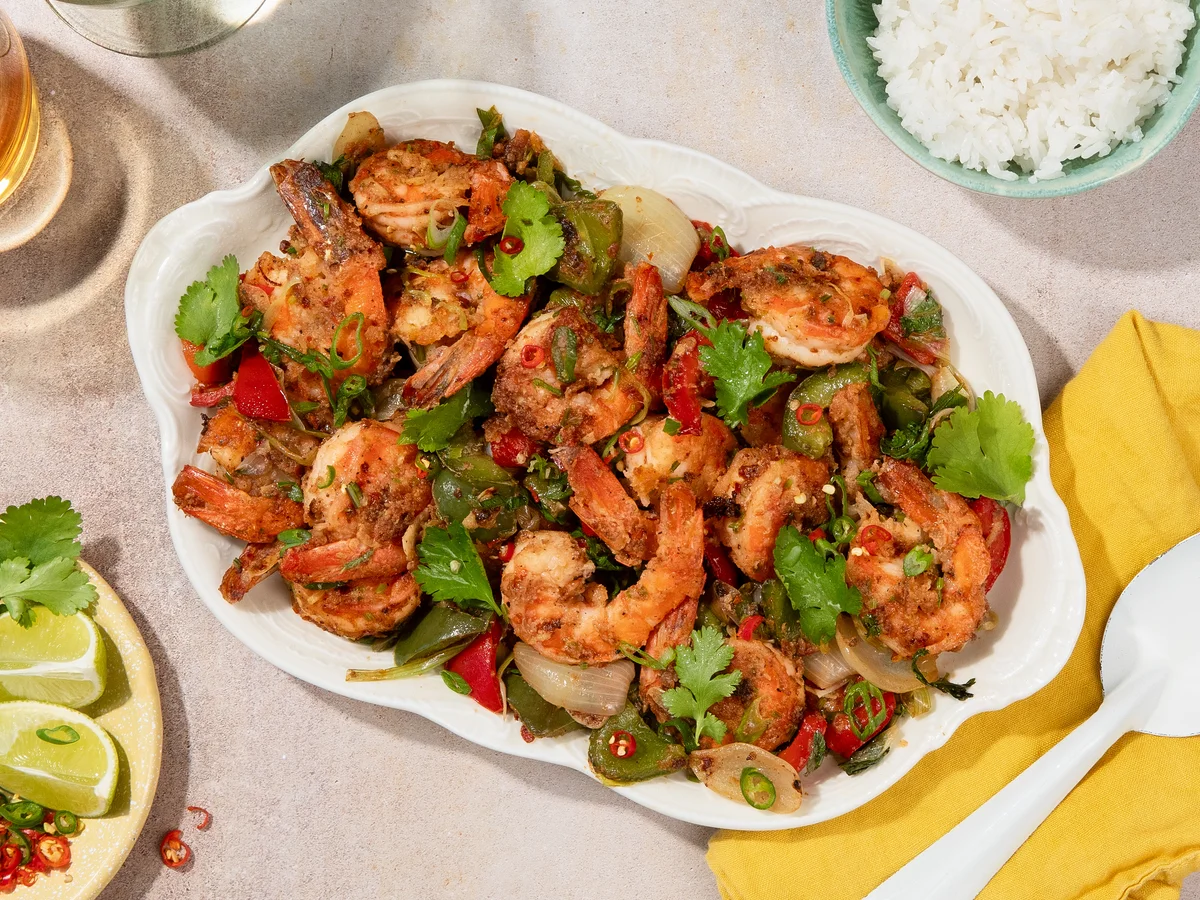
Salt and pepper shrimp is a Cantonese-inspired stir-fry of crisp, lightly coated shrimp tossed with colourful vegetables, chilli and warming spices. It comes together quickly and is served with jasmine rice to catch the savoury, peppery flavours.
Ingredients
- 397 g (14 oz)black tiger shrimp
- 1onion
- ½green pepper
- ½red pepper
- 2Thai chillies
- 2spring onions
- 1 clovegarlic
- 1 tbspginger
- 21 g (¾ oz)fresh coriander
- 90 g (¾ cup)cornflour
- ½ tspChinese five-spice powder
- ½ tspwhite pepper
- ½ tspblack peppercorns
- ½ tspgarlic powder
- ½ tspchilli flakes
- ½ tspsalt
- ½lime
- as neededoil, for frying
- cooked, for servingjasmine rice
Instructions
- 1
Prepare vegetables
Cut the onion into quarters and the red and green peppers into roughly 2 cm triangles. Peel and finely slice the garlic and ginger, then finely slice the Thai chillies. Slice the spring onion greens finely and cut the white parts lengthways into pieces about 4 cm long. Pick the coriander leaves and set them aside; finely slice the stalks.
- 2
Coat and fry
In a small bowl, mix the five-spice, white pepper, garlic powder, chilli flakes, salt and black peppercorns. Put the cornflour in a large bowl with some salt and pepper, add the shrimp and toss to coat. Tip the shrimp into a sieve over the bowl and shake off the excess cornflour. Heat a wok or large frying pan over medium-high heat, add some oil, then fry the shrimp for about 5 minutes, turning halfway through, until evenly coloured and crisp. Remove and set aside.
- 3
Stir-fry vegetables
Add a little more oil to the same wok. Add the onion and both peppers, season with salt and pepper, and fry for about 4 minutes. Add the garlic, ginger, coriander stalks, spring onion whites and half the Thai chilli; fry for about 2 minutes more.
- 4
Finish and serve
Return the shrimp to the wok. Stir while sprinkling over the spice mixture so it is distributed evenly, and fry for about 1 minute. Squeeze in the lime and stir through most of the coriander leaves and spring onion greens. Serve with cooked jasmine rice, garnished with the remaining coriander leaves and Thai chilli.
What is salt and pepper shrimp?
Salt and pepper shrimp is a Chinese-style dish built around crisp shrimp tossed with a fragrant, peppery seasoning and aromatics. This version takes inspiration from the Cantonese classic, combining five-spice, chilli, garlic and fresh herbs.
The shrimp are coated in cornflour and fried before being returned to the wok with vegetables. That two-stage method helps keep their coating crisp while letting the spices and aromatics cling to them.
Nutrition and macros by portion
The nutrition label shows one serving as written: 385 calories, 44g protein, 41g carbs, 2g fat.
| Portion | Adjustment | kcal | Protein | Carbs | Fat |
|---|---|---|---|---|---|
| Lighter | More vegetables, less rice | 270 kcal | 31g | 29g | 1g |
| This serving | As written | 385 kcal | 44g | 41g | 2g |
| Hungry | Larger rice portion | 578 kcal | 66g | 62g | 3g |
The rice and cornflour provide most of the carbohydrates, while the shrimp supplies most of the protein. The frying oil contributes fat, though the amount used can vary; serve with extra vegetables if you want a more substantial balance without adding much more rice.
Choosing the shrimp and coating
Shrimp: Black tiger shrimp are used here; peel and clean them first if they are not already prepared. Dry surfaces help the cornflour adhere rather than forming a wet, patchy coating.
Cornflour: Toss the shrimp until coated, then shake off the excess in a sieve. A thin layer is more likely to turn crisp and less likely to leave loose flour in the wok.
Build the spice mix
Pepper and five-spice: White pepper, black peppercorns and Chinese five-spice give the seasoning its warm, fragrant character. Mix them with the garlic powder, chilli flakes and salt before cooking so the flavour can be scattered evenly over the shrimp.
Chilli: Thai chillies and chilli flakes both bring heat, while the fresh chillies also add a sharp, bright note. Keeping some Thai chilli back for the finish lets you adjust the final bite.
Keep the coating crisp
Frying: Cook the coated shrimp in a single layer where possible, turning them halfway through the roughly 5-minute frying time. They should look evenly coloured and crisp before you take them out.
Returning to the wok: Add the shrimp back only after the vegetables and aromatics have cooked. The final 1-minute toss seasons them without leaving them in the pan for long.
Cook the vegetables in stages
Peppers and onion: Give these about 4 minutes first, so they begin to soften while retaining some bite. Cut the peppers into similarly sized triangles for more even cooking.
Aromatics: Garlic, ginger, coriander stalks and spring onion whites need only about 2 minutes. Adding them after the vegetables helps prevent the finely cut ingredients from overcooking.
Finish with herbs and lime
Fresh coriander leaves, spring onion greens and lime go in at the end, after the shrimp has been tossed with the seasoning. Their fresh, tangy flavours balance the warm spices and chilli.
Serve promptly with cooked jasmine rice. The rice makes a simple base for the peppery shrimp and vegetables.
Recipe notes & tips
- Pat the shrimp dry before coating so the cornflour sticks in a fine layer.
- Shake off loose cornflour before frying to reduce clumping in the wok.
- Fry the shrimp in batches if the pan is crowded.
- Keep the wok at medium-high heat so the shrimp cooks promptly and crisps.
- Taste the seasoning before serving, then add more lime or chilli if desired.
Variations
- Milder heat: Use one Thai chilli or leave out the chilli flakes.
- Extra vegetables: Add sliced vegetables alongside the peppers and onion, keeping the pan uncrowded.
- Lemon finish: Use lemon juice instead of lime for a slightly different citrus note.
- Herb change: Use a little less coriander if you prefer a subtler herbal flavour.
- Rice swap: Serve with another cooked grain instead of jasmine rice.
Common mistakes to avoid
- Wet shrimp: The coating can turn pasty; pat the shrimp dry before tossing with cornflour.
- Too much coating: Excess flour can clump in the pan; shake it off in a sieve.
- Crowded wok: The shrimp may steam rather than crisp; fry them in batches.
- Overcooked aromatics: Garlic can scorch; add it with the ginger after the vegetables have started cooking.
- Shrimp left in too long: They can become tough; fry until crisp, then return only for the brief final toss.
How to store
Refrigerate leftovers in a sealed container and use within 2 days. Reheat gently in a frying pan until hot; the coating may be less crisp after storage. Store rice separately where possible.
Frequently asked questions
Can I use peeled shrimp?
Yes. Use peeled black tiger shrimp, or another similar large shrimp, and pat them dry before coating.
How can I make the dish less spicy?
Use less Thai chilli and reduce or omit the chilli flakes. Add the reserved chilli gradually at the end if you want to check the heat.
Can I prepare anything in advance?
You can chop the vegetables and mix the spice blend ahead of time. For the crispest result, coat and fry the shrimp shortly before serving.
How do I know when the shrimp are cooked?
They should be evenly coloured and opaque, with a crisp coating. Follow the recipe's approximate 5-minute frying time, turning them halfway.
Can I make this without a wok?
Yes. Use a large frying pan and avoid crowding it; cook the shrimp in batches if needed.
What can I serve with salt and pepper shrimp?
The recipe serves it with cooked jasmine rice. You can also add extra stir-fried vegetables alongside.
Cook it from the original
This recipe comes from kitchenstories.com. Their page has the author’s own photos, notes and tips — the best place to cook it from.
Open the recipe on kitchenstories.com