
Pasta alla Crudaiola with mozzarella (pasta with raw tomato sauce)
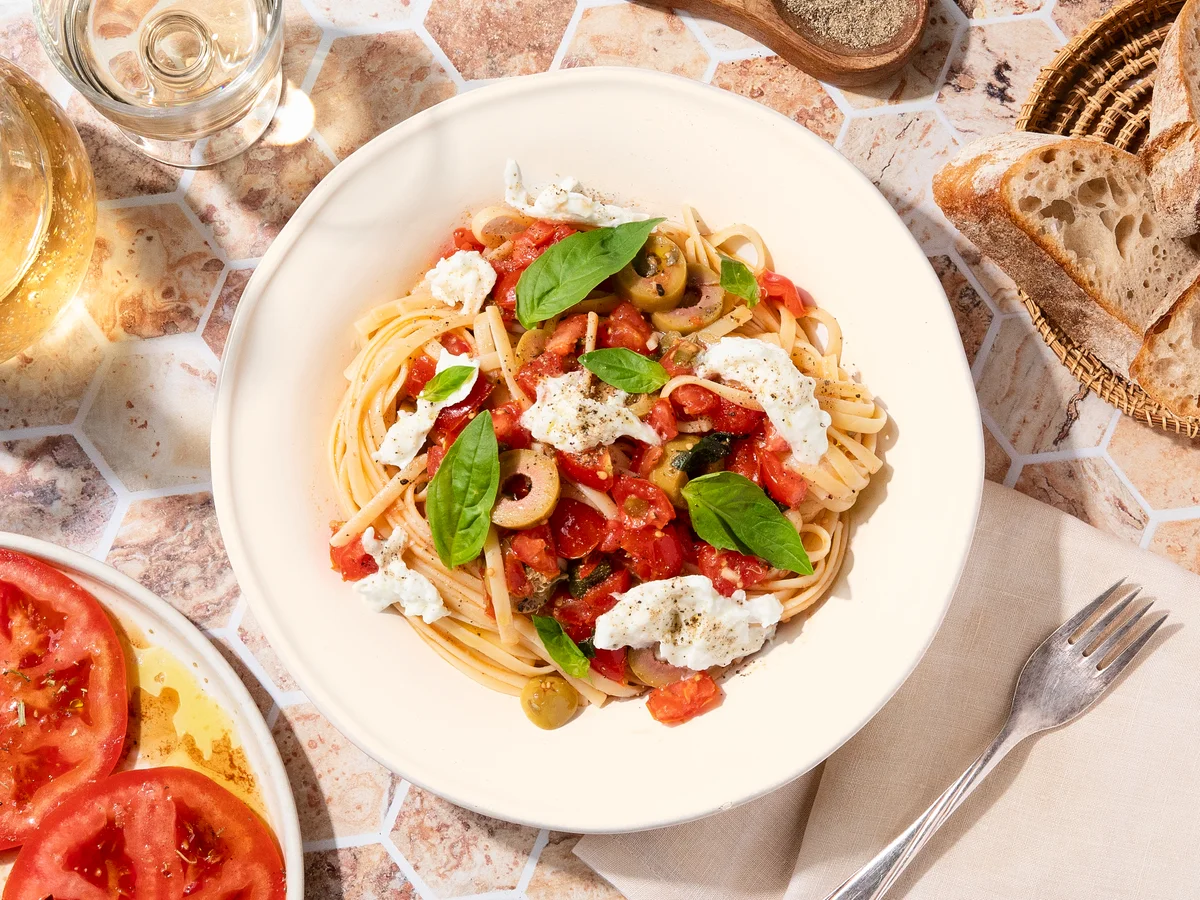
Pasta alla crudaiola pairs spaghetti with a fresh, uncooked sauce of cherry tomatoes, olives, capers, garlic and basil. It is a quick Italian summer dish, finished with creamy buffalo mozzarella if you like.
Ingredients
- 590 g (1.3 lb)cherry tomatoes
- 4 tbspcapers
- 4 tbspolives
- 4 tbspolive oil
- 2 clovesgarlic
- 20 g (0.7 oz)basil
- 500 g (1.1 lb)spaghetti
- 2buffalo mozzarella
- to tastesalt
- to tastepepper
Instructions
- 1
Prepare the sauce
Cut the tomatoes and olives into small, similarly sized pieces. Roughly chop the capers and finely chop or grate the garlic. Put everything in a large bowl and drizzle with the olive oil. Season with salt and pepper, starting cautiously because the capers and olives are already salty. Add half the basil and mix well. Leave the sauce to sit while the pasta cooks.
- 2
Cook the spaghetti
Cook the spaghetti in salted water according to the packet instructions until al dente. Drain it and add it straight to the tomato sauce. Toss until evenly coated, adding more olive oil if needed. Finish with the remaining basil and, if you like, mozzarella. Serve immediately.
What is pasta alla crudaiola?
Crudaiola refers to a sauce made from raw ingredients, rather than one simmered on the hob. This Italian-style pasta is especially suited to summer, when ripe tomatoes and fresh basil bring plenty of flavour without a cooked sauce.
The version here combines tomatoes with salty capers and olives, then tosses them with hot spaghetti. Mozzarella is an optional creamy finish.
Nutrition and macros by portion
The nutrition label shows one serving as written: 770 calories, 28g protein, 90g carbs, 30g fat.
| Portion | Adjustment | kcal | Protein | Carbs | Fat |
|---|---|---|---|---|---|
| Lighter | Less oil, more tomatoes | 539 kcal | 20g | 63g | 21g |
| This serving | As written | 770 kcal | 28g | 90g | 30g |
| Hungry | Larger spaghetti portion | 1155 kcal | 42g | 135g | 45g |
The spaghetti supplies most of the carbohydrates, while olive oil and mozzarella contribute much of the fat. Mozzarella also adds protein, alongside smaller amounts from the pasta. Pair a serving with a green salad or extra vegetables for a more balanced plate.
Why the sauce stays raw
Raw tomatoes: cutting them into small pieces helps their juices mingle with the olive oil and seasonings while the sauce rests.
Resting time: leave the mixture in the bowl as the pasta cooks so the flavours can come together. It is a short pause, not a long marinade.
Balancing the salty ingredients
Capers and olives: both contribute salt as well as sharp, savoury flavour. Taste the sauce before adding much salt, then adjust only if it needs it.
Garlic: finely chopping or grating it distributes its flavour through the uncooked sauce. Use the stated amount for a noticeable garlic note.
Getting the pasta right
Al dente: cook the spaghetti according to its packet instructions and check it near the end of the cooking time. It should be tender but still have a slight bite.
Drain and toss: add the drained pasta to the sauce straight away. The warmth helps coat each strand, while the raw tomatoes retain their fresh character.
Finishing with basil and mozzarella
Basil: adding half to the sauce and saving the rest for the finish gives the dish fresh herbal flavour throughout and on top.
Mozzarella: tear or cut it into pieces and add it just before serving if you want a softer, creamier contrast. It is optional, so the pasta can also be served without it.
Serving the dish
Serve the pasta immediately after tossing, while it is warm and the tomato sauce is still fresh. A crisp green salad or simply dressed vegetables make an easy accompaniment.
The sauce is also generous in flavour, so extra seasoning or a complicated side is not essential. Keep any additional olive oil for the final toss rather than adding it automatically.
Recipe notes & tips
- Taste the tomato mixture before adding salt, as the capers and olives are already seasoned.
- Cut the tomatoes and olives into small pieces so they mix evenly with the spaghetti.
- Use a large bowl with enough room to toss the pasta without spilling the sauce.
- Save some basil for the final garnish to keep its aroma fresh.
- Add extra olive oil only if the drained pasta needs help taking on the sauce.
Variations
- Add chilli: mix a little finely chopped fresh chilli into the raw tomato sauce.
- Use another pasta shape: choose a similar amount of a short pasta and cook it according to its packet instructions.
- Try black olives: swap them for the olives listed for a deeper, more savoury flavour.
- Add lemon: grate a little lemon zest into the sauce for a bright citrus note.
- Skip the mozzarella: leave it out for a lighter, dairy-free version.
Common mistakes to avoid
- Over-salting the sauce: capers and olives are salty, so taste before adding more.
- Cooking the sauce: keep the tomato mixture raw; it is meant to stay fresh rather than simmer.
- Overcooking the spaghetti: check it towards the end of the packet timing and drain when al dente.
- Letting the pasta sit before tossing: add it to the sauce immediately after draining so it coats evenly.
- Adding all the basil too early: reserve half for the finish to preserve its fresh flavour.
How to store
For the best texture, serve this pasta straight away. Refrigerate leftovers in an airtight container for up to 2 days; the pasta will soften as it sits. Reheat gently in a pan with a small splash of water or olive oil, and add fresh basil after warming.
Frequently asked questions
Can I make the tomato sauce ahead?
You can mix the raw sauce shortly before cooking the pasta and let it rest while the spaghetti cooks. For the freshest flavour and texture, avoid leaving it for a long time.
Do I have to use buffalo mozzarella?
No. The mozzarella is optional, so you can leave it out or use another mozzarella you have to hand.
How do I know when the spaghetti is al dente?
Follow the packet timing and taste a strand near the end. It should be cooked through but retain a slight firmness in the centre.
Why should I be cautious with salt?
Capers and olives can bring plenty of salt to the sauce. Taste the mixture first and add salt gradually if needed.
Can I serve this pasta cold?
It is intended to be served immediately after the warm pasta is tossed with the raw sauce. You can eat leftovers cold, though the pasta will have absorbed some of the sauce.
Cook it from the original
This recipe comes from kitchenstories.com. Their page has the author’s own photos, notes and tips — the best place to cook it from.
Open the recipe on kitchenstories.com