
Peanut butter curry
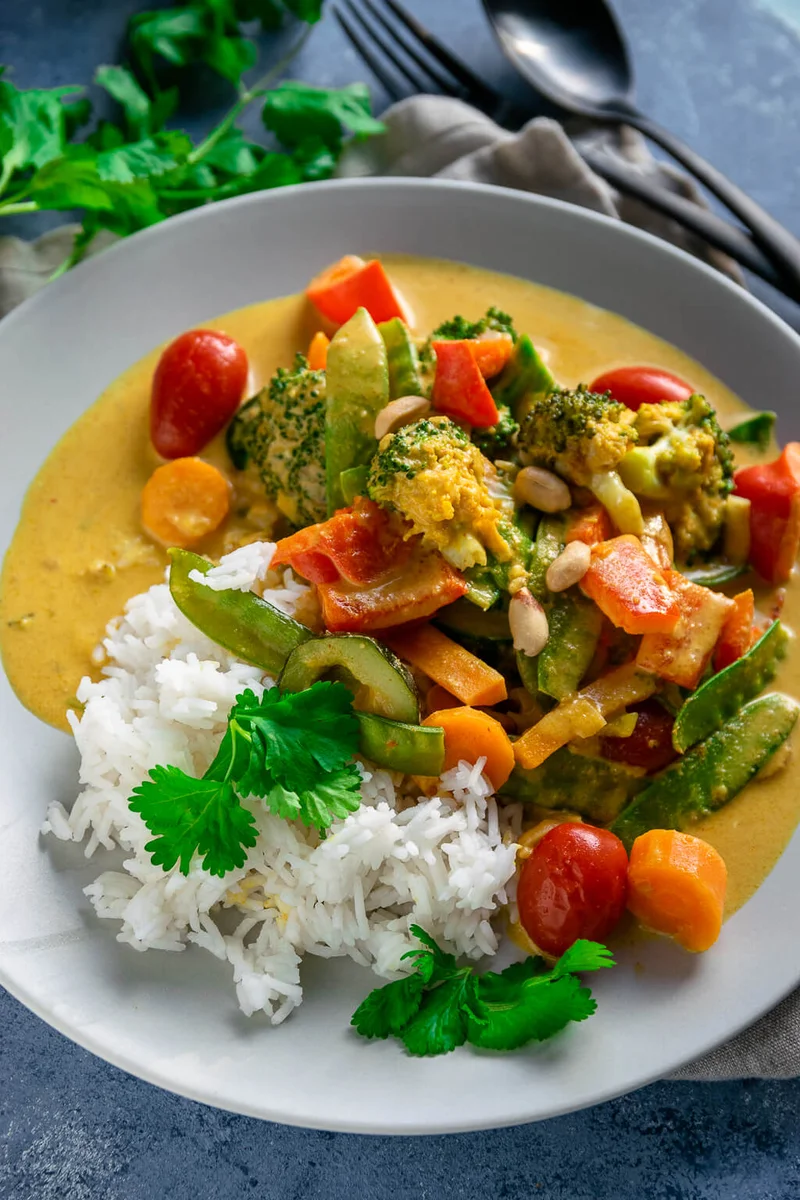
This easy vegetable curry brings together coconut milk, curry paste and peanut butter for a rich, savoury sauce. It is a flexible way to use fresh or frozen vegetables, and leftovers can make a handy meal the next day.
Ingredients
- 15 mlpeanut oil (or rapeseed oil)
- 3carrots
- 2red peppers
- ½ headbroccoli
- 1 smallcourgette
- 2 handfulsmangetout
- 2spring onions
- 5 mlginger
- 2 handfulscherry tomatoes
- 30 mlpeanut butter
- 15 mlcurry paste
- 1 pack (about 250–400 ml)coconut milk
- somefresh coriander
- somepeanuts
- 30 mlyoghurt (optional)
- to tastesalt
- to tasteblack pepper
- to serverice
Instructions
- 1
Prepare vegetables
Wash the vegetables and cut them into bite-sized pieces.
- 2
Prepare aromatics
Grate or finely dice the ginger. Remove the strings from the mangetout.
- 3
Fry vegetables
Heat the oil in a pan and briefly fry the vegetables. Start with the carrots, then add the peppers and broccoli. Add the courgette and tomatoes last.
- 4
Make the sauce
Add the ginger, peanut butter, curry paste and coconut milk. Stir everything together and season with a little salt and pepper.
- 5
Serve the curry
Serve with rice and peanuts, adding coriander if you like. Yoghurt is also a good accompaniment.
What is peanut butter curry?
This is a home-style vegetable curry rather than a claim to one specific regional tradition: its defining feature is the combination of curry paste, coconut milk and peanut butter. The vegetables make it colourful and varied, while the creamy sauce brings them together.
The method works because it adds firmer vegetables to the pan first and more delicate ones later. That gives the carrots and broccoli a head start without leaving the courgette and tomatoes cooking for as long.
Nutrition and macros by portion
The nutrition label shows one serving as written: 390 calories, 10g protein, 30g carbs, 27g fat.
| Portion | Adjustment | kcal | Protein | Carbs | Fat |
|---|---|---|---|---|---|
| Lighter | Use less coconut milk | 273 kcal | 7g | 21g | 19g |
| This serving | As written | 390 kcal | 10g | 30g | 27g |
| Hungry | Add extra rice | 585 kcal | 15g | 45g | 41g |
The vegetables and rice provide most of the carbohydrates, while peanut butter and peanuts contribute fat and some protein. Coconut milk and cooking oil also account for a substantial share of the fat. To balance the plate, serve a generous amount of vegetables with a measured portion of rice.
Choose and prepare the vegetables
Cut evenly: Bite-sized pieces are easier to stir and serve, and similar sizes help the vegetables cook at a similar pace.
Use what you have: The recipe welcomes fresh or frozen vegetables. If using frozen ones, add them in the same order according to how quickly they soften.
Build the curry in stages
Start firm: Carrots go into the hot oil first, followed by peppers and broccoli. Give them a brief fry so they begin to soften before adding the quicker-cooking vegetables.
Finish gently: Add courgette and cherry tomatoes last, then stir in the ginger, curry paste, peanut butter and coconut milk. Stir until the peanut butter is blended into the sauce.
Get the sauce consistency right
Coconut milk: The recipe gives a range of about 250–400 ml, so the sauce can be adjusted to what you have. A smaller amount makes a thicker, more concentrated coating; a larger amount makes it looser.
Peanut butter: Stir thoroughly after adding it so it does not remain in dense pockets. Taste the finished sauce and adjust the seasoning with salt and pepper.
Check the vegetables for doneness
Aim for vegetables that have softened but still hold their shape, rather than cooking them until they collapse. The method calls for a brief fry, so keep an eye on the pan as you add each batch.
The recipe does not specify a cooking time; use the texture of the carrots and broccoli as your guide. They should be tender enough to eat while the later additions retain some structure.
Serve with toppings
Rice makes a simple base for the creamy curry, while peanuts add a crunchy contrast. Scatter over fresh coriander if you enjoy its flavour.
A little yoghurt is an optional finishing touch alongside the curry. Add it at the table rather than stirring it into the pan.
Recipe notes & tips
- Cut the carrots and broccoli into small, even pieces so they cook at a similar pace.
- Remove the strings from the mangetout before adding it to the pan.
- Add courgette and cherry tomatoes towards the end to help them keep their shape.
- Stir the peanut butter well into the coconut milk so the sauce is smooth.
- Taste the sauce before serving and adjust the salt and pepper.
- Keep the peanuts separate until serving so they stay crunchy.
Variations
- Use frozen vegetables: Add them straight to the pan and cook until tender.
- Change the vegetables: Swap in other vegetables you have, adding firmer ones earlier.
- Adjust the sauce: Use the lower end of the coconut milk range for a thicker curry.
- Add more heat: Choose a hotter curry paste for a spicier version.
- Skip the yoghurt: Leave it out for a dairy-free serving.
Common mistakes to avoid
- Adding everything at once: The vegetables cook at different speeds; add the firmer ones first.
- Cutting uneven pieces: Large and small pieces soften at different rates; aim for bite-sized pieces of similar size.
- Leaving strings on mangetout: They can be unpleasant to eat; pull them off before cooking.
- Not stirring the sauce: Peanut butter can sit in clumps; stir until it is incorporated.
- Cooking the later vegetables for too long: Courgette and tomatoes can lose their shape; add them near the end.
How to store
Refrigerate leftovers in a covered container and use within 3 days. Reheat gently in a pan or microwave until piping hot, stirring the curry; add a splash of water or coconut milk if the sauce has thickened. Store rice separately where possible.
Frequently asked questions
Can I use frozen vegetables?
Yes. The recipe description allows fresh or frozen vegetables. Add them in stages, putting firmer vegetables in before quicker-cooking ones.
How much coconut milk should I use?
Use the pack you have, with the recipe suggesting about 250–400 ml. Less gives a thicker sauce and more gives a looser one.
What can I use instead of peanut oil?
Rapeseed oil is the stated alternative. It is used to fry the vegetables at the start.
How do I make the sauce smooth?
Stir the peanut butter, curry paste and coconut milk together thoroughly in the pan. Keep stirring until the peanut butter is evenly blended into the sauce.
What should I serve with the curry?
Serve it with rice, and add peanuts and fresh coriander if you like. The recipe also suggests yoghurt as an optional accompaniment.
Cook it from the original
This recipe comes from einfachmalene.de. Their page has the author’s own photos, notes and tips — the best place to cook it from.
Open the recipe on einfachmalene.de