
Chocolate chip brioche rolls
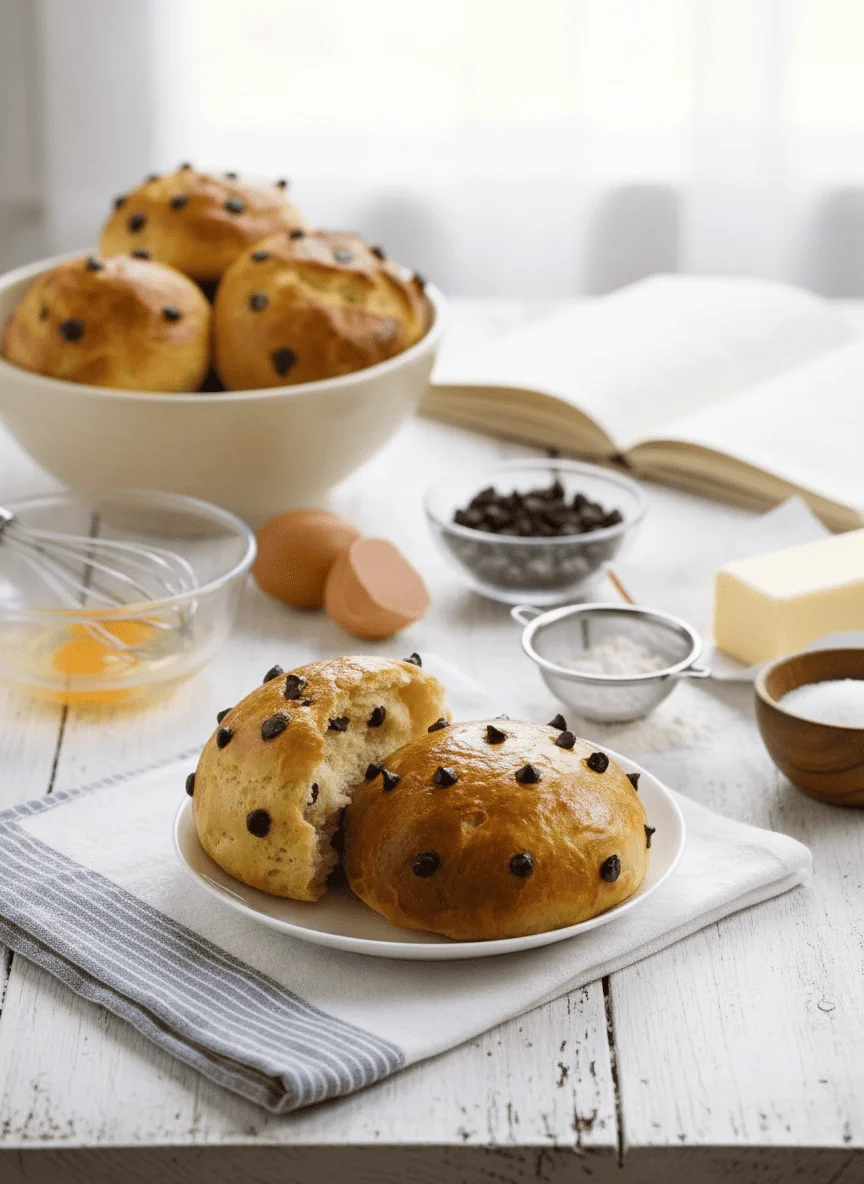
These French-style chocolate chip brioche rolls have a soft, enriched crumb and chocolate in every bite. They make a lovely teatime bake, though the two rises mean they need more than the stated 40 minutes from start to finish.
Ingredients
- 600 gbrioche flour
- 2 sachetsdried baker’s yeast
- 310 mlmilk
- 3eggs
- 1egg yolk
- 80 gsoftened butter
- 6 tablespoonscaster sugar
- 1 teaspoonsalt
- 150 gchocolate chips
Instructions
- 1
Mix and knead
In a large bowl, stir together the flour, yeast, sugar and salt. Add the milk, eggs and softened butter, then mix in 130 g of the chocolate chips. Stir with a spoon, then knead by hand for 5–10 minutes until the dough is soft and even; it may be sticky at first.
- 2
First rise
Put the dough in a clean bowl and cover it with a tea towel. Leave it in a warm place for at least 1 hour 30 minutes, until it has doubled in size.
- 3
Shape the rolls
Turn the dough onto a lightly floured work surface and knead it briefly to knock out the air. Divide it into 8 portions and shape each into a ball. Press the remaining chocolate chips lightly onto the rolls.
- 4
Second rise
Arrange the rolls on a baking tray lined with baking paper. Cover with a clean tea towel and leave to rise for 40 minutes, until slightly puffed.
- 5
Glaze and bake
Heat the oven to 180°C. Mix the egg yolk with a little water and gently brush it over the rolls. Bake for 18–20 minutes, until golden, then leave to cool until warm before serving.
What are brioche rolls?
Brioche is a French enriched bread, made tender and rich with ingredients such as eggs, butter and milk. These small rolls add chocolate chips for a sweet teatime version.
The dough is mixed, kneaded and given two rises before baking. That combination helps the rolls become soft and airy, while the egg-yolk glaze gives them a golden finish.
Nutrition and macros by portion
The nutrition label shows one serving as written: 1080 calories, 27g protein, 160g carbs, 35g fat.
| Portion | Adjustment | kcal | Protein | Carbs | Fat |
|---|---|---|---|---|---|
| Lighter | Smaller roll, fruit alongside | 756 kcal | 19g | 112g | 25g |
| This serving | As written | 1080 kcal | 27g | 160g | 35g |
| Hungry | Two rolls per serving | 1620 kcal | 41g | 240g | 53g |
The flour and sugar provide most of the carbohydrates, while butter, egg yolks and chocolate contribute much of the fat. Eggs, flour and milk provide some protein, though these rolls are a rich bread rather than a protein-focused meal. To balance a serving, pair it with fresh fruit and plain yoghurt.
Choosing and using the ingredients
Brioche flour: the recipe uses a prepared brioche flour, alongside yeast, sugar and salt. If substituting another flour, use one suitable for bread dough and follow the yeast packet’s guidance for the equivalent quantity.
Butter and eggs: softened butter is easier to work into the dough, and the eggs help make it rich. Keep the separate yolk for glazing the shaped rolls.
Kneading a soft dough
Start with a spoon to bring the ingredients together, then knead by hand for 5–10 minutes. The dough may feel sticky at first; keep working it gently until it becomes more cohesive and even.
Avoid adding lots of extra flour just to make the dough easy to handle. Too much can make the baked rolls dense rather than soft.
Two rises, two cues
First rise: cover the dough and leave it somewhere warm for at least 1 hour 30 minutes. Look for it to double in size rather than relying only on the clock.
Second rise: after shaping, give the rolls 40 minutes under a tea towel. They should look puffier before they go into the oven.
Shaping and adding chocolate
Divide the dough into 8 portions and shape each into a ball with a smooth top. Briefly kneading the dough before dividing it releases some of the air built up during the first rise.
The recipe mixes 130 g of chocolate chips into the dough and reserves the rest for the tops. Press the topping chips gently into the dough so they stay in place as the rolls rise.
Baking and serving
Brush the rolls carefully with the egg-yolk mixture for an even glaze, then bake at 180°C for 18–20 minutes. Their tops should be golden; check towards the shorter end of the baking time if your oven runs hot.
Let them cool until warm before eating so the crumb can settle. Serve them on their own with tea or coffee, or alongside fruit and plain yoghurt.
Recipe notes & tips
- Check that your yeast is within its use-by date before mixing the dough.
- Use softened, not melted, butter so it blends into the dough as intended.
- Knead patiently if the dough feels sticky at first rather than immediately adding extra flour.
- Leave enough room between the shaped rolls on the tray for them to puff up.
- Begin checking the rolls at 18 minutes, as oven performance can vary.
Variations
- Citrus zest: add finely grated orange zest to the dough for a fresh aroma.
- Dark chocolate: use dark chocolate chips for a less sweet, more cocoa-forward bite.
- Chopped chocolate: replace the chips with roughly chopped chocolate for irregular pockets.
- Cinnamon: add a little ground cinnamon to the dry ingredients for a warm spice note.
Common mistakes to avoid
- Adding flour too quickly: the dough can turn dense, so knead gently before deciding it needs more.
- Cutting the first rise short: wait for the dough to double rather than shaping it just because the minimum time has passed.
- Skipping the second rise: give the shaped rolls the full 40 minutes so they can puff before baking.
- Pressing the topping too hard: lightly place the remaining chips on the rolls so they stay near the surface.
- Overbaking: check at 18 minutes and take the rolls out once golden.
How to store
Once completely cool, store the rolls in an airtight container at room temperature and eat within 2 days. Warm them briefly in a low oven to refresh; avoid overheating, which can dry them out.
Frequently asked questions
How long does this recipe take from start to finish?
The listed total time is 40 minutes, but the method also calls for at least 1 hour 30 minutes for the first rise and 40 minutes for the second. Allow additional time for both rises, as well as mixing, shaping and baking.
How can I tell when the dough has risen enough?
After the first rise, it should have doubled in size. After shaping, look for rolls that have become visibly puffier during the 40-minute second rise.
Can I use a different flour?
The recipe specifies brioche flour. Another bread flour may work, but the dough’s texture and the amount of liquid it needs can differ.
Why is the dough sticky?
It can be sticky at the start of kneading, which the method notes is normal. Continue kneading gently for 5–10 minutes before considering any changes.
Can I prepare the dough ahead?
The method is written for rising at room temperature. It does not specify a chilled overnight rise, so for the most predictable timing, follow the stated rises.
How do I know the rolls are baked?
Bake at 180°C for 18–20 minutes, until the tops are golden. Check them at 18 minutes, especially if your oven tends to bake quickly.
Cook it from the original
This recipe comes from francine.com. Their page has the author’s own photos, notes and tips — the best place to cook it from.
Open the recipe on francine.com