
Ribollita – the best Italian vegetable soup
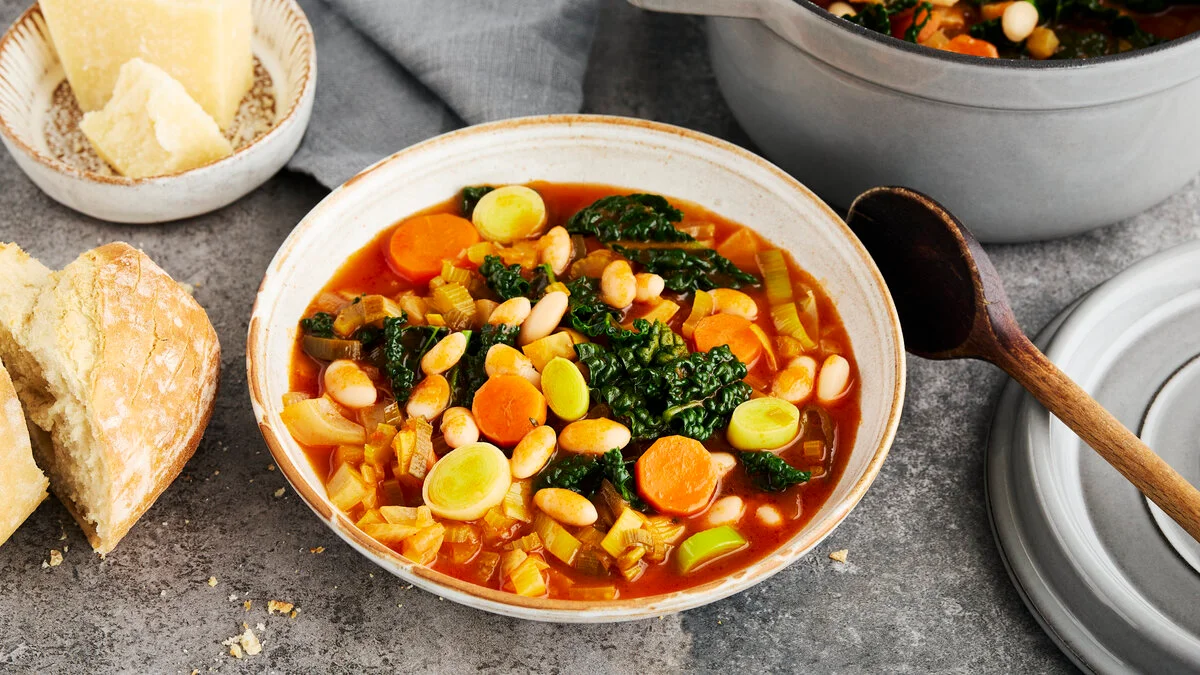
Ribollita is a hearty Tuscan vegetable and bean soup, thickened with blended cannellini beans and served with bread. It makes a warming one-pot meal from a generous mix of vegetables, with kale adding colour and texture.
Ingredients
- 1 largeonion
- 2 clovesgarlic
- 4 stalkscelery
- 1 smallfennel bulb
- 2 largecarrots
- 1 stalkleek
- 300 gkale or cavolo nero
- 3 tbsp (45 ml)olive oil
- 2 sprigsthyme
- 2bay leaves
- to tastesalt
- to tasteblack pepper
- 1 tbsptomato purée
- 200 gtinned chopped tomatoes
- 800 mlvegetable stock
- 1 tin (240 g drained weight)cannellini beans
- somewhite bread, such as day-old bread
- optional, to tasteParmesan or vegetarian hard cheese
Instructions
- 1
Prepare the vegetables
Peel and finely chop the onion and garlic. Wash and prepare the remaining vegetables. Slice the celery, dice the fennel and peel and slice the carrots into bite-sized pieces. Halve the leek lengthways if it is large, then cut it into rings. Strip the kale leaves from their stems, slice the leaves finely and set them aside.
- 2
Soften the onion
Heat the olive oil in a large pan over medium-high heat. Rinse and shake dry the thyme. Add the onion, thyme sprigs and bay leaves to the pan and cook for about 6–8 minutes, until the onion is golden and caramelised.
- 3
Cook the vegetables
Add all the prepared vegetables except the kale, season with salt and pepper, and cook together for a few minutes. Stir in the tomato purée and cook briefly, then add the chopped tomatoes. Simmer uncovered for about 5 minutes.
- 4
Simmer the soup
Once the mixture has reduced a little, pour in the vegetable stock and adjust the seasoning with salt and pepper. Lower the heat, cover the pan and simmer gently for about 15–20 minutes, until the vegetables are tender.
- 5
Add beans and kale
Meanwhile, drain and rinse the beans under cold water, then leave them to drain. Add them to the soup after its initial simmer, bring briefly to the boil and cook for about 5 minutes. Transfer about a third of the stew to a tall blending jug and purée until smooth with a stick blender. Return it to the pan with the sliced kale and cook uncovered for about 5–10 minutes, until the kale is tender.
- 6
Serve the ribollita
Just before serving, briefly toast the bread in a hot frying pan if you like. If using cheese, finely grate it; note that Parmesan may mean the soup is neither vegan nor vegetarian. Ladle the ribollita into soup bowls, add cheese to taste and serve with the bread.
What is ribollita?
Ribollita is a Tuscan bread-and-vegetable soup whose name means “reboiled”. It is traditionally associated with making a substantial meal from vegetables, beans and bread.
This version builds its flavour with a slow-cooked onion base, aromatic vegetables and tomatoes. Blending some of the beans and vegetables gives the broth a creamy body without adding dairy.
Nutrition and macros by portion
The nutrition label shows one serving as written: 350 calories, 14g protein, 54g carbs, 10g fat.
| Portion | Adjustment | kcal | Protein | Carbs | Fat |
|---|---|---|---|---|---|
| Lighter | Less oil, skip cheese | 245 kcal | 10g | 38g | 7g |
| This serving | As written | 350 kcal | 14g | 54g | 10g |
| Hungry | Add extra bread | 525 kcal | 21g | 81g | 15g |
The beans and vegetables provide most of the carbohydrate, while the cannellini beans also contribute protein. Olive oil supplies most of the fat; bread and optional cheese add further energy and macros. For a balanced plate, serve a moderate amount of bread alongside a generous bowl of soup.
Build a flavourful base
Onion and herbs: Give the onion the full 6–8 minutes in the oil so it softens and turns golden; add the thyme and bay leaves as directed.
Tomato: Briefly cooking the tomato purée before adding the chopped tomatoes takes away its raw edge and helps it blend into the broth.
Prepare the vegetables evenly
Cut: Aim for similarly sized slices and pieces so the celery, fennel, carrots and leek become tender at roughly the same time.
Kale: Remove the tough stems and slice the leaves finely. Keeping them aside until the final stage helps them retain their texture and colour.
Get the texture right
Blend: Purée about a third of the cooked stew, then stir it back into the pan. This thickens the soup while leaving plenty of beans and vegetables whole.
Consistency: The soup should be thick and hearty rather than completely smooth. If it seems too thick, loosen it with a little extra stock or water.
Follow the cooking cues
Vegetables: Keep the covered simmer gentle and check that the carrots are tender before moving on to the beans.
Kale: Cook it uncovered for 5–10 minutes, tasting near the end; stop when the leaves are tender but not falling apart.
Choose beans and bread
Cannellini beans: Drain and rinse them before adding, which removes the canning liquid and helps keep the soup's flavour clean.
Bread: Day-old white bread works well alongside the stew. Toasting it briefly in a hot pan adds a crisp contrast to the soft vegetables and creamy broth.
What to serve with it
Serve the ribollita in bowls with toasted bread on the side or laid into the bowl, if you prefer it to soften in the soup.
Grated Parmesan or vegetarian hard cheese is optional. For a vegan bowl, leave off the cheese and check that the bread contains no dairy.
Recipe notes & tips
- Chop the vegetables before heating the oil so they are ready to add in sequence.
- Keep the onion over medium-high heat and stir it regularly as it caramelises.
- Use a stick blender carefully, keeping the blending head submerged to avoid splashes.
- Blend only about a third of the stew so the finished soup still has texture.
- Taste the broth after adding the stock, then adjust the salt and pepper again near the end.
- Toast the bread just before serving so it stays crisp.
Variations
- Use cavolo nero: Choose it instead of kale for a traditional Tuscan-style leafy green.
- Add extra beans: Stir in another drained tin if you want a beanier, thicker soup.
- Make it vegan: Leave out the optional cheese and use vegan bread.
- Use stale bread: Tear day-old bread into pieces and serve it with the soup to soften in the bowl.
- Add chilli: Include a little chilli with the vegetables for gentle heat.
Common mistakes to avoid
- Rushing the onion: It needs 6–8 minutes to turn golden; cook it for the full time over medium-high heat.
- Adding kale too early: It can become overly soft; add it after blending the stew.
- Skipping the bean rinse: Drain and rinse the beans before adding them to the pan.
- Blending everything: Purée only about a third so the soup keeps its chunky texture.
- Boiling too hard: A vigorous simmer can break down the vegetables; lower the heat and cover the pan.
- Serving untoasted bread: Briefly toast it in a hot pan if you want a crisp contrast.
How to store
Cool leftovers promptly and keep them in an airtight container in the fridge for up to 3 days. Reheat gently in a pan until piping hot, adding a splash of water or stock if the soup has thickened; store bread and cheese separately.
Frequently asked questions
Can I make ribollita ahead?
Yes. Make the soup ahead and refrigerate it once cooled; reheat it gently before serving. Toast the bread and add any cheese at the last moment.
Can I use dried cannellini beans?
Yes, but cook them separately until tender before adding them to the soup. The recipe's timing assumes tinned beans, which are already cooked.
Can I use a different green instead of kale?
Cavolo nero is the suggested alternative. Other leafy greens can work, though their cooking time may differ, so add them when the vegetables are nearly tender.
How do I keep the soup vegan?
Omit the optional cheese and use bread that contains no dairy. The soup itself is made with vegetables, beans, oil and vegetable stock.
Why blend part of the soup?
Blending about a third of it thickens the broth and gives it a creamy texture while leaving the rest of the vegetables and beans intact.
Can I freeze ribollita?
The soup can be frozen in an airtight container, though the vegetables may soften a little after thawing. Freeze it without the bread or cheese, and reheat until piping hot.
Cook it from the original
This recipe comes from einfachkochen.de. Their page has the author’s own photos, notes and tips — the best place to cook it from.
Open the recipe on einfachkochen.de