
Vegan muffins
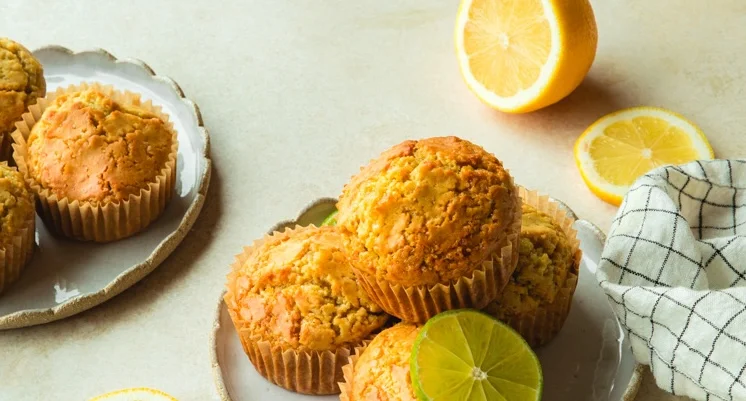
These vegan muffins are a simple, fluffy bake made with plant milk, lemon juice and neutral oil. The straightforward batter makes them a handy base for breakfast or an afternoon snack.
Ingredients
- 300 gplain flour
- 350 mlplant milk (soya, oat or almond)
- 2 tablespoonslemon juice
- 60 mlneutral-tasting oil
- 140 gcane sugar
- 3 g (or 10 g)bicarbonate of soda (or baking powder)
- 1 pinchsalt
Instructions
- 1
Heat the oven
Preheat the oven to 220 °C.
- 2
Mix the liquids
Measure the plant milk in a jug, then add the lemon juice and oil.
- 3
Make the batter
Put the flour, sugar, bicarbonate of soda or baking powder, and salt in a large bowl. Add the liquids and whisk to combine. Add flavouring if you wish, then mix again.
- 4
Fill and bake
Divide the batter between muffin moulds. Bake for 15 minutes, lowering the oven temperature to 200 °C.
- 5
Cool the muffins
Leave the muffins to cool until just warm before removing them from the moulds.
What are vegan muffins?
Muffins are individual, quick-mixed cakes, and this French recipe uses plant milk and oil instead of dairy ingredients. Its short ingredient list makes a plain, adaptable base.
Lemon juice adds acidity to the liquid mixture, while the raising agent helps the batter rise. The method keeps things simple: combine the wet and dry ingredients, then bake.
Nutrition and macros by portion
The nutrition label shows one serving as written: 185 calories, 4g protein, 33g carbs, 6g fat.
| Portion | Adjustment | kcal | Protein | Carbs | Fat |
|---|---|---|---|---|---|
| Lighter | Smaller muffin portions | 130 kcal | 2g | 23g | 4g |
| This serving | As written | 185 kcal | 4g | 33g | 6g |
| Hungry | Two muffins per portion | 278 kcal | 5g | 50g | 8g |
The flour and cane sugar provide most of the carbohydrates, while the neutral oil supplies most of the fat. Protein comes mainly from the flour and varies with the plant milk; serve a muffin with soya yoghurt or another protein-rich side to make a more balanced plate.
Choosing the plant milk
Soya milk: its relatively full-bodied texture makes it a reliable option in this batter.
Oat or almond milk: either can be used, as the recipe allows. Choose an unsweetened variety if you want to keep the added sweetness mainly from the cane sugar.
Bicarbonate or baking powder
Bicarbonate of soda: use 3 g as listed. The lemon juice supplies acidity to the mixture.
Baking powder: the recipe gives 10 g as an alternative. Use one raising-agent option, rather than adding both.
Mixing for a light crumb
Whisk the wet and dry ingredients until combined, then stop rather than working the batter for a long time. A few small lumps are preferable to overmixing, which can make muffins firm.
If adding flavouring, mix it in briefly at the end. The recipe does not specify a type or quantity, so keep any additions modest.
Baking and checking
The oven starts at 220 °C, then the temperature is reduced to 200 °C as the muffins bake for 15 minutes. Make sure the oven is fully hot before putting the tray in.
Look for risen tops that feel set rather than wet. Ovens and mould sizes can vary, so check near the end of the stated baking time.
Serving ideas
Let the muffins cool until just warm so they are easier to remove from their moulds without breaking. They work on their own or alongside fruit for a simple snack.
For a more filling breakfast, serve one with a protein-rich accompaniment such as soya yoghurt. Keep additions separate if you want to preserve the recipe's plain base.
Recipe notes & tips
- Measure the raising agent carefully, especially when using just 3 g of bicarbonate of soda.
- Use a jug to measure the plant milk before adding the lemon juice and oil.
- Whisk only until the batter comes together to help keep the muffins tender.
- Lower the oven temperature to 200 °C when the muffins go in, as directed.
- Allow the muffins to cool until just warm before taking them out of their moulds.
Variations
- Citrus note: add a little finely grated lemon zest to the batter.
- Vanilla: stir a small amount of vanilla extract into the wet ingredients.
- Warm spice: mix ground cinnamon into the dry ingredients.
- Berry addition: fold fresh berries through the finished batter gently.
- Chocolate chips: stir a handful through the batter just before filling the moulds.
Common mistakes to avoid
- Using both raising agents: choose either 3 g bicarbonate of soda or 10 g baking powder.
- Overmixing: stop whisking once the ingredients are combined to avoid a firm crumb.
- Skipping the temperature change: reduce the oven to 200 °C when the muffins go in.
- Removing them while very hot: let them cool until just warm so they release more easily.
- Filling moulds unevenly: divide the batter as evenly as you can for more consistent baking.
How to store
Once completely cool, keep the muffins in an airtight container at room temperature and eat within 2–3 days. Warm briefly in a low oven or microwave if you prefer them slightly warm.
Frequently asked questions
Can I use any plant milk?
The recipe suggests soya, oat or almond milk. Choose whichever you have, keeping in mind that flavour and thickness can vary between types.
Can I use baking powder instead of bicarbonate of soda?
Yes. The recipe gives 10 g baking powder as an alternative to 3 g bicarbonate of soda. Use one or the other.
Why is lemon juice added?
It adds acidity to the liquid mixture, which is useful when the recipe uses bicarbonate of soda. The method adds it to the plant milk before mixing with the dry ingredients.
How long do the muffins bake?
Bake for 15 minutes, reducing the oven temperature from 220 °C to 200 °C when they go in. Check that the tops look set before taking them out.
When should I remove the muffins from their moulds?
Let them cool until just warm first. This helps them hold together as you take them out.
Cook it from the original
This recipe comes from leculdepoule.co. Their page has the author’s own photos, notes and tips — the best place to cook it from.
Open the recipe on leculdepoule.co