
Naan bread, Indian flatbread cooked in a pan
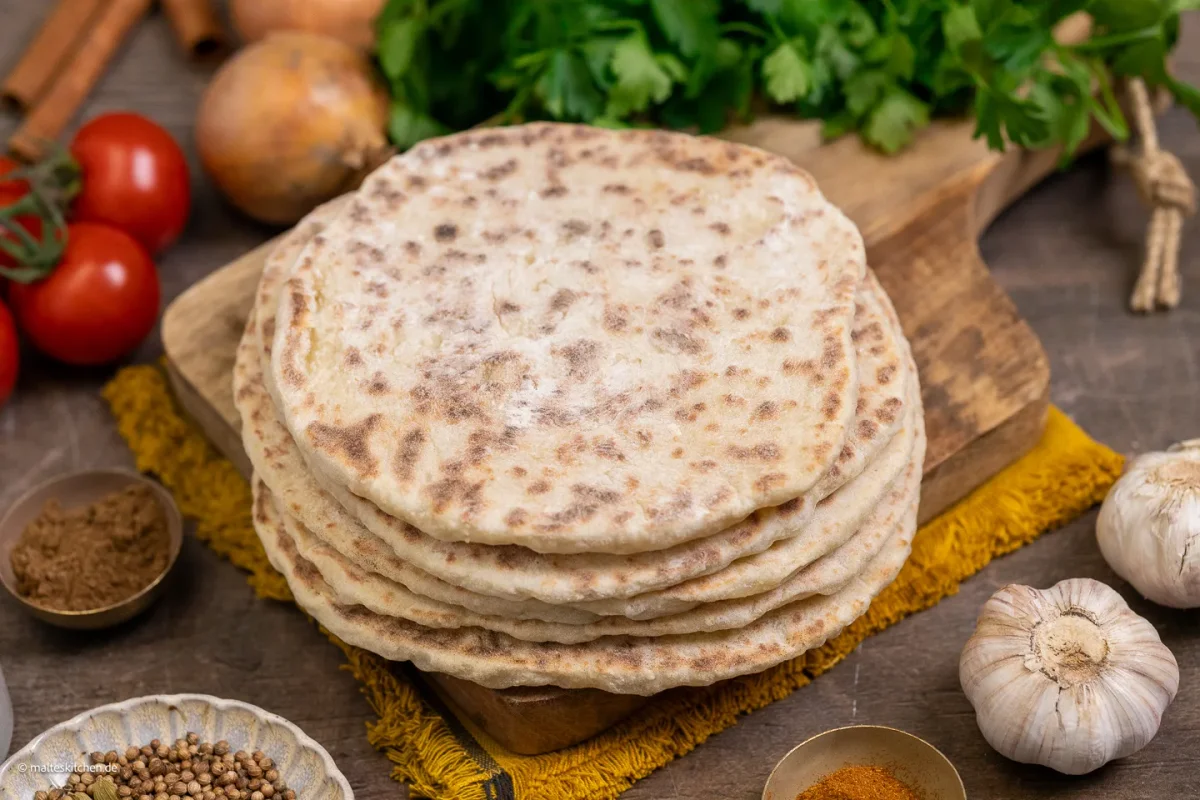
These soft, pan-cooked naan are made with a yoghurt-and-milk dough that turns tender and mild. Serve them warm alongside curries, dals or other Indian-inspired dishes.
Ingredients
- 500 gplain flour
- 7 gdried yeast
- 30 ml (2 tbsp)rapeseed oil
- 130 gyoghurt
- 15 gsugar
- 15 gsalt
- 275 mlmilk
Instructions
- 1
Mix the dough
Put the flour in a large bowl and make a well in the centre. Add the oil, yoghurt, yeast, sugar and salt, then stir with a fork until large clumps form. Pour in the milk and continue mixing with the fork as far as possible, then knead by hand until smooth. Scrape any dough from your hands with the fork or a spoon and roughly shape it into a ball.
- 2
Let it rise
Cover the bowl and leave the dough in a warm place for at least 1 hour, until it has noticeably increased in volume.
- 3
Shape the naans
Divide the dough into 12 portions. Shape each piece into a ball between your hands, then flatten it by hand. Dust lightly with flour and roll it out to about 15 cm in diameter.
- 4
Cook the first side
Heat a frying pan; using two pans will speed things up. Add a dough round and cook over medium heat. When bubbles appear, after about 30 seconds, turn it with a spatula and cook for a little over 30 seconds, watching that it does not burn.
- 5
Finish cooking
Turn the naan again and gently press it down with the spatula for 10–15 seconds. If it puffs up, the inside will be especially soft. Turn it once more for 10–15 seconds, until no raw, doughy patches remain, then lift it out of the pan.
- 6
Keep warm
Set the cooked naans on a wire rack or keep them in a slightly warm oven so they can be served warm. Cook the remaining dough in the same way.
What is naan?
Naan is a soft, leavened flatbread associated with South Asian cooking and commonly served with Indian dishes. This home version is cooked in a frying pan rather than a traditional tandoor.
Yoghurt and milk enrich the dough, while yeast gives it lift. The result is a mild, tender bread that is easy to pair with saucy meals.
Nutrition and macros by portion
The nutrition label shows one serving as written: 212 calories, 7g protein, 42g carbs, 1g fat.
| Portion | Adjustment | kcal | Protein | Carbs | Fat |
|---|---|---|---|---|---|
| Lighter | Serve a smaller naan | 148 kcal | 5g | 29g | 1g |
| This serving | As written | 212 kcal | 7g | 42g | 1g |
| Hungry | Serve an extra naan | 318 kcal | 11g | 63g | 2g |
The flour supplies most of the carbohydrate, while the yoghurt and milk contribute some protein as well as smaller amounts of fat and carbohydrate. Serve a naan with a protein-rich curry and vegetables for a more balanced plate.
Building a smooth dough
Fork first: Stir the flour, oil, yoghurt, yeast, sugar and salt until clumps form, then add the milk. The fork does the initial mixing before hand-kneading brings the dough together.
Knead by hand: Work until the dough looks smooth, scraping sticky bits from your fingers with a fork or spoon as needed. A roughly rounded shape is enough before the rise.
The rise matters
Warm rest: Cover the bowl and leave the dough somewhere warm for at least an hour. Look for a noticeable increase in volume rather than relying only on the clock.
Covered dough: A cover helps keep the surface from drying while the dough rests. Keep it in the bowl until you are ready to divide and shape it.
Rolling even rounds
Portioning: The method divides the dough into 12 pieces, although the recipe lists 10 servings. For evenly sized naans, divide the dough consistently and roll each piece to about 15 cm across.
Light dusting: Use just enough flour to stop sticking as you roll. Too much can remain on the bread and scorch in the hot pan.
Cooking in the pan
Watch the bubbles: Cook the first side over medium heat until bubbles appear, usually after about 30 seconds, then turn it. The following cooking times are short, so stay by the pan.
Check the centre: Press the naan gently during the final turns and look for any raw, doughy patches. A puffed naan is a welcome sign of a soft interior, but it still needs to cook through.
Serving and timing
Cook in batches: Each naan takes only a short time in the pan, but the dough is cooked one round at a time. Two pans can make the process quicker if you have them.
Serve warm: Keep finished breads on a wire rack or in a slightly warm oven while the remaining dough cooks. They are a natural partner for curry, dal or other dishes with a sauce to scoop up.
Recipe notes & tips
- Use two frying pans if you want to cook the naan more quickly.
- Keep the dough covered during its rise so the surface does not dry out.
- Roll the portions to a similar size so they cook at a similar pace.
- Stay beside the pan because the naan cooks in short bursts.
- Keep cooked naan warm in a slightly warm oven while you finish the batch.
Variations
- Garlic finish: Brush cooked naan with garlic-infused oil if you have it to hand.
- Herb finish: Scatter chopped fresh herbs over the naan just before serving.
- Spiced dough: Add a little ground spice to the dough for a warmer flavour.
- Seed topping: Press a few seeds onto each round before cooking.
- Yoghurt swap: Use plain yoghurt in the dough, keeping the stated quantity the same.
Common mistakes to avoid
- Skipping the rise: The dough needs at least 1 hour in a warm place and should noticeably increase in volume.
- Over-flouring: Too much flour on the rounds can scorch; dust them lightly.
- Heat too high: The naan may burn before it cooks through; use medium heat and watch closely.
- Walking away from the pan: The short cooking times make it easy to miss the bubbles or overcook a side.
- Serving the batch cold: Keep cooked naan on a wire rack or in a slightly warm oven while the rest cooks.
How to store
Keep cooled naan in an airtight container at room temperature for up to 2 days. Reheat briefly in a dry frying pan or warm oven until soft and heated through.
Frequently asked questions
How many naans does this recipe make?
The method divides the dough into 12 portions, while the recipe lists 10 servings. Follow the 12-portion instruction for smaller naans, or make fewer, larger ones.
How do I know when the dough has risen enough?
After at least 1 hour in a warm place, it should have noticeably increased in volume. If it has not, give it more time.
Why is my naan not puffing up?
Puffing is not guaranteed, but a hot pan and evenly rolled dough help. Cook each side briefly and check that the pan is not too cool.
Can I make the dough ahead?
The method does not give instructions for an overnight rise. For the most reliable result, follow the stated rise of at least 1 hour in a warm place.
What should I serve with naan?
Serve it warm with curry, dal or another saucy Indian-inspired dish. It also works alongside vegetables and a protein-rich main.
Can I freeze cooked naan?
Yes. Cool the naan completely, pack it airtight and freeze. Reheat from thawed in a dry frying pan or warm oven.
Cook it from the original
This recipe comes from malteskitchen.de. Their page has the author’s own photos, notes and tips — the best place to cook it from.
Open the recipe on malteskitchen.de