
Crema catalana – the best authentic recipe
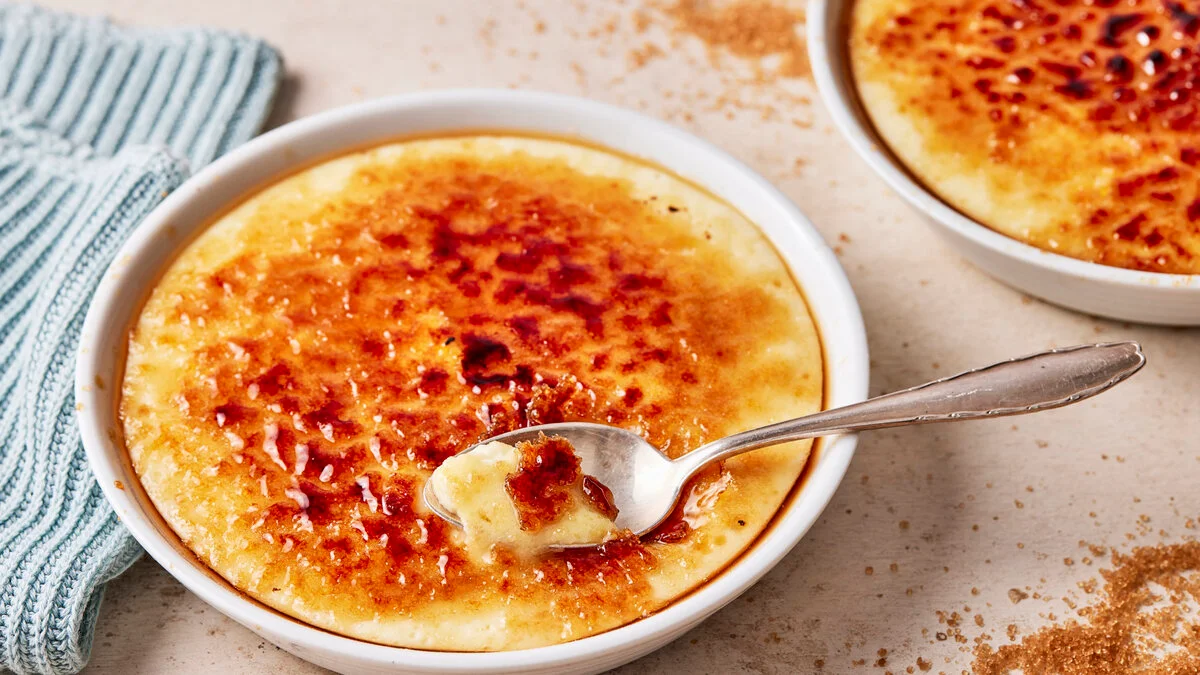
Crema catalana is a chilled Catalan custard topped with a thin, crackling layer of caramelised sugar. This version is flavoured with cinnamon and lemon, and makes an elegant dessert that can be prepared ahead.
Ingredients
- 800 mlmilk
- 1cinnamon stick
- 1unwaxed lemon
- 6 (size M)egg yolks
- 80 gsugar
- 50 gcornflour
- 2–4 tbspsoft brown sugar
Instructions
- 1
Heat the milk
Bring the milk and cinnamon stick to the boil. Wash and dry the lemon, then use a vegetable peeler to remove 2 strips of zest and add them to the milk. In a bowl, whisk the egg yolks and sugar until creamy, then stir in the cornflour.
- 2
Strain the milk
Pour the hot cinnamon milk through a sieve into the egg mixture, leaving a small amount—about 2–3 tbsp—in the pan. Remove the cinnamon stick and lemon zest from the sieve, then briefly whisk the egg and milk mixture.
- 3
Thicken the custard
Pour the egg and milk mixture back into the pan in small additions. Bring it briefly to the boil, stirring constantly, then cook over a medium heat for about 4 minutes, stirring, until thickened. It should set without continuing to bubble vigorously.
- 4
Strain and chill
Pass the custard through a sieve to remove any lumps. Divide it while hot among dessert dishes about 14 cm in diameter and with a 200 ml capacity. Chill for about 4 hours.
- 5
Caramelise the sugar
Just before serving, sprinkle the brown sugar over the desserts and caramelise it with a kitchen blowtorch. Alternatively, use the grill setting of an oven preheated to 220°C and caramelise for about 3–4 minutes. Serve immediately.
What is crema catalana?
Crema catalana is a Catalan custard dessert, traditionally served chilled beneath a crisp layer of caramelised sugar. It is closely associated with Catalonia in north-eastern Spain, where it is also known as crema cremada.
This version infuses the milk with cinnamon and lemon zest before thickening it with egg yolks and cornflour. The result is a softly set custard with a fragrant flavour and a brittle sugar top.
Nutrition and macros by portion
The nutrition label shows one serving as written: 350 calories, 9g protein, 54g carbs, 11g fat.
| Portion | Adjustment | kcal | Protein | Carbs | Fat |
|---|---|---|---|---|---|
| Lighter | Use less topping sugar | 245 kcal | 6g | 38g | 8g |
| This serving | As written | 350 kcal | 9g | 54g | 11g |
| Hungry | Serve a larger portion | 525 kcal | 14g | 81g | 17g |
Most of the carbohydrates come from the sugar, cornflour and milk, while the egg yolks and milk contribute much of the fat and protein. Enjoy a dish alongside fresh fruit if you would like a simple way to balance the dessert.
Infuse the milk gently
Cinnamon: the stick flavours the milk as it heats, so there is no need to grind it into the custard. Remove it after straining to keep the texture smooth.
Lemon: use a peeler to take only two strips of zest, avoiding as much of the bitter white pith as possible. An unwaxed lemon is useful because its peel goes directly into the milk.
Mix the yolks and cornflour
Egg yolks: whisk them with the sugar until creamy before adding the cornflour. This gives the thickener a chance to disperse through the mixture rather than forming dry pockets.
Hot milk: pour it through a sieve into the bowl, keeping a little behind in the pan as directed. Whisk briefly, then return the mixture to the pan gradually to help it combine evenly.
Watch the thickening stage
Steady stirring: keep the custard moving as it heats so it thickens evenly and is less likely to catch on the bottom of the pan. Once it reaches a brief boil, lower the heat to medium.
Doneness: cook for about 4 minutes, until the mixture has thickened and no longer bubbles vigorously. It will firm up further as it cools.
Strain for a smooth finish
Hot custard: pass it through a sieve before filling the dishes to catch any lumps. Pour it into the dishes straight away, while it is still hot.
Chilling: allow about 4 hours for the custard to cool and set. Keep the sugar topping for just before serving so it stays crisp.
Make the crisp sugar top
Blowtorch: sprinkle the brown sugar over the chilled custard and move the flame across the surface until the sugar melts and darkens. Keep the flame moving to avoid scorching one spot.
Oven grill: the alternative is a grill preheated to 220°C, with the dishes under it for about 3–4 minutes. Watch closely, since the sugar can go from caramelised to burnt quickly.
Serving and timing
Serve the desserts as soon as the sugar has caramelised, while the crust is still brittle. The cool custard beneath it creates the characteristic contrast in temperature and texture.
The custard needs about 4 hours to chill, so make it well ahead and finish the top at the last moment. Small dishes make it easier to portion and to caramelise the sugar evenly.
Recipe notes & tips
- Peel off only the coloured lemon zest, not the bitter white pith.
- Whisk the cornflour into the yolks and sugar before adding the hot milk.
- Pour the hot milk gradually into the egg mixture while whisking.
- Keep stirring as the custard thickens, especially across the bottom of the pan.
- Chill the custard fully before adding the brown sugar.
- Watch the sugar closely under the grill, as it caramelises quickly.
Variations
- More citrus: add another strip of lemon zest while infusing the milk.
- Orange note: replace the lemon zest with two strips of orange zest.
- Extra cinnamon: serve with a light dusting of ground cinnamon.
- Fine sugar crust: use caster sugar for the topping if you prefer a finer layer.
- Blowtorch finish: caramelise each dish individually for more control over the crust.
Common mistakes to avoid
- Too much pith: it can make the citrus flavour bitter; peel only the yellow outer zest.
- Lumpy cornflour: whisk it into the yolk mixture before adding liquid.
- Rushing the milk: add it in a steady stream while whisking to help the mixture combine smoothly.
- Leaving the pan unattended: constant stirring helps stop the custard catching or forming lumps.
- Caramelising too early: add the sugar just before serving so the crust stays crisp.
- Overdoing the grill: check the sugar frequently and remove the dishes as soon as it has caramelised.
How to store
Cover and refrigerate the uncaramelised custards for up to 2 days. Add the brown sugar and caramelise just before serving; the finished crust softens in storage. This dessert is best served chilled and should not be reheated.
Frequently asked questions
Can I make crema catalana ahead?
Yes. Make and chill the custards ahead, then add and caramelise the brown sugar just before serving.
Can I caramelise the topping without a blowtorch?
Yes. Use the grill setting of an oven preheated to 220°C and grill for about 3–4 minutes, watching closely.
How do I know when the custard has thickened?
After about 4 minutes over a medium heat, it should be thick and should not be bubbling vigorously. It will become firmer as it chills.
Why should I strain the custard?
Straining catches any lumps and pieces of lemon zest or cinnamon, leaving a smoother custard.
Can I use a different citrus fruit?
Orange zest can be used in place of the lemon for a different citrus aroma. Keep the amount modest so it does not overpower the cinnamon.
Cook it from the original
This recipe comes from einfachkochen.de. Their page has the author’s own photos, notes and tips — the best place to cook it from.
Open the recipe on einfachkochen.de