
Antipasti platter
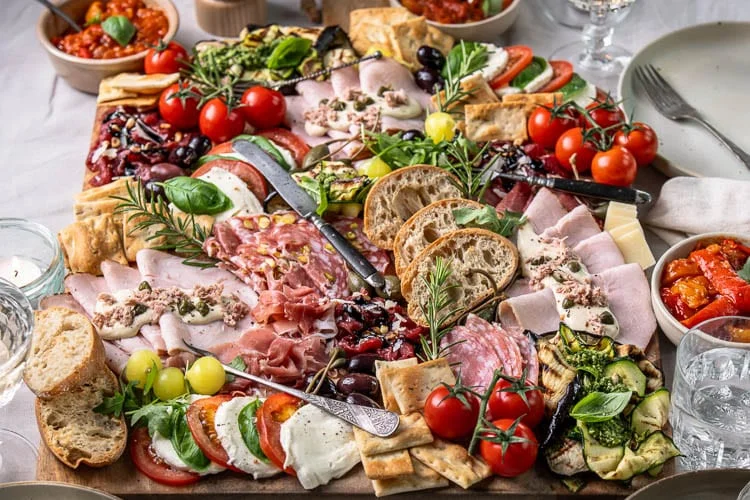
This Italian antipasti platter brings together carpaccio, vitello tonnato, Caprese salad, vegetables, cured meats, cheeses and bread for a colourful spread to share. It suits a festive gathering and can be assembled quickly once the prepared dishes are ready.
Ingredients
- 125 gcarpaccio
- 1 portionvitello tonnato
- 1 portionpeperonata
- 1 portionCaprese salad
- 1 portiongarlic mushrooms
- to tastegrilled vegetables (aubergine, courgette)
- to tasteItalian sweet-and-sour onions
- to tasteItalian cured meats (salami, prosciutto, mortadella)
- to tasteItalian cheeses (Parmesan, provolone)
- to tastegreen pesto
- to tasteolives
- to tastescrocchi (Italian crackers, or grissini)
- to tasteciabatta
- to tastebasil
- to tastefresh rosemary (for garnish or cocktail sticks)
Instructions
- 1
Find the recipes
The separate recipes for the dishes on this Italian antipasti platter are available on Mind Your Feed. Select a dish in the ingredient list there to go to its recipe.
- 2
Prepare the dishes
Start by making the peperonata, garlic mushrooms, fresh pesto and the mayonnaise for the vitello tonnato.
- 3
Arrange the classics
The ingredients are intended for 4 people. First arrange the carpaccio, vitello tonnato and Caprese salad on the sharing platter, dividing each into 4 small portions across the platter.
- 4
Fill the platter
Add the vegetables, cured meats, cheeses, ciabatta and crackers to fill out the platter. Place small bowls of pesto and peperonata among the other bites.
What is an antipasti platter?
Antipasti are Italian appetisers served before a meal, often combining small savoury bites rather than one main dish. This version turns that idea into a generous sharing platter, with familiar Italian ingredients arranged for a festive table.
The contrast is what makes it work: fresh Caprese salad sits alongside rich cured meats and cheeses, while vegetables, olives and bread offer different flavours and textures.
Nutrition and macros by portion
The nutrition label shows one serving as written: 650 calories, 32g protein, 42g carbs, 38g fat.
| Portion | Adjustment | kcal | Protein | Carbs | Fat |
|---|---|---|---|---|---|
| Lighter | More vegetables, less cheese | 455 kcal | 22g | 29g | 27g |
| This serving | As written | 650 kcal | 32g | 42g | 38g |
| Hungry | Add extra ciabatta | 975 kcal | 48g | 63g | 57g |
The bread and crackers provide most of the carbohydrate, while the cured meats, cheeses, carpaccio and vitello tonnato contribute protein and much of the fat. The exact nutrition will vary with the portions and recipes used; serve a generous share of the vegetables and Caprese salad alongside the richer bites to balance the plate.
Prepare the components first
Make-ahead dishes: the method starts with peperonata, garlic mushrooms, fresh pesto and the mayonnaise for the vitello tonnato. Having those components ready makes the final assembly straightforward.
Ready-to-serve items: carpaccio, cured meats, cheeses, olives and crackers need only arranging. Keep the bread and crackers accessible so guests can build their own bites.
Build the platter in stages
Classic centrepieces: start with the carpaccio, vitello tonnato and Caprese salad, divided into four small portions across the platter. Spacing them out makes the main dishes easy to reach.
Fill the gaps: add grilled vegetables, cured meats, cheeses, ciabatta and crackers afterwards. Small bowls of pesto and peperonata help keep sauces contained.
Balance the flavours
Rich and savoury: carpaccio, vitello tonnato, salami, prosciutto, mortadella and cheese bring plenty of savoury depth. Offer them alongside the vegetables and salad rather than grouping all the richer bites together.
Bright accents: sweet-and-sour onions and olives add sharp, briny notes, while pesto brings a fragrant herbal flavour. Ciabatta and crackers make useful bases for combining the different components.
Make the platter easy to share
Four portions: the recipe is designed for four people, so spread the classic dishes across the board rather than leaving them in one large pile. This helps everyone reach a little of each.
Serving dishes: use small bowls for the pesto and peperonata, and keep the crackers and ciabatta within reach. Rosemary can be used as a garnish or for cocktail sticks, as suggested in the ingredient list.
What to serve alongside
This platter is designed to be served as a selection of appetisers, but it can also be part of a larger celebratory meal. For a fuller table, offer extra bread and a simple green salad alongside it.
Because the board already includes meat, cheese, vegetables and bread, there is no need for another elaborate accompaniment.
Recipe notes & tips
- Prepare the peperonata, mushrooms, pesto and vitello tonnato mayonnaise before you begin arranging the platter.
- Divide the three classic dishes into four small portions so they are easy to share.
- Use small bowls for the pesto and peperonata to keep their sauces from spreading across the platter.
- Keep crackers and ciabatta near the platter so guests can help themselves.
- Arrange the ingredients in separate groups to make the different choices easy to see.
Variations
- Add artichokes: include drained artichoke hearts for another vegetable bite.
- Swap the crackers: use grissini in place of scrocchi, as the recipe suggests.
- Change the cheese: choose other Italian cheeses in place of Parmesan or provolone.
- Add fresh herbs: scatter extra basil over the Caprese salad just before serving.
- Make it meat-free: replace the carpaccio and cured meats with extra grilled vegetables and cheese.
Common mistakes to avoid
- Making the board too crowded: leave a little space between groups so each item is easy to pick up.
- Putting sauces directly on the platter: serve pesto and peperonata in small bowls to keep the other bites neat.
- Leaving the classics in one pile: divide them into four small portions and spread them across the board.
- Adding crackers too early: place them near the platter shortly before serving so they stay crisp.
- Forgetting serving utensils: provide small forks or cocktail sticks for the prepared dishes and olives.
How to store
Refrigerate leftover meat, cheese, salad and cooked vegetable components promptly in separate covered containers and use within 2 days. Store bread and crackers separately at room temperature, and reheat only the cooked components that are meant to be served warm.
Frequently asked questions
Can I prepare the antipasti platter ahead of time?
Prepare the peperonata, garlic mushrooms, pesto and other component recipes in advance. Assemble the platter closer to serving so the bread and crackers keep their texture.
How much should I make for four people?
The recipe lists 125 g of carpaccio and one portion each of vitello tonnato, peperonata, Caprese salad and garlic mushrooms. The remaining platter items are listed without quantities, so adjust them to suit your group and the other food being served.
What can I use instead of scrocchi?
The ingredient list suggests grissini as an alternative. Ciabatta is also included on the platter.
Can I leave out the meat?
Yes. Leave out the carpaccio, vitello tonnato and cured meats, and serve extra grilled vegetables, salad, olives and cheese instead.
How should I arrange the platter?
Put the carpaccio, vitello tonnato and Caprese salad on first, divided into four small portions. Fill the remaining spaces with vegetables, meats, cheeses, bread and crackers, with pesto and peperonata in bowls.
Cook it from the original
This recipe comes from mindyourfeed.nl. Their page has the author’s own photos, notes and tips — the best place to cook it from.
Open the recipe on mindyourfeed.nl