
Panellets – the authentic Catalan recipe
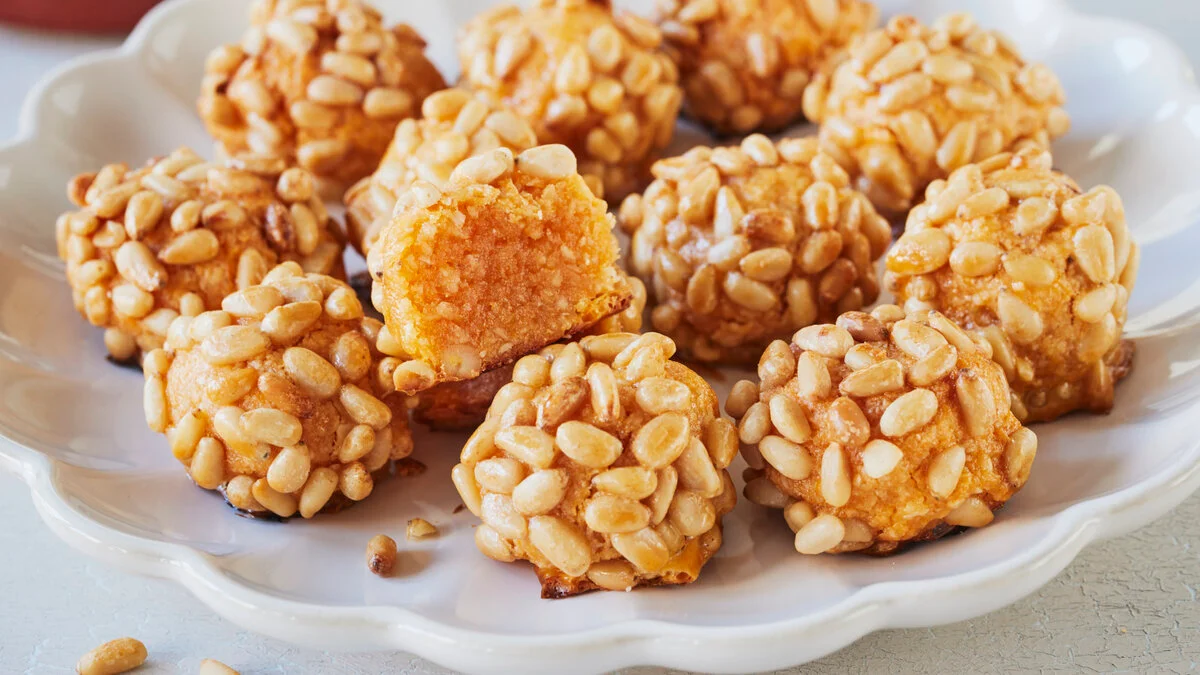
Panellets are small Catalan almond sweets traditionally made for All Saints’ Day. Sweet potato keeps this version soft inside, while pine nuts form a crisp, golden coating.
Ingredients
- 1 small (about 200 g)sweet potato
- A littlesalt
- 300 gblanched ground almonds
- 300 gsugar
- 1 tsplemon zest (optional)
- 200 gpine nuts (or chopped or flaked almonds)
- 2medium egg yolks
- 1 tbspmilk
Instructions
- 1
Cook the potato
Put the sweet potato, skin on, into a pan of lightly salted water and bring it to the boil. Cook for about 20 minutes, until tender. Alternatively, wrap it in foil and bake it in a preheated oven at 180°C conventional (160°C fan) for about 45 minutes; you can do this up to 2 days ahead.
- 2
Mix the dough
Peel the sweet potato while it is still warm and mash the flesh with a fork. Mix the ground almonds, sugar and lemon zest in a bowl, then add the mash and knead everything into a soft dough. Leave it to stand for 15 minutes. Meanwhile, preheat the oven to 180°C conventional (160°C fan) and line a baking tray with baking paper.
- 3
Shape the balls
Put the pine nuts in a shallow dish. Beat the egg yolks with the milk in a small bowl. Use a teaspoon to divide the sweet potato mixture into 25 walnut-sized portions, then shape each into a ball with slightly damp hands.
- 4
Coat and bake
Roll the balls in the pine nuts, then dip them in the egg mixture. Arrange them spaced apart on the prepared tray and bake in the preheated oven for about 10–12 minutes. Leave them to cool completely.
What are panellets?
Panellets are bite-sized Catalan sweets traditionally associated with All Saints’ Day, or Tots Sants. Almonds and sugar make up the base, and they are often coated in pine nuts.
This version uses sweet potato in the dough, lending the centres a soft, moist texture. The brief bake sets the coating without drying out the almond mixture.
Nutrition and macros by portion
The nutrition label shows one serving as written: 143 calories, 4g protein, 16g carbs, 12g fat.
| Portion | Adjustment | kcal | Protein | Carbs | Fat |
|---|---|---|---|---|---|
| Lighter | Smaller panellets | 100 kcal | 3g | 11g | 8g |
| This serving | As written | 143 kcal | 4g | 16g | 12g |
| Hungry | Larger portion | 215 kcal | 6g | 23g | 18g |
Almonds, pine nuts and egg yolks contribute most of the fat and some protein, while the sugar provides most of the carbohydrates. The sweet potato adds a smaller amount of carbohydrate. Pair a couple of panellets with fresh fruit for a more balanced snack.
Building the dough
Sweet potato: cook it until a fork slips easily into the centre, then mash it while warm so it combines smoothly with the other ingredients.
Almonds and sugar: mix these with the lemon zest before adding the mash. The dough should feel soft and hold together; the 15-minute rest gives it time to settle before shaping.
Coating with pine nuts
Pine nuts: roll each ball around in a shallow dish, pressing gently so the nuts cling to the surface.
Egg wash: dip the coated balls in the yolk and milk mixture to help the outside brown in the oven. Let any excess drip off before placing them on the tray.
Shaping and spacing
Portions: aim for 25 walnut-sized pieces, keeping them roughly even so they bake at the same rate. Slightly damp hands make the soft dough easier to roll.
Tray: leave a little space around each ball so the coatings do not touch. If needed, bake in batches rather than crowding the tray.
When they are done
Timing: start checking at 10 minutes, since oven performance and the size of the balls can affect how quickly they bake.
Texture: the pine nuts should look lightly golden and the outside should feel set. The centres are meant to stay tender, so avoid baking until the dough feels firm throughout.
Serving and storing
Cooling: leave the panellets to cool completely before serving; this gives the soft centres time to firm up and makes them easier to handle.
To serve: offer them with coffee or tea as a small sweet. For a balanced snack plate, pair one or two with fresh fruit.
Recipe notes & tips
- Cook the sweet potato until fully tender so it mashes without leaving lumps.
- Measure the portions with a teaspoon to help make all 25 panellets a similar size.
- Dampen your hands lightly whenever the dough starts to stick.
- Press the pine nuts gently into the dough so they stay in place during baking.
- Cool the panellets fully before packing them away.
Variations
- Almond coating: use chopped or flaked almonds instead of pine nuts.
- Lemon zest: leave it out for a simpler almond flavour.
- Smaller sweets: make more, smaller balls and begin checking them earlier.
- Make ahead: cook the sweet potato up to 2 days in advance, as described in the method.
Common mistakes to avoid
- Undercooked potato: cook until fork-tender so it mashes evenly.
- Lumpy dough: mash the warm sweet potato thoroughly before mixing it in.
- Dry hands: dampen them slightly to shape the soft mixture more easily.
- Loose coating: roll the balls gently in the pine nuts and press them on lightly.
- Overbaking: check from 10 minutes and take them out once the coating is lightly golden.
How to store
Once completely cool, store the panellets in an airtight container at room temperature for at least 1 week. They are best eaten as they are; reheating can soften or darken the pine-nut coating.
Frequently asked questions
Can I cook the sweet potato ahead?
Yes. The recipe allows you to cook it up to 2 days ahead, then peel and mash it when you make the dough.
Can I use a different coating?
Yes. Chopped or flaked almonds can replace the pine nuts, as listed in the ingredients.
How do I know when the panellets are baked?
After about 10–12 minutes, the coating should be lightly golden and the outside set. The centres should remain soft.
Why is the dough sticky?
The sweet potato makes this dough soft. Shape it with slightly damp hands and portion it with a teaspoon.
Do panellets need to be refrigerated?
The recipe recommends keeping them in an airtight container, where they will keep for at least a week. Refrigeration is not specified.
Cook it from the original
This recipe comes from einfachbacken.de. Their page has the author’s own photos, notes and tips — the best place to cook it from.
Open the recipe on einfachbacken.de