
Braised cacciatore chicken legs
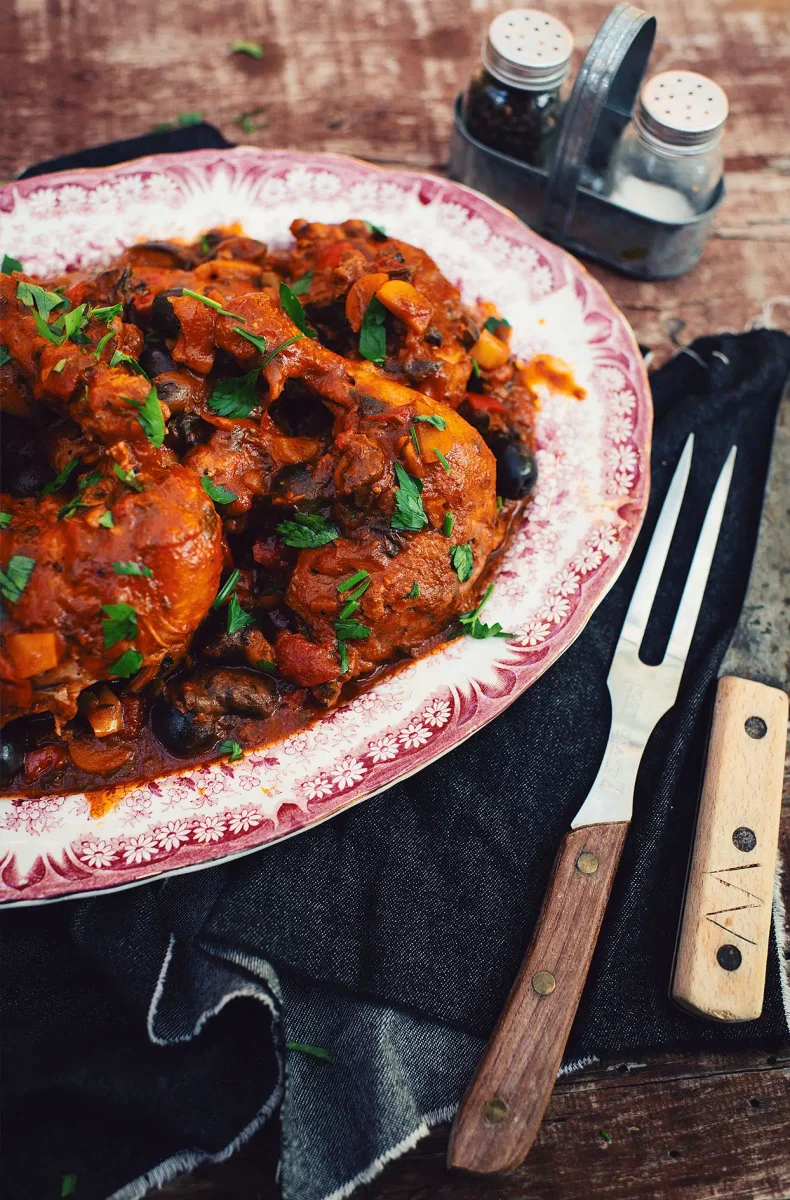
Chicken legs are browned, then gently braised in a tomato and red wine sauce with olives, capers and vegetables. It is a hearty, hands-off supper with plenty of sauce for serving over rice.
Ingredients
- 6 (1.2 kg total)chicken legs, with the whole back removed
- A drizzleolive oil
- 1yellow onion, finely chopped
- 3 clovesgarlic, finely chopped
- 4Nantes carrots, halved and sliced
- 1red bell pepper, diced
- 1orange bell pepper, diced
- 227 gcremini mushrooms, sliced
- 1 can (398 ml)whole pitted black olives
- 60 ml (¼ cup)capers
- 240 ml (1 cup)red wine
- 5 sprigsfresh thyme
- 60 ml (¼ cup)fresh parsley, finely chopped
- 60 ml (¼ cup)fresh basil, finely chopped
- 1 teaspoondried oregano
- 1 can (796 ml)crushed tomatoes
- 1 can (398 ml)fire-roasted diced tomatoes, or regular diced tomatoes
- 3 tablespoonstomato paste
- To tastesalt and freshly ground pepper
Instructions
- 1
Brown the chicken
Heat a large saucepan over medium heat and add a drizzle of olive oil. Season the chicken legs generously with salt and pepper, then brown them for 2 to 3 minutes per side. Set them aside.
- 2
Cook the vegetables
Add the onion, garlic and carrots to the pan, season with salt and pepper, and add a little more olive oil if needed. Cook for 3 to 4 minutes, stirring.
- 3
Add peppers and olives
Add the peppers, mushrooms, olives and capers, then pour in a thin stream of olive oil. Season with salt and pepper and cook for 3 to 4 minutes, stirring.
- 4
Deglaze with wine
Pour in the red wine and stir, scraping the bottom of the pan to loosen the browned bits.
- 5
Braise and serve
Add the remaining ingredients and the chicken legs, season with salt and pepper, and stir well. Cover and bring to a boil, then reduce the heat to medium-low. Simmer for 45 minutes, stirring occasionally. Serve with rice and garnish with fresh parsley.
What is cacciatore chicken?
Cacciatore means “hunter-style” in Italian, and the dish is commonly made by braising chicken with tomatoes, herbs and other savoury ingredients. This Québécoise version leans into a generous tomato sauce, with red wine, black olives and capers for a tangy, robust flavour.
The chicken browns before it simmers, while the vegetables and canned tomatoes make a substantial sauce. It is well suited to a slow evening meal, especially with rice to catch the juices.
Nutrition and macros by portion
The nutrition label shows one serving as written: 390 calories, 33g protein, 25g carbs, 18g fat.
| Portion | Adjustment | kcal | Protein | Carbs | Fat |
|---|---|---|---|---|---|
| Lighter | More vegetables, less chicken | 273 kcal | 23g | 18g | 13g |
| This serving | As written | 390 kcal | 33g | 25g | 18g |
| Hungry | Add extra rice | 585 kcal | 50g | 38g | 27g |
The chicken supplies most of the protein and a substantial share of the fat; the tomato, carrots, peppers and onion contribute carbohydrates and fibre. Rice served alongside adds further carbohydrates, so balance the plate with a generous amount of the vegetables and sauce.
Brown the chicken first
Chicken legs: Give them room in the saucepan and brown both sides for the full 2 to 3 minutes. This develops colour and leaves browned bits in the pan to enrich the sauce.
Pan fond: Scrape the base when you add the wine. Those browned fragments loosen into the liquid and help build flavour.
Build the vegetable base
Onion and carrots: These go in first and cook for 3 to 4 minutes, giving the firmer vegetables a head start. Stir as they cook so the garlic does not catch on the pan.
Peppers and mushrooms: Add these with the olives and capers for another 3 to 4 minutes. The olives and capers bring salt and briny sharpness, so season in stages and taste before adding much more salt.
Keep the braise gentle
After bringing the covered pan to a boil, reduce the heat to medium-low for the 45-minute simmer. The sauce should bubble gently rather than boil hard.
Stir occasionally, reaching down to the base of the pan. This helps prevent the tomato sauce from sticking while the chicken cooks.
Check the chicken and sauce
The chicken should be tender after simmering and easy to pierce near the joint. If it still feels firm, continue cooking gently until tender.
The sauce should be thick enough to coat the chicken but still spoonable over rice. If it seems especially loose, let it simmer uncovered briefly, keeping an eye on the base.
Serve it with something to catch the sauce
Rice is the suggested accompaniment and makes good use of the tomato and wine sauce. Spoon the chicken and vegetables over the rice, then finish with fresh parsley.
For a different plate, serve it with pasta or crusty bread. A simple green salad can bring a fresh contrast to the rich braise.
Recipe notes & tips
- Pat the chicken dry before browning to help it colour rather than steam.
- Use a saucepan large enough to hold the chicken and vegetables without crowding.
- Add salt cautiously because olives and capers are already salty.
- Scrape the pan thoroughly when stirring in the red wine.
- Keep the lid on during the simmer and stir occasionally.
- Chop the parsley garnish just before serving for a fresh finish.
Variations
- Use regular tomatoes: Swap the fire-roasted diced tomatoes for the regular ones specified in the recipe.
- Change the olives: Use another pitted olive variety if black olives are unavailable.
- Add more herbs: Increase the fresh parsley or basil garnish to taste.
- Serve with pasta: Spoon the chicken and sauce over cooked pasta instead of rice.
- Make it less briny: Reduce the capers or olives to suit your preference.
Common mistakes to avoid
- Crowding the pan: The chicken may steam rather than brown; brown it in batches if needed.
- Skipping the scrape: Leaving the browned bits behind wastes flavour; loosen them with the wine.
- Boiling too hard: A vigorous boil can make the sauce splatter and catch; lower the heat after it boils.
- Adding too much salt early: Olives and capers add saltiness; season gradually and taste the sauce.
- Stirring too rarely: Tomato sauce can stick to the base; stir occasionally during the simmer.
How to store
Refrigerate leftovers in a covered container for up to 3 days. Reheat gently in a saucepan until piping hot, adding a splash of water if the sauce has thickened; rice is best stored separately.
Frequently asked questions
Can I use regular diced tomatoes?
Yes. The recipe specifically allows regular diced tomatoes in place of fire-roasted ones.
How do I know when the chicken is done?
After the 45-minute simmer, it should be tender and easy to pierce near the joint. If it is still firm, continue simmering gently until tender.
Can I make the dish ahead?
Yes. Cool and refrigerate it in a covered container, then reheat gently until piping hot. The sauce may thicken in the fridge, so add a little water if needed.
What can I serve with cacciatore chicken?
Rice is the suggested accompaniment. Pasta or crusty bread also works well for serving with the sauce.
Can I leave out the capers?
You can omit them, though the sauce will be less briny and tangy. Taste before adjusting the salt, since the olives also season the dish.
Cook it from the original
This recipe comes from lecoupdegrace.ca. Their page has the author’s own photos, notes and tips — the best place to cook it from.
Open the recipe on lecoupdegrace.ca