
Pain perdu
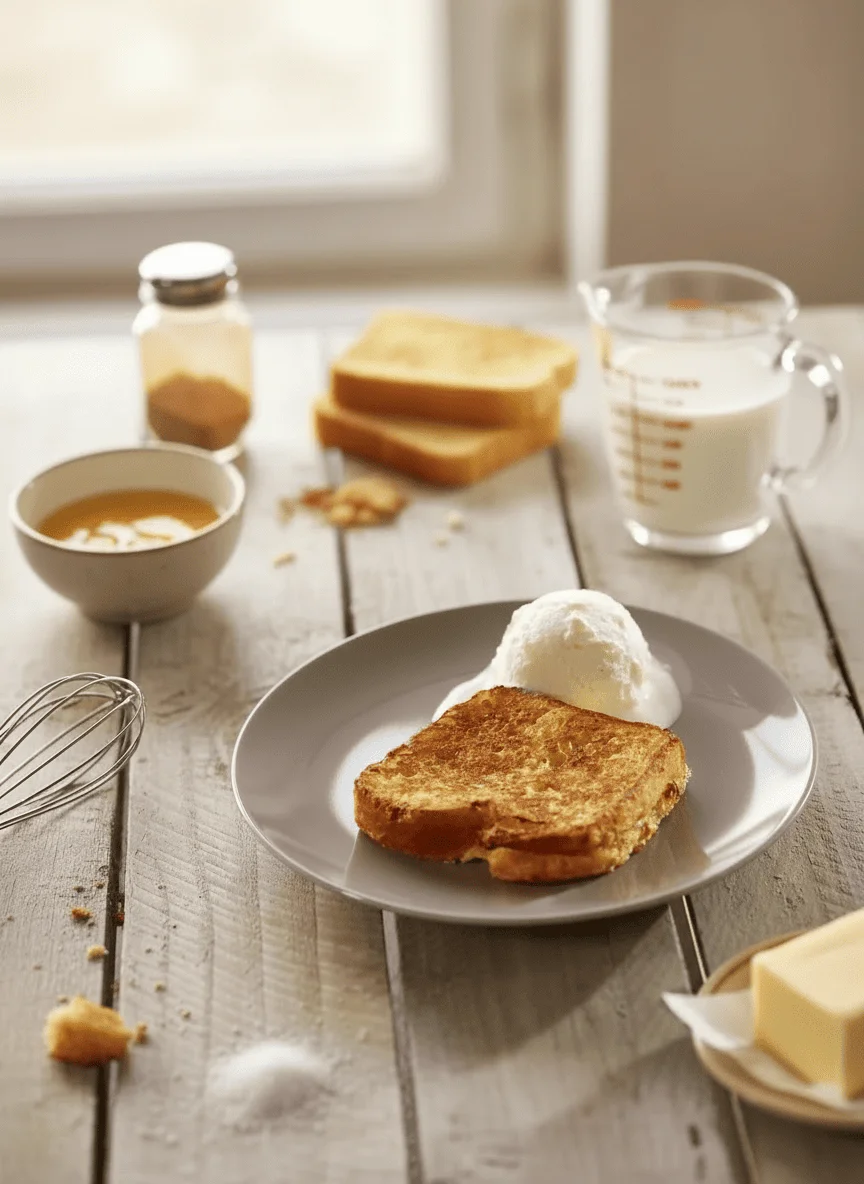
Pain perdu is French-style French toast: stale bread soaked in a lightly spiced egg-and-milk mixture, then cooked in butter until golden. It turns leftover bread into a warm, comforting breakfast or dessert in about 15 minutes.
Ingredients
- 2eggs
- 1 litremilk
- 100 gvergeoise sugar
- 2 pinchesground cinnamon
- 100 gbutter
- 6 or 12 slicesstale bread
- to tasteicing sugar
Instructions
- 1
Mix the custard
Beat the eggs and milk together in a bowl. Add the vergeoise sugar and cinnamon, then mix until combined.
- 2
Cook the bread
Melt a piece of butter in a frying pan. Dip a slice of bread in the egg mixture just long enough to soak it, then place it in the pan. Cook 2 or 3 slices at a time, depending on the size of the pan, until golden on both sides. Add a little more butter between batches if needed.
- 3
Serve warm
Serve straight away while hot, with a dusting of icing sugar.
What is pain perdu?
Pain perdu, literally “lost bread”, is a traditional French way to use up bread that has gone stale. Bread is soaked in an egg-and-milk mixture, then fried until its outside is golden and its centre is soft.
This version gets warmth from cinnamon and a caramel-like note from vergeoise sugar. Cooking the slices in butter gives them a rich, browned finish.
Nutrition and macros by portion
The nutrition label shows one serving as written: 430 calories, 13g protein, 57g carbs, 18g fat.
| Portion | Adjustment | kcal | Protein | Carbs | Fat |
|---|---|---|---|---|---|
| Lighter | Use less butter | 301 kcal | 9g | 40g | 13g |
| This serving | As written | 430 kcal | 13g | 57g | 18g |
| Hungry | Choose 6 slices | 645 kcal | 20g | 86g | 27g |
The bread and vergeoise sugar provide most of the carbohydrates, while butter supplies much of the fat and eggs and milk contribute protein. Serve a moderate portion with fruit or plain yoghurt to add freshness and balance the rich, sweet slices.
Choosing the bread
Stale bread: slightly dry slices absorb the mixture without falling apart as readily as fresh bread. The recipe allows either 6 or 12 slices, so the result will depend on how thickly you cut them and how much custard they take up.
Slice thickness: use slices of similar thickness so they soak and cook at roughly the same pace.
Getting the soak right
Quick dip: let each slice absorb some of the egg mixture, but do not leave it sitting in the bowl. Very soft bread can break when lifted if it becomes saturated.
Even coating: turn the slice as needed so both sides are moistened. Let any excess drip back into the bowl before transferring it to the pan.
Cooking to a golden finish
Moderate heat: melt a little butter before adding each batch and cook the slices steadily. If the pan is too hot, the outside may brown before the soaked centre has warmed through.
Doneness cue: look for an even golden colour on both sides and a centre that feels soft but set rather than wet. The method gives a total cooking time of about 15 minutes.
Working in batches
Pan space: cook 2 or 3 slices at a time, as the method specifies. Leaving space around them makes it easier to turn each slice and helps them brown rather than crowding together.
Fresh butter: add a little more between batches if the pan looks dry. Keep the finished slices warm while you cook the rest, then serve them promptly.
Serving suggestions
Finish: dust with icing sugar just before serving so it stays visible on the warm surface. These slices are best eaten straight from the pan.
On the side: pair them with fresh fruit or plain yoghurt for a contrast to the buttery, sweet bread. They also work as a simple dessert after a light meal.
Recipe notes & tips
- Use bread that is stale but still in good condition.
- Dip slices briefly so they absorb the mixture without becoming difficult to handle.
- Keep the pan at a steady moderate heat to brown the bread without scorching it.
- Cook only 2 or 3 slices at a time, leaving room to turn them.
- Add a little butter between batches if the pan becomes dry.
- Dust with icing sugar immediately before serving.
Variations
- Add vanilla: mix a little vanilla into the egg and milk mixture.
- Use brioche: choose stale brioche for a softer, richer result.
- Try citrus: add finely grated orange zest to the custard.
- Serve with fruit: add sliced apple or berries alongside the hot bread.
- Change the spice: replace the cinnamon with a pinch of mixed spice.
Common mistakes to avoid
- Soaking too long: the bread may fall apart; dip each slice only until it has absorbed some mixture.
- Using very fresh bread: it can become soggy quickly; stale slices are easier to handle.
- Heating the pan too much: the surface can burn before the centre warms; cook over moderate heat.
- Overcrowding the pan: the slices are harder to turn and brown evenly; work in batches of 2 or 3.
- Skipping the butter between batches: the pan may dry out; add a small piece whenever needed.
How to store
Pain perdu is best served straight away. If needed, refrigerate leftovers in a covered container for up to 2 days and reheat in a frying pan over low heat or in the oven until warmed through.
Frequently asked questions
Can I use fresh bread?
Yes, but fresh bread can become soft quickly in the mixture. Dip it especially briefly, or let the slices dry out before cooking.
How long should I soak each slice?
Only long enough for the bread to take up some of the mixture. The exact time depends on how dry and thick the slices are.
Why is my pain perdu soggy?
The slices may have soaked for too long or the bread may have been very fresh. Use stale bread, dip briefly and cook over moderate heat until both sides are golden.
Can I make it with fewer bread slices?
Yes. The ingredient list gives 6 or 12 slices, and the amount of bread you use affects how much mixture each slice absorbs.
Can I prepare the mixture ahead?
You can beat the eggs, milk, sugar and cinnamon together in advance and keep the mixture covered in the refrigerator. Dip the bread just before cooking.
Can I reheat leftovers?
Yes. Warm them gently in a frying pan or oven until heated through. Add the icing sugar after reheating.
Cook it from the original
This recipe comes from francine.com. Their page has the author’s own photos, notes and tips — the best place to cook it from.
Open the recipe on francine.com