
Tteokbokki: unbelievably delicious
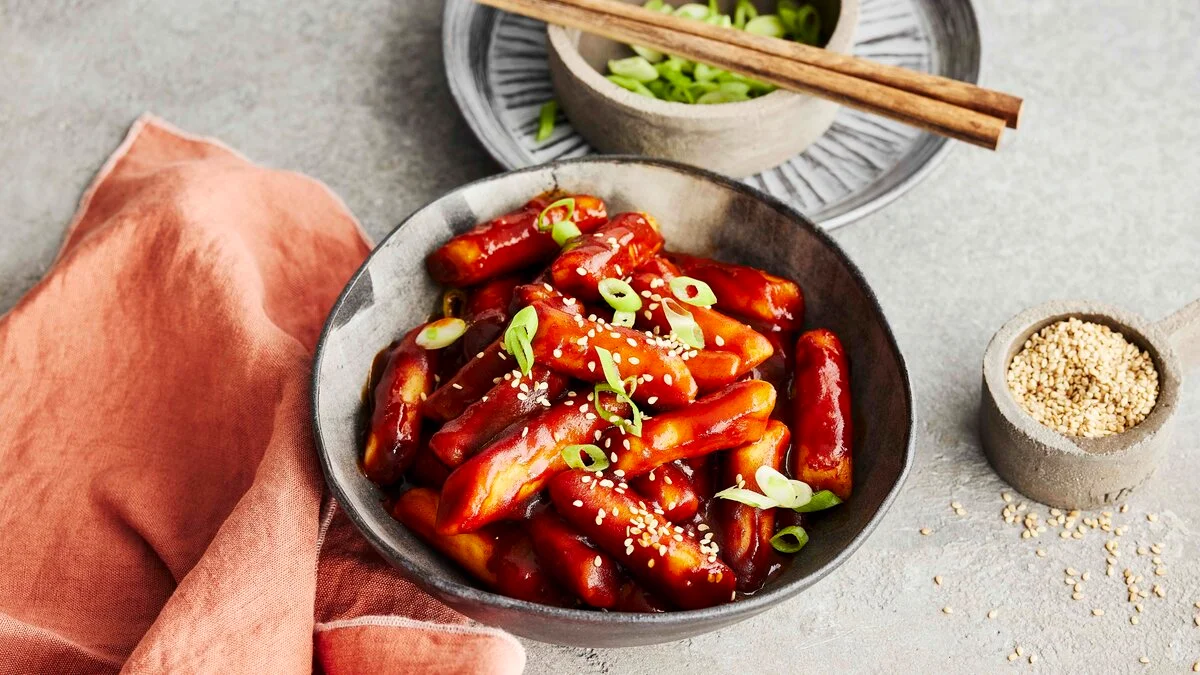
Tteokbokki is a Korean dish of chewy rice cakes coated in a savoury, spicy-sweet gochujang sauce. This quick version makes its sauce from a handful of ingredients and is finished with spring onions and sesame.
Ingredients
- 500 gKorean rice cakes (tteok)
- as neededhot water
- 500 mlwater
- 2 clovesgarlic
- 2 tbspgochujang paste
- 2 tbspsoy sauce
- 1.5 tbspsugar
- 2spring onions
- 1 tbsptoasted sesame seeds
Instructions
- 1
Soak the rice cakes
Put the rice cakes in a heatproof bowl and pour over enough hot water to cover them. Cover the bowl and leave them to soak until soft, following the packet instructions.
- 2
Make the sauce
Pour 500 ml water into a saucepan and bring it to the boil. Meanwhile, peel and finely chop the garlic. Add it to the pan with the gochujang, soy sauce and sugar, and stir well. Simmer over a medium heat for about 2–3 minutes.
- 3
Simmer the tteok
Add the prepared rice cakes to the sauce and stir them in gently, then lower the heat. Simmer gently for about 8–10 minutes, stirring occasionally, until the sauce has reduced to a thick, glossy consistency.
- 4
Garnish and serve
Meanwhile, wash and trim the spring onions, then slice them into fine rounds. Divide the tteokbokki between plates and garnish with the spring onions and sesame seeds before serving.
What is tteokbokki?
Tteokbokki is a Korean dish made with tteok, or rice cakes, simmered in a bold sauce. It is widely enjoyed as a casual meal or snack, with chewy rice cakes at the centre of the dish.
This version builds a quick sauce with gochujang, soy sauce, garlic and sugar. Simmering the rice cakes in the sauce lets them take on its flavour as it thickens around them.
Nutrition and macros by portion
The nutrition label shows one serving as written: 450 calories, 8g protein, 105g carbs, 2g fat.
| Portion | Adjustment | kcal | Protein | Carbs | Fat |
|---|---|---|---|---|---|
| Lighter | Add more vegetables | 315 kcal | 6g | 74g | 1g |
| This serving | As written | 450 kcal | 8g | 105g | 2g |
| Hungry | Increase the rice cakes | 675 kcal | 12g | 158g | 3g |
Most of the carbohydrates come from the rice cakes, with additional carbohydrates from the sugar and gochujang. The gochujang and sesame contribute some fat, while the rice cakes and soy sauce provide modest amounts of protein. For a more balanced plate, serve a portion alongside vegetables such as steamed greens.
Choosing the rice cakes
Rice cakes: Use Korean tteok intended for dishes such as tteokbokki. Their shape and thickness can vary, so follow the packet guidance when soaking them.
Soaking water: Cover the cakes with hot water in a heatproof bowl. The recipe relies on them softening before they go into the sauce.
Building the sauce
Gochujang: This fermented Korean chilli paste provides the sauce's savoury heat and colour. Stir it thoroughly into the water so it disperses evenly.
Balance: Soy sauce brings saltiness, while sugar rounds out the chilli paste. Keep the proportions as written, then taste the sauce as it simmers if you want to judge its balance.
Getting the texture right
Gentle simmer: Once the rice cakes are added, turn the heat down and let them cook gently for 8–10 minutes. A hard boil can make it more difficult to keep the cakes intact while stirring.
Sauce cue: The sauce should reduce until it looks thick and clings to the rice cakes. Stir occasionally so the cakes do not stick to the bottom of the pan.
Keeping the rice cakes tender
Check the packet: Soaking time can differ between rice cakes, so use the packet instructions to decide when they are soft enough for the pan.
Avoid overcooking: The final simmer is meant to coat and heat the cakes while the sauce thickens. Check their texture as the 8–10 minutes elapse.
Finishing and serving
Spring onions: Cut them into fine rounds so they are easy to scatter over the finished dish. They add a fresh, savoury contrast to the rich sauce.
Sesame: Sprinkle the toasted seeds on just before serving to preserve their texture. Tteokbokki is best served hot, straight after the sauce has reduced.
Recipe notes & tips
- Use a bowl large enough to keep all the rice cakes covered while they soak.
- Check the packet before soaking, as rice cake preparation can vary.
- Finely chop the garlic so it blends into the sauce.
- Stir gently after adding the rice cakes to help keep them whole.
- Keep the heat low during the final simmer and stir occasionally.
- Slice the spring onions while the sauce simmers to have the garnish ready.
Variations
- Add vegetables: Stir in sliced cabbage or carrots during the sauce simmer.
- Add fish cakes: Cut them into bite-sized pieces and simmer them with the rice cakes.
- Adjust the heat: Use a little less gochujang for a milder sauce.
- Add a boiled egg: Serve one alongside each portion for a heartier meal.
- Finish with extra sesame: Add another small sprinkle just before serving.
Common mistakes to avoid
- Skipping the soak: The rice cakes may remain too firm; soften them according to the packet before adding them to the pan.
- Boiling too vigorously: The rice cakes can break or stick; reduce the heat to a gentle simmer.
- Stirring too roughly: The cakes may lose their shape; fold them through the sauce carefully.
- Stopping too soon: The sauce may stay thin; simmer until it thickens and clings to the rice cakes.
- Leaving the pan unattended: The sauce can catch on the bottom; stir from time to time during the final simmer.
How to store
Store leftovers in a covered container in the fridge and eat within 2 days. Reheat gently in a saucepan with a splash of water, stirring until hot; the sauce may thicken further as it cools.
Frequently asked questions
Do I need to soak the rice cakes first?
Yes, this recipe softens them in hot water before they go into the sauce. Follow the soaking time on the packet.
How do I know when the sauce is ready?
After the rice cakes simmer for about 8–10 minutes, the sauce should be thick and cling to them.
Can I make this less spicy?
Use less gochujang for a milder result. The sauce will also have less of the paste's characteristic flavour.
Can I use a different type of rice cake?
Use Korean rice cakes suitable for tteokbokki, and check the packet for preparation guidance. Other rice products may not have the same texture or cooking needs.
What can I serve with tteokbokki?
It works as a meal on its own or alongside steamed greens or other vegetables. A boiled egg is another simple accompaniment.
Cook it from the original
This recipe comes from einfachkochen.de. Their page has the author’s own photos, notes and tips — the best place to cook it from.
Open the recipe on einfachkochen.de