
Puff pastry
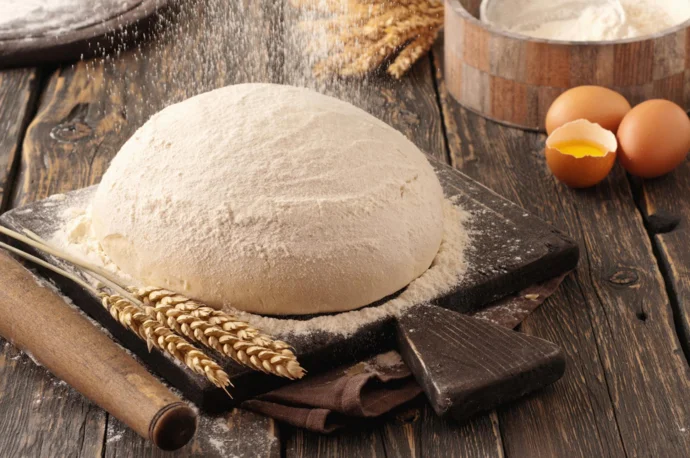
This classic French puff pastry is made by enclosing butter in a simple flour-and-water dough, then folding and rolling it to build layers. Make it when you want a crisp, flaky base for both sweet and savoury bakes.
Ingredients
- 300 gFrancine Suprême flour
- 225 gbutter
- 150 ml (15 cl)water
- 1 pinchsalt
Instructions
- 1
Mix the dough
In a mixing bowl, combine the Francine Suprême flour, salt and water until a soft dough forms.
- 2
Rest the dough
Gather the dough into a ball, put it in a bowl, cover with a tea towel and leave it to rest for 20 minutes.
- 3
Shape the butter
Wrap the butter in cling film. Gently flatten it with the palm of your hand or a rolling pin into a square about 15 x 15 cm.
- 4
Roll the dough
Roll out the dough into a rectangle measuring 40 x 30 cm.
- 5
Enclose the butter
Place the butter square in the middle and fold all four sides of the dough over it. Press the edges firmly to seal in the butter, then refrigerate the dough for 15 minutes.
- 6
Make the first folds
On a floured work surface, roll the dough into a rectangle about 1 cm thick and three times as long as it is wide. Fold it into thirds, then turn it a quarter-turn.
- 7
Make the next fold
Roll the dough into another rectangle three times as long as it is wide and fold it into thirds again. Refrigerate it for 20 minutes.
- 8
Finish the turns
Repeat this folding action twice more to give the pastry six turns in total. Roll it out before use; bake for 30 to 35 minutes in an oven at 240°C.
What is puff pastry?
Puff pastry, or pâte feuilletée, is a French pastry made by layering dough and butter through repeated rolling and folding. In the oven, the layers separate to create a crisp, airy texture.
This version uses a simple flour, water and salt dough, with butter enclosed in the centre. Chilling between stages helps keep the butter distinct from the dough as you roll.
Nutrition and macros by portion
The nutrition label shows one serving as written: 451 calories, 5g protein, 38g carbs, 31g fat.
| Portion | Adjustment | kcal | Protein | Carbs | Fat |
|---|---|---|---|---|---|
| Lighter | Use a smaller pastry portion | 316 kcal | 4g | 27g | 21g |
| This serving | As written | 451 kcal | 5g | 38g | 31g |
| Hungry | Make a larger pastry portion | 677 kcal | 8g | 57g | 46g |
The flour supplies most of the carbohydrates, while butter contributes most of the fat and saturated fat; the pastry has a modest amount of protein from the flour. Serve a smaller piece alongside vegetables and a protein-rich filling or side to make a more balanced plate.
The détrempe
Flour and water: mix them with the salt only until a soft dough forms. A brief rest of 20 minutes gives the dough time to relax before rolling.
Butter: shape it into an even 15 x 15 cm square. Keeping it reasonably uniform helps it spread through the dough during the turns.
Enclosing the butter
The seal: fold all four sides of the dough over the butter and press the edges together so the butter is enclosed. This gives you a sealed parcel to roll out without exposing the butter.
The chill: refrigerate the parcel for 15 minutes before the first turns. If it feels very soft or sticky, keep it cool rather than forcing it through the rolling pin.
How the turns build layers
The fold: roll the pastry into a rectangle three times as long as it is wide, then fold it into thirds. Turning it a quarter-turn sets it up for the next roll.
The sequence: after the next fold, chill the pastry for 20 minutes, then repeat the folding action twice more. The recipe finishes with six turns in total.
Rolling and baking
Thickness: keep the first rolled rectangle about 1 cm thick, and aim for an even shape so the folds stay regular. Dust the work surface with flour to prevent sticking, brushing off any excess before folding.
Oven: bake the pastry at 240°C for 30 to 35 minutes, as directed. The exact bake will depend on how the pastry is used and how thickly it has been rolled.
Ways to use it
Savoury bakes: use the pastry for tarts, pies or savoury parcels, with vegetables, cheese or other fillings. Keep wet fillings under control so they do not make the pastry soggy.
Sweet bakes: it also works for fruit tarts and other pastries. Pair it with a filling that can bake at the same high temperature, or bake the pastry separately when needed.
Recipe notes & tips
- Measure the butter square carefully so it sits evenly inside the dough.
- Keep the work surface lightly floured to stop the pastry sticking without adding too much extra flour.
- Roll from the centre towards the edges to help maintain a neat rectangle.
- Chill the pastry for the full stated times between stages.
- Use a ruler to check the initial 40 x 30 cm rectangle and the butter square.
- Roll the pastry out immediately before using it.
Variations
- Sweet finish: use the pastry as a base for a fruit tart.
- Savoury tart: top it with vegetables and cheese for a simple tart.
- Hand pies: cut the rolled pastry into squares and enclose a savoury filling.
- Decorative top: use pastry cut-outs to finish a pie before baking.
Common mistakes to avoid
- Butter too soft: chill the dough parcel before rolling so the butter stays enclosed.
- Edges not sealed: press the folds together firmly before the first chilling stage.
- Too much bench flour: use only enough to prevent sticking and brush away excess before folding.
- Uneven rolling: keep the rectangle as regular as possible so the folds line up.
- Skipping the rests: follow the 15-minute and 20-minute chilling periods to keep the pastry workable.
How to store
Wrap unused pastry tightly and refrigerate it for up to 2 days, or freeze it for longer storage. Thaw frozen pastry in the refrigerator before rolling and using it.
Frequently asked questions
What does a turn mean in puff pastry?
A turn is one cycle of rolling the pastry into a rectangle and folding it into thirds. Follow the recipe’s sequence to reach six turns in total.
Why does the pastry need to rest?
Resting gives the dough time to relax and helps it stay manageable during rolling. The method calls for 20 minutes after mixing, 15 minutes after enclosing the butter and 20 minutes after the next fold.
Can I use another plain flour?
Yes, another plain wheat flour can be used in place of the named flour. The dough may feel slightly different, so add the water as directed and judge the texture as you mix.
How can I tell when the pastry is baked?
Bake it for 30 to 35 minutes at 240°C, as specified in the recipe. Look for a well-risen, crisp pastry with an even golden colour.
Can I prepare the pastry ahead?
Yes. Wrap it well and refrigerate it for up to 2 days, or freeze it and thaw it in the refrigerator before use.
Cook it from the original
This recipe comes from francine.com. Their page has the author’s own photos, notes and tips — the best place to cook it from.
Open the recipe on francine.com