
Gazpacho
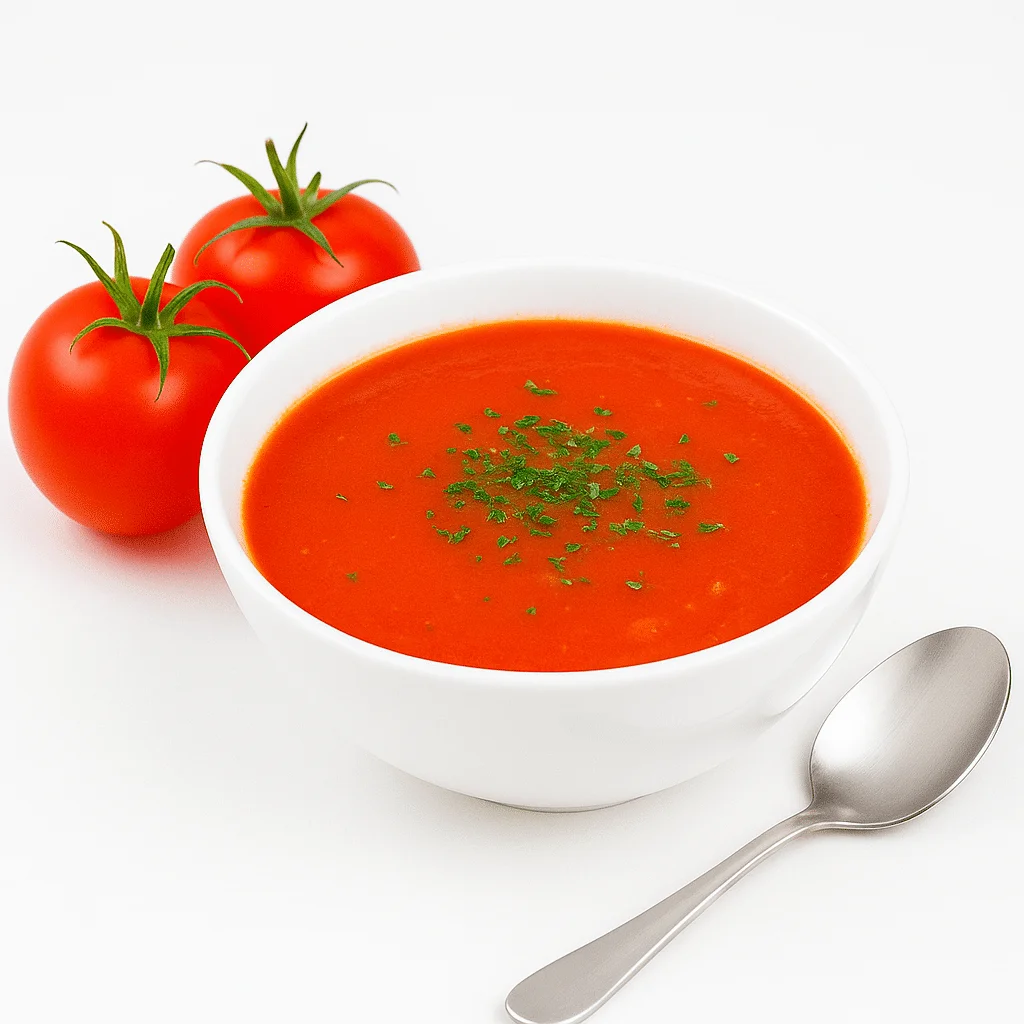
Gazpacho is a chilled Spanish soup blended from ripe tomatoes, cucumber, green pepper, bread and olive oil. It is a good make-ahead choice for a light meal, with the seasoning adjusted to taste just before serving.
Ingredients
- 4–5 (about 1 kg)large, very ripe tomatoes
- 1cucumber
- 1–2green peppers
- 2 clovesgarlic
- 1 smallonion
- up to 500 mlcold water, added gradually
- 1 large slicewhite wheat bread, crust removed
- 5–6 sprigsfresh parsley
- to tastesalt, added a little at a time
- 1 tbsp at a timeolive oil, added while blending
- 1 tsp at a timewine vinegar, added after tasting
Instructions
- 1
Wash the produce
Wash your hands, worktop, chopping board and utensils. Rinse the tomatoes, cucumber, peppers and parsley under running water, rubbing them gently; use a clean brush for the cucumber if needed. Do not wash the vegetables with soap or detergent.
- 2
Peel the tomatoes
If the tomato skins are thick or tough, cut out the stalk ends and score a shallow cross in the base. Immerse the tomatoes in boiling water for about 20 seconds, then transfer them to iced water and peel. You can skip this if their skins are thin and your blender is powerful.
- 3
Prepare the vegetables
Cut the tomatoes into large pieces. Remove the stalks and seeds from the peppers, then chop the cucumber, peppers, garlic and onion into pieces suitable for your blender.
- 4
Soak the bread
Dampen the bread with a little of the cold water, leave it for a few seconds, then squeeze it out. It thickens the soup, and the water used here counts towards the total of up to 500 ml.
- 5
Blend the ingredients
Put the tomatoes, cucumber, peppers, garlic, onion, bread and parsley in the blender. Blend until evenly combined. If your blender jug is small, work in batches and combine them in a clean container.
- 6
Season and emulsify
With the blender running, add the olive oil 1 tbsp at a time until the soup is smooth and lightly emulsified. Add a little salt and the wine vinegar 1 tsp at a time, tasting between additions.
- 7
Adjust the consistency
Check the texture before adding water. If the gazpacho is too thick, pour in cold water in small amounts and blend again; you may not need all 500 ml.
- 8
Choose the texture
For a finer, thinner soup, pass it through a sieve. Leave it unstrained for a thicker texture. Straining will reduce the finished quantity.
- 9
Chill the soup
Transfer the gazpacho to a clean, covered container and refrigerate it straight away. Divide a larger batch between shallow containers so it cools more quickly, and keep it at or below 4°C.
- 10
Taste before serving
Stir the soup and taste it again before serving. Cold temperatures mute the flavour, so add a little more salt or wine vinegar if needed. If it is too thick, loosen it with a little cold water; avoid using ice as a standard addition, as it gradually dilutes the soup.
What is gazpacho?
Gazpacho is a chilled Spanish soup, traditionally associated with Andalusia, made by blending raw vegetables into a cool, savoury mixture. This version combines ripe tomatoes with cucumber, green pepper, garlic, onion and parsley.
Bread gives the soup body, while olive oil helps bring the blended ingredients together. The gradual additions of water, salt and vinegar let you tailor both its consistency and balance.
Nutrition and macros by portion
The nutrition label shows one serving as written: 230 calories, 7g protein, 45g carbs, 14g fat.
| Portion | Adjustment | kcal | Protein | Carbs | Fat |
|---|---|---|---|---|---|
| Lighter | Use less olive oil | 161 kcal | 5g | 31g | 10g |
| This serving | As written | 230 kcal | 7g | 45g | 14g |
| Hungry | Serve with extra bread | 345 kcal | 10g | 68g | 21g |
Tomatoes, cucumber, peppers, onion and bread provide most of the carbohydrates, while olive oil is the main source of fat. The vegetables and bread contribute a little protein, so serve a portion with eggs, beans or fish if you want a more filling plate.
Choosing the vegetables
Ripe tomatoes: They provide most of the soup’s colour, liquid and sweetness, so use tomatoes that are soft and fragrant rather than firm and pale.
Green pepper and cucumber: These contribute the fresh, vegetal character. Remove the pepper seeds and stalks, and peel the cucumber only if its skin is particularly tough.
Making a smooth blend
Bread: A large slice, dampened and squeezed out, thickens the soup without needing to cook it. Keep the water used to soak it within the recipe’s total allowance.
Olive oil: Add it gradually while the blender runs so it disperses through the vegetables and gives the soup a lightly emulsified finish. If the jug is small, blend in batches and mix them together afterwards.
Peeling and straining
Tomato skins: Blanching and chilling the tomatoes makes thick skins easier to remove. With thin-skinned tomatoes and a powerful blender, you can skip this extra step.
Sieve: Straining removes seeds and fibrous pieces for a finer, thinner soup, but also reduces the amount you end up with. Leaving it unstrained keeps more texture and body.
Getting the texture right
Water: Blend the vegetables first, then judge whether the soup needs thinning. Add cold water in small amounts rather than pouring in the full 500 ml at once.
Bread and blending: If the soup is already thick after blending, loosen it gradually and blend again. For a smoother result, make sure the vegetables are cut small enough for your blender to process evenly.
Seasoning a chilled soup
Salt and vinegar: Add each little by little and taste between additions, since the tomatoes’ acidity and sweetness vary. Chill the soup before its final adjustment if you have time, as cold temperatures can make its flavour seem more muted.
Serving temperature: Keep the gazpacho cold, but use cold water rather than ice to adjust it. Ice melts into the soup and can dilute its flavour.
What to serve with gazpacho
Serve it as a light starter or alongside a sandwich, omelette or another simple savoury dish. For a more substantial meal, pair it with a source of protein such as eggs, beans or grilled fish.
A small side of bread works well, though the soup already contains bread for thickness. Keep any extra serving simple so the fresh vegetable flavour stays central.
Recipe notes & tips
- Use very ripe tomatoes for a fuller flavour and a naturally vivid colour.
- Add the olive oil slowly with the blender running for a more even, lightly emulsified texture.
- Start with less water than you think you need; it is easy to thin the soup later.
- Taste the soup after chilling and adjust the salt or vinegar before serving.
- If you strain the soup, remember that the finished amount will be smaller.
- Divide a large batch into shallow containers so it chills more quickly.
Variations
- Extra smooth: Strain the blended soup through a fine sieve before chilling.
- More texture: Leave the soup unstrained and chop a little extra cucumber to serve alongside.
- Herb change: Replace some of the parsley with fresh basil for a different herbal note.
- Gentler garlic: Use one clove instead of two for a milder flavour.
- More acidity: Add wine vinegar a teaspoon at a time, tasting after each addition.
Common mistakes to avoid
- Adding all the water at once: The soup may become too thin; blend first and add cold water gradually.
- Pouring in oil too quickly: It may not blend evenly; add it 1 tbsp at a time with the blender running.
- Over-seasoning before chilling: Cold soup tastes different; make a final adjustment just before serving.
- Skipping the texture check: Thick gazpacho can be hard to serve; loosen it with small additions of cold water.
- Using ice to thin the soup: It dilutes the flavour as it melts; use cold water instead.
- Leaving a large batch in a deep container: It cools more slowly; divide it between shallow containers.
How to store
Refrigerate the gazpacho promptly in a clean, covered container and keep it at or below 4°C. Use within 2 days for the freshest flavour, stirring well before serving. Serve cold rather than reheating.
Frequently asked questions
Can I skip peeling the tomatoes?
Yes, if the skins are thin and your blender can break them down well. Peel tomatoes with thick or tough skins for a finer result.
Do I need to use all 500 ml of water?
No. The recipe gives an upper limit, not a required amount; add only enough to reach the consistency you like.
Why is bread added to gazpacho?
It gives the soup body and helps make it more substantial. Dampen it with a little of the measured cold water before blending.
Can I make gazpacho ahead?
Yes. Chill it in a covered container and stir it before serving. Check the seasoning once it is cold, as the flavour can seem more subdued.
Should I strain the soup?
That depends on your preferred texture. Straining makes it finer and thinner but reduces the finished quantity; leaving it unstrained keeps it thicker.
How do I make the soup less thick?
Blend in cold water a little at a time until it reaches the consistency you want. Avoid adding ice, which can dilute the soup as it melts.
Cook it from the original
This recipe comes from menumag.bg. Their page has the author’s own photos, notes and tips — the best place to cook it from.
Open the recipe on menumag.bg