
Spaghetti carbonara
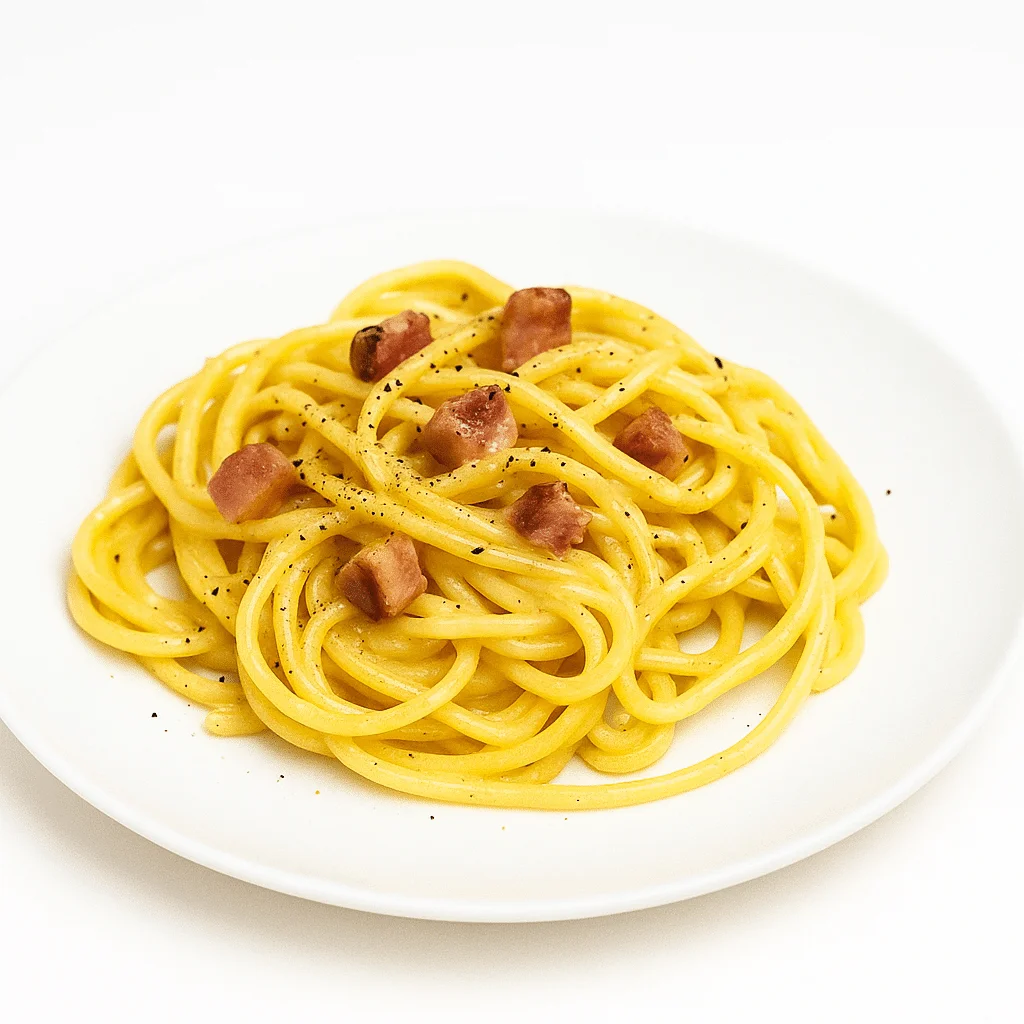
Spaghetti carbonara made with crisp bacon, Parmesan and a smooth sauce of cream and pasteurised egg yolks. Off-heat mixing and a little starchy pasta water help the sauce coat the spaghetti without scrambling.
Ingredients
- 400 gdried spaghetti
- 2pasteurised egg yolks
- 120 ml (½ cup)double cream
- up to 15 ml (1 tbsp), only if neededolive oil
- 170 gbacon, cut into even cubes
- 2 clovesgarlic, thinly sliced
- 100 g (1 cup), finely grated and divided between the sauce and servingParmesan
- to tastefreshly ground black pepper
- a pinchnutmeg
- as neededwater and a little salt for cooking the pasta
Instructions
- 1
Mix the sauce
In a bowl, whisk the pasteurised egg yolks with the cream, about three-quarters of the finely grated Parmesan, black pepper and nutmeg until smooth. Keep the mixture nearby, but do not heat it directly.
- 2
Cook the spaghetti
Boil the spaghetti in lightly salted water according to the packet instructions until al dente. Before draining, reserve 120 ml (½ cup) of the starchy cooking water. Do not rinse the pasta.
- 3
Render the bacon
Put the bacon in a cold or moderately warm deep frying pan and cook it gradually until it releases its fat and browns. Add up to 15 ml (1 tbsp) olive oil only if the bacon is very lean or the pan needs it. Judge when it is ready by its appearance rather than relying on a fixed cooking time, as the bacon and cube sizes vary.
- 4
Add the garlic
Lower the heat and add the garlic briefly, just until fragrant. Do not let it darken, or it may turn bitter.
- 5
Coat the pasta
Add the hot, drained spaghetti to the pan and toss it in the bacon fat. Remove the pan completely from the heat. If it is sizzling very vigorously, wait briefly for the intense frying to stop.
- 6
Loosen the mixture
Whisk a little of the reserved hot water into the egg-and-cream mixture, whisking continuously. This makes it easier to distribute, but it does not mean that unpasteurised eggs would have become safe.
- 7
Make the sauce
Pour the mixture over the spaghetti off the heat and stir vigorously to coat the pasta. Add the starchy water in small amounts, not all at once, until the sauce is smooth and glossy. Do not let it boil.
- 8
Season and finish
Taste before adding salt, as the bacon, Parmesan and pasta water may already be salty. If needed, adjust with black pepper and a little salt, then stir in more of the reserved Parmesan.
- 9
Serve straight away
Divide the pasta among warmed plates and finish with the remaining Parmesan and black pepper. Do not leave the egg sauce sitting in the warm pan for long.
What is spaghetti carbonara?
Carbonara is a Roman pasta dish traditionally associated with eggs, cured pork, cheese and black pepper. This version uses cream and pasteurised egg yolks for a richer, more forgiving sauce.
The method still relies on residual heat rather than boiling the sauce. Starchy pasta water helps bring the ingredients together into a coating that clings to the spaghetti.
Nutrition and macros by portion
The nutrition label shows one serving as written: 840 calories, 34g protein, 77g carbs, 39g fat.
| Portion | Adjustment | kcal | Protein | Carbs | Fat |
|---|---|---|---|---|---|
| Lighter | Less cream, more vegetables | 588 kcal | 24g | 54g | 27g |
| This serving | As written | 840 kcal | 34g | 77g | 39g |
| Hungry | Larger pasta portion | 1260 kcal | 51g | 116g | 59g |
Most of the carbohydrates come from the spaghetti, while the cream, bacon, egg yolks and Parmesan contribute much of the fat; the bacon, cheese and egg yolks also provide protein. Balance the plate with a side of salad or vegetables, keeping the pasta portion the same.
Why the ingredients matter
Bacon: Cooking it gradually gives the cubes time to release fat and brown. That fat flavours the spaghetti, so add olive oil only if the bacon or pan needs help.
Parmesan: Finely grated cheese disperses more evenly through the sauce. Keep some aside to finish the plates.
Control the heat
Off the heat: The pan needs to be away from the hob before the egg-and-cream mixture goes in. If the bacon is still frying fiercely, pause briefly so the residual heat is less aggressive.
Keep stirring: Vigorous mixing helps the sauce coat the pasta evenly. Add the reserved water in small splashes, stopping when the sauce looks smooth and glossy.
Use the pasta water well
Reserve it: Scoop out 120 ml (½ cup) before draining, while the water is still starchy. The recipe may not need all of it.
Add it gradually: A little loosens the egg-and-cream mixture, and further additions help adjust the finished sauce. Adding it all at once can leave the sauce thinner than intended.
Look for the right texture
Spaghetti: Cook it until al dente according to the packet directions, then drain without rinsing so its surface can hold the sauce.
Sauce: Aim for a glossy coating rather than a watery pool. Keep the mixture moving and do not let it boil, which can make the eggs set into curds.
Timing and serving
Get the sauce ingredients mixed before the pasta is ready, and have the Parmesan and pepper within reach. Once the spaghetti is tossed with the sauce, serve it promptly rather than leaving it in the warm pan.
Warmed plates help the pasta stay hot as you serve it. A simple green salad or lightly dressed vegetables can provide a fresh contrast to the rich sauce.
Recipe notes & tips
- Finely grate the Parmesan so it mixes into the sauce more readily.
- Reserve the pasta water before draining; it is difficult to recover once poured away.
- Use a deep pan with enough room to toss the spaghetti thoroughly.
- Add olive oil only if the bacon does not release enough fat for the pan.
- Taste before salting because the bacon, cheese and cooking water can all be salty.
- Serve as soon as the sauce is glossy to avoid it thickening in the pan.
Variations
- Extra pepper: Grind more black pepper over the finished plates for a sharper finish.
- More garlic: Add another thinly sliced clove, taking care not to let it brown.
- Peas: Stir in cooked peas with the hot spaghetti for a sweet green addition.
- Mushrooms: Brown sliced mushrooms in the pan before adding the garlic.
- Different cheese: Replace some of the Parmesan with finely grated Pecorino for a saltier, sharper flavour.
Common mistakes to avoid
- Adding the sauce over heat: The eggs can curdle; take the pan fully off the hob first.
- Boiling the sauce: It can turn grainy; keep stirring and use residual heat only.
- Pouring in all the pasta water: The sauce may become too thin; add it a little at a time.
- Browning the garlic: It can taste bitter; cook it only until fragrant.
- Rinsing the spaghetti: It removes the starchy surface that helps the sauce cling; drain without rinsing.
- Salting too soon: Bacon and Parmesan may already make the dish salty; taste before adjusting.
How to store
Refrigerate leftovers in a covered container and use within 2 days. Reheat gently in a pan over low heat with a small splash of water, stirring often; avoid boiling, as the sauce may split or set.
Frequently asked questions
Can I make this without cream?
This recipe uses cream, so leaving it out changes the sauce. For this version, keep the cream and use small additions of starchy water to adjust the consistency.
Why take the pan off the heat?
The egg mixture needs gentle residual heat to form a smooth sauce. Direct heat can make the eggs scramble.
Do I need to use all the reserved pasta water?
No. Add it in small amounts until the sauce is smooth and glossy, and stop when it coats the spaghetti well.
Can I use unpasteurised egg yolks?
The method calls for pasteurised egg yolks. Loosening the mixture with hot pasta water does not make unpasteurised eggs safe.
How do I know when the bacon is ready?
Look for browned cubes and rendered fat rather than relying on a set number of minutes. The time depends on the bacon and the size of the pieces.
Can I prepare the sauce ahead?
Mix the sauce shortly before cooking and keep it unheated. Once the pasta is coated, serve promptly rather than letting the egg sauce sit in the warm pan.
Cook it from the original
This recipe comes from menumag.bg. Their page has the author’s own photos, notes and tips — the best place to cook it from.
Open the recipe on menumag.bg