
Cinnamon rolls
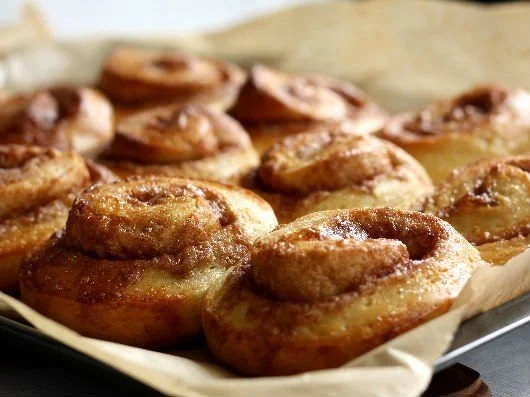
These Danish-style cinnamon rolls are soft yeasted buns filled with butter, sugar and cinnamon, then baked until golden. Make them for a weekend bake or a batch to share while still warm.
Ingredients
- 100 gbutter
- 350 mlmilk
- 2eggs
- 700 gplain flour
- 7 g dried yeast or 25 g fresh yeastyeast
- 1 tspsalt
- 2 tbspsugar
- 1 tspground cardamom
- 1egg, for brushing
- 150soft butter
- 150 gsugar
- 2 tbspground cinnamon
Instructions
- 1
Mix and prove
Melt the butter in a saucepan and add the milk. Let the mixture cool until it feels lukewarm, about little-finger temperature. Mix the eggs, flour, yeast, salt, sugar and cardamom, then add the milk and butter mixture. Knead for about 5–10 minutes if using dried yeast, then leave the dough to rise for about 1 hour.
- 2
Fill and shape
While the dough rises, mix the butter, sugar and cinnamon for the filling. Once risen, knead the dough through and roll it out into a large square. Spread the filling over the dough, roll it up and cut it into 2 cm slices. Arrange them on a baking tray lined with baking paper, press the rolls down slightly and leave them to rise for just under 30 minutes.
- 3
Brush and bake
Brush the rolls with beaten egg. Bake in an oven preheated to 200°C for about 10–15 minutes, until golden and crisp.
What are cinnamon rolls?
Cinnamon rolls are sweet buns made from yeasted dough, rolled around a spiced, buttery filling and sliced before baking. In Denmark, a close cousin is known as kanelsnegle, or cinnamon snails.
This version combines cardamom in the dough with cinnamon in the filling. The first rise gives the dough time to develop, while a second rise after shaping helps the rolls bake up softer.
Nutrition and macros by portion
The nutrition label shows one serving as written: 285 calories, 7g protein, 41g carbs, 11g fat.
| Portion | Adjustment | kcal | Protein | Carbs | Fat |
|---|---|---|---|---|---|
| Lighter | Smaller rolls | 200 kcal | 5g | 29g | 7g |
| This serving | As written | 285 kcal | 7g | 41g | 11g |
| Hungry | Serve two rolls | 428 kcal | 11g | 62g | 16g |
The flour and sugar provide most of the carbohydrates, while butter contributes most of the fat and the eggs, milk and flour provide some protein. For a more balanced plate, serve a roll with fresh fruit and plain yoghurt.
The dough ingredients
Lukewarm milk: it should feel gently warm rather than hot when tested with a finger. Melted butter enriches the dough, while eggs help bind it.
Yeast and flour: use either 7 g dried yeast or 25 g fresh yeast, as listed. The recipe gives 700 g plain flour; add the milk mixture to the dry ingredients and knead until the dough comes together.
Making the filling
Soft butter: it should be pliable enough to mix smoothly with the sugar and cinnamon. Spread the mixture across the rolled-out dough so the filling is distributed through the spirals.
Cinnamon and sugar: mix them thoroughly with the butter before spreading. This keeps the filling easy to apply and helps each slice have a similar flavour.
Shaping the rolls
Roll evenly: shape the dough into a large square, then roll it up after spreading on the filling. A fairly even roll makes the slices more consistent.
Slice gently: cut the roll into 2 cm slices and set them on a lined baking tray. Press each one down a little, as directed, before the second rise.
Proofing and baking cues
First rise: leave the dough for about 1 hour. The recipe does not give a specific size cue, so use the stated time as a guide and keep the dough covered while it rests.
Second rise: allow just under 30 minutes after shaping. Bake at 200°C for 10–15 minutes, checking for a golden surface and crisp edges.
Serving ideas
The rolls are especially inviting warm from the oven, when the cinnamon filling is fragrant. Let them cool briefly on the tray so the filling can settle before serving.
Serve them with coffee or tea, or alongside fruit for a simple breakfast or afternoon snack.
Recipe notes & tips
- Keep the milk lukewarm rather than hot when adding it to the dough.
- Knead the dough for the full 5–10 minutes when using dried yeast, as the method specifies.
- Use soft butter for the filling so it spreads without tearing the dough.
- Line the baking tray with baking paper to make the rolls easier to lift off.
- Check the rolls near the 10-minute mark, as oven timings can vary.
Variations
- Extra cardamom: add a little more to the dough for a more pronounced fragrant note.
- Pear filling: scatter small pieces of pear over the cinnamon filling before rolling.
- Raisin rolls: add raisins over the filling before rolling up the dough.
- Simple icing: drizzle cooled rolls with a little icing made from icing sugar and water.
- Nut topping: scatter chopped nuts over the rolls before baking.
Common mistakes to avoid
- Hot milk: it can be too hot for the dough; let the butter and milk mixture cool to lukewarm.
- Cold butter filling: it is difficult to spread evenly; soften the butter before mixing.
- Uneven slices: they may bake at different rates; cut the roll into slices of a similar 2 cm thickness.
- Skipping the second rise: the shaped rolls need the stated resting time; allow just under 30 minutes before baking.
- Overbaking: the rolls can become dry; check them after about 10 minutes and remove when golden and crisp.
How to store
Once cool, store the rolls in an airtight container at room temperature for up to 2 days. Warm briefly in a low oven or microwave before serving; freeze for longer storage and defrost before reheating.
Frequently asked questions
Can I use fresh yeast instead of dried yeast?
Yes. The ingredient list gives 25 g fresh yeast as an alternative to 7 g dried yeast.
How warm should the milk mixture be?
It should be lukewarm, around little-finger temperature, rather than hot.
How thick should I cut the rolls?
The method says to cut them into 2 cm slices. Try to keep the slices similar in thickness so they bake evenly.
How do I know when the rolls are baked?
Bake at 200°C for about 10–15 minutes, until the rolls are golden and crisp.
Can I prepare the rolls ahead?
You can bake them ahead and store them once cool in an airtight container. The recipe does not specify an overnight preparation method.
Cook it from the original
This recipe comes from foodfanatic.dk. Their page has the author’s own photos, notes and tips — the best place to cook it from.
Open the recipe on foodfanatic.dk