
Bao: steamed buns with filling
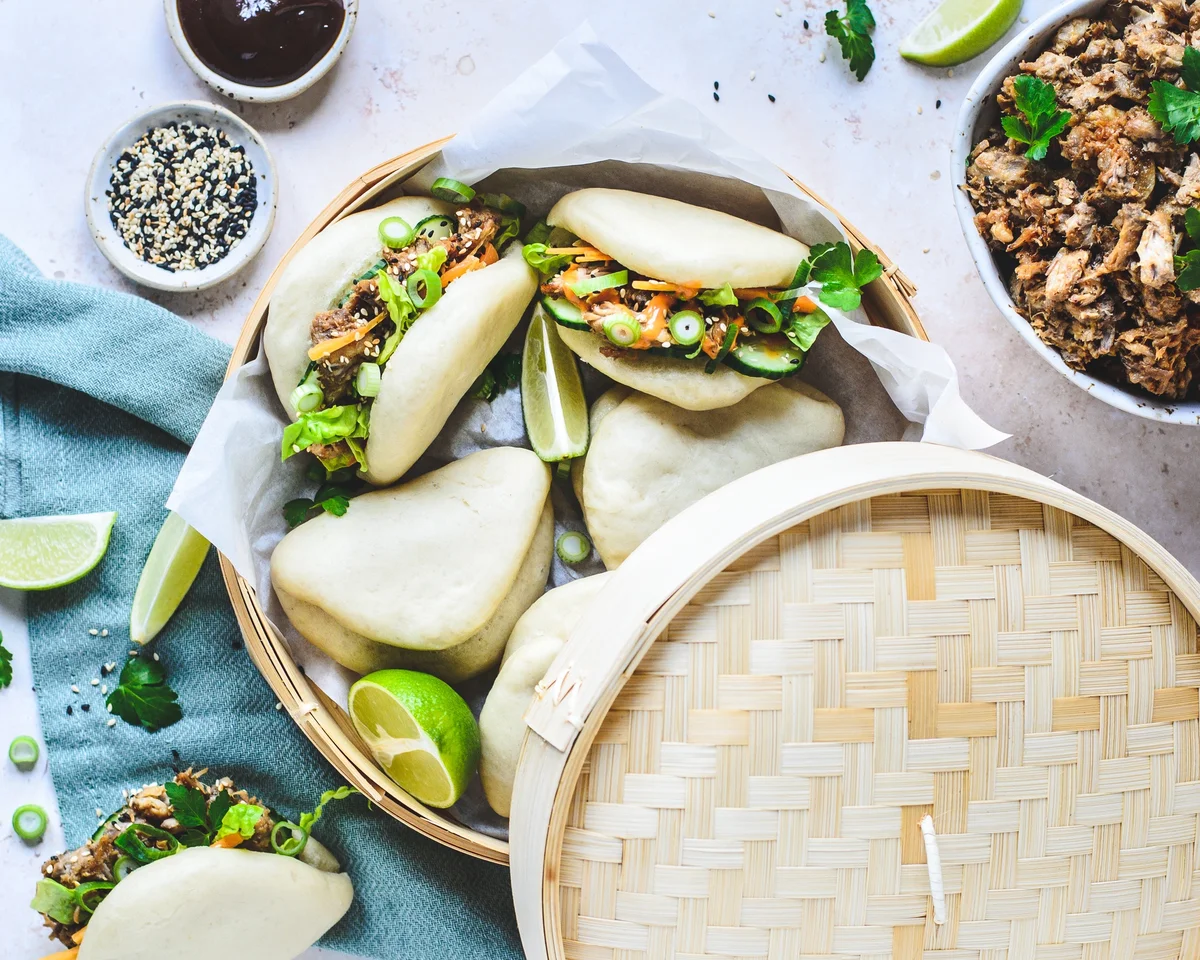
These soft, folded Chinese steamed buns are made from a simple yeasted dough and left open like little pockets for filling. Make a batch for a hands-on meal, then let everyone add their own crunchy vegetables, dressing and meat or other fillings.
Ingredients
- 340 gplain flour
- 60 gcornflour
- 20 gyeast
- 7.5 ml (1½ tsp)baking powder
- 250 mlwater, about 35°C
- 10 ml (2 tsp)sugar, or your preferred sweetener
- 15 ml (1 tbsp), plus a little for brushingneutral-flavoured oil
Instructions
- 1
Dissolve the yeast
Pour the water into the bowl of a stand mixer and stir in the yeast until dissolved.
- 2
Mix and rise
Add the plain flour, cornflour, baking powder, sugar and neutral oil to the water. Knead the dough well for a couple of minutes. Cover the bowl with a clean tea towel and leave the dough to rise until doubled in size, about 1–1½ hours.
- 3
Shape the dough
Knock back the dough and divide it into 18 equal pieces. Shape each piece into a small ball, then roll it into an oval about ½ cm thick.
- 4
Brush and fold
Brush the top of each oval with neutral oil and fold it in half, with the oiled side inside. Set each bao on a small piece of baking paper.
- 5
Prove the buns
Cover the bao with a clean tea towel and leave them to rise for about 20 minutes, until they have puffed up all over.
- 6
Heat the water
While the buns prove, fill a saucepan about halfway with water and bring it to the boil.
- 7
Load the steamer
Once the water is boiling and the bao have finished rising, place them, still on their baking paper, in a bamboo steamer. Leave a little space between them as they will expand during steaming.
- 8
Steam the bao
Set the bamboo steamer over the pan of boiling water and steam the buns for 12–14 minutes, until cooked. Steam the remaining bao in batches.
- 9
Add the filling
Fill the bao with your chosen ingredients and serve.
What are bao?
Bao are soft Chinese steamed buns, often folded to make a pocket for filling. Their pillowy dough and open fold make them easy to fill at the table, much like small pitta breads.
This version uses a yeasted dough with both plain flour and cornflour. The buns are folded before steaming, so they open readily for crunchy vegetables, dressing and a filling of your choice.
Nutrition and macros by portion
The nutrition label shows one serving as written: 83 calories, 2g protein, 18g carbs, 1g fat.
| Portion | Adjustment | kcal | Protein | Carbs | Fat |
|---|---|---|---|---|---|
| Lighter | More vegetables, less oil | 58 kcal | 1g | 12g | 1g |
| This serving | As written | 83 kcal | 2g | 18g | 1g |
| Hungry | Add extra filling | 125 kcal | 3g | 26g | 1g |
The dough’s carbohydrates mainly come from the plain flour, cornflour and sugar, while the small amount of oil supplies most of its fat; the listed protein comes largely from the flour. These nutrition figures cover the buns, not any filling, so add vegetables and a protein-rich filling to make a more balanced plate.
The dough ingredients
Plain flour: it gives the buns their structure, while the cornflour contributes to a tender bite. Measure both carefully so the dough keeps the intended balance.
Yeast and baking powder: yeast provides the first rise, and baking powder is mixed into the dough as well. Use water at about 35°C to dissolve the yeast without making the liquid too hot.
Getting a good rise
First rise: cover the bowl with a clean tea towel and wait until the dough has doubled, which takes about 1–1½ hours. The time can vary, so use the dough’s size as the cue.
Second rise: after shaping and folding, leave the buns for about 20 minutes. They should look puffed before they go into the steamer.
Shaping and folding
Even portions: divide the dough into 18 pieces so the buns cook at a similar rate. Roll each into an oval about ½ cm thick.
Oiled fold: brush oil over the top surface, then fold the oval with the oil inside. This helps keep the two sides from sticking together, leaving a pocket for filling.
Steaming without sticking
Baking paper: put each folded bun on its own small piece of paper before arranging it in the bamboo steamer. This makes it easier to lift the soft dough and helps prevent sticking.
Room to expand: leave space between the buns, as they grow during steaming. If they do not all fit with a little space around them, cook them in batches.
When the buns are ready
Steam each batch for 12–14 minutes over boiling water. Keep the steamer over the pan and avoid crowding the buns so the steam can circulate around them.
The finished buns should look puffed and feel soft. Let them cool just enough to handle, then gently open the folded sides to add the filling.
Filling and serving
Crunchy vegetables and dressing work well alongside meat, as suggested in the recipe description. Prepare your chosen fillings while the dough rises so they are ready when the buns come out of the steamer.
Serve the buns warm and fill them just before eating. Keeping the fillings separate lets everyone choose their own combination.
Recipe notes & tips
- Use water at about 35°C when dissolving the yeast.
- Wait for the dough to double rather than relying only on the clock.
- Cut individual pieces of baking paper before arranging the buns in the steamer.
- Keep the buns spaced apart so they have room to expand.
- Prepare the fillings while the shaped buns have their second rise.
Variations
- Crunchy vegetables: add sliced vegetables for a fresh contrast to the soft bun.
- Meat filling: use cooked meat with dressing for the kind of filling suggested in the recipe description.
- Vegetarian filling: fill the buns with vegetables and your preferred dressing.
- Sweetener swap: use your preferred sweetener in place of the sugar, as the ingredient list allows.
- Mix-and-match: put several fillings on the table so everyone can assemble their own bao.
Common mistakes to avoid
- Water too hot: use water at about 35°C when dissolving the yeast.
- Impatient first rise: wait until the dough has doubled before shaping.
- Uneven portions: divide the dough into 18 equal pieces for more consistent buns.
- Skipping the oil: brush the oval before folding so the two sides are less likely to stick together.
- Crowding the steamer: leave gaps between the buns and steam in batches if needed.
- Under-proving the shaped buns: give them about 20 minutes and look for an all-over puff before steaming.
How to store
Store cooled, unfilled buns in an airtight container in the fridge and use within 2 days. Reheat them by steaming until warmed through; keep fillings separate until serving.
Frequently asked questions
Can I make the dough without a stand mixer?
The method uses a stand-mixer bowl, but the dough can be mixed and kneaded by hand in a large bowl. Knead it well for a couple of minutes, as directed.
How do I know when the dough has risen enough?
For the first rise, look for the dough to double in size; this takes about 1–1½ hours. After shaping, the buns should look puffed following their 20-minute rise.
Why fold the buns before steaming?
The fold creates an opening that can be filled after cooking. Brushing the dough with oil before folding helps the two sides remain separate.
Do I need a bamboo steamer?
The recipe specifies a bamboo steamer set over a pan of boiling water. Use a steamer that fits securely over the pan and leaves room for the buns to expand.
Can I steam all 18 buns at once?
Only if they fit with a little space between them. The buns expand as they steam, so cook them in batches if the steamer would be crowded.
What can I put inside bao?
The recipe suggests crunchy vegetables, dressing and meat. You can also choose other fillings to suit your meal.
Cook it from the original
This recipe comes from mariasilje.dk. Their page has the author’s own photos, notes and tips — the best place to cook it from.
Open the recipe on mariasilje.dk