
Pasta pomodoro
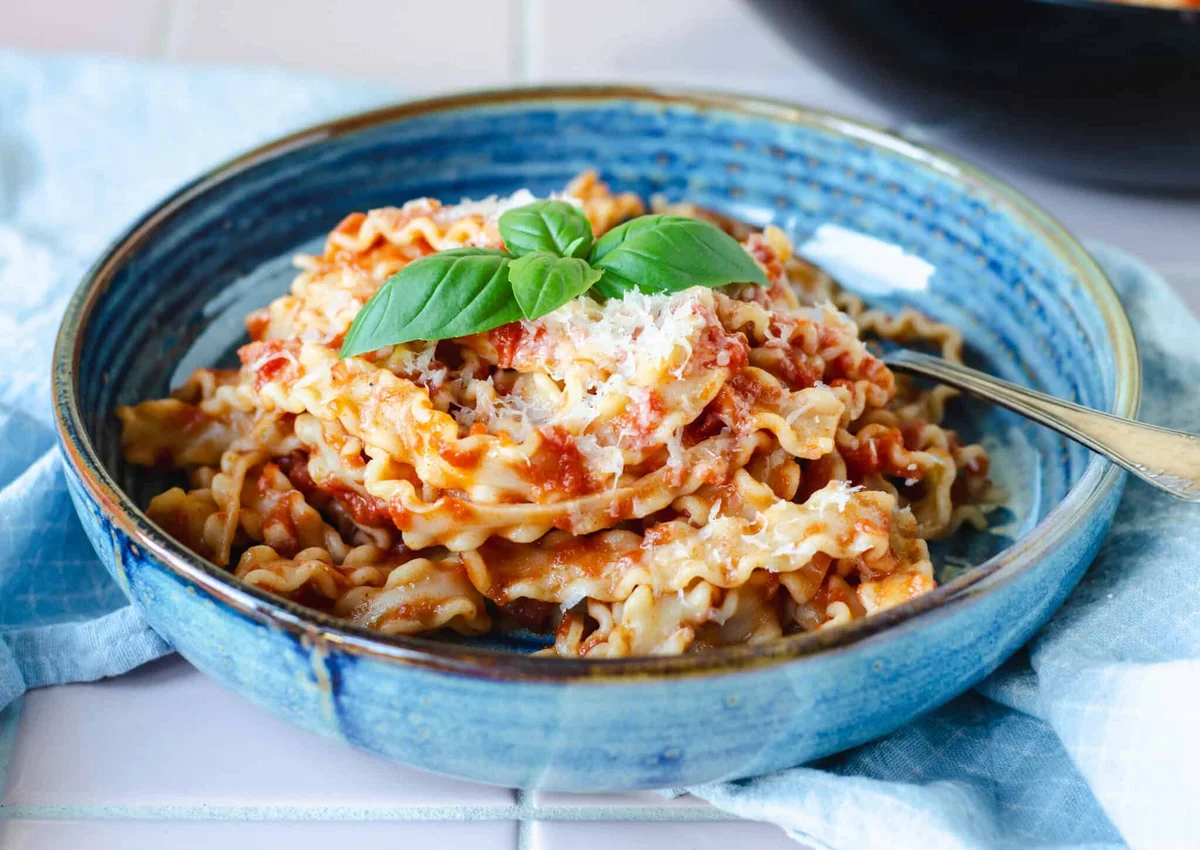
Pasta pomodoro pairs spaghetti with a slowly simmered tomato sauce, Parmesan and fresh basil. It is a straightforward meal for when you want a satisfying bowl of pasta without a long list of ingredients.
Ingredients
- 30 ml (2 tbsp)olive oil
- 1 small (finely chopped, about 100 ml)onion
- 2 clovesgarlic, pressed or finely chopped
- 1 pinch (optional)chilli flakes
- 2 tins (about 800 g)tomatoes, finely chopped, chopped or whole
- To tastesalt and freshly ground black pepper
- 100 mlfreshly grated Parmesan (half for the sauce, half for topping)
- 400 gspaghetti or other long pasta
- 50 mlreserved pasta water
- To tastefresh basil leaves, for topping
Instructions
- 1
Prepare the ingredients
Finely chop the onion and garlic. If you are not using finely chopped tinned tomatoes, blend the tomatoes briefly.
- 2
Warm the oil
Heat the olive oil in a large frying pan over a medium heat.
- 3
Soften the onion
Cook the chopped onion and garlic for 4–5 minutes, until soft and translucent. Add the chilli flakes if you would like some heat.
- 4
Add the tomatoes
Stir in the tomatoes and season with salt and pepper.
- 5
Simmer the sauce
Simmer the sauce uncovered for about 20 minutes, until it has reduced slightly.
- 6
Cook the pasta
Cook the pasta in plenty of salted water, following the packet instructions.
- 7
Reserve pasta water
Keep about 50 ml of the pasta water, then drain the rest.
- 8
Combine pasta and sauce
Add the hot pasta to the tomato sauce and return the pan to the heat.
- 9
Adjust the texture
Add a little of the reserved pasta water until the sauce has a creamy consistency.
- 10
Stir in Parmesan
Mix in half of the Parmesan and toss everything together well.
- 11
Serve the pasta
Serve straight away, topped with the remaining Parmesan and fresh basil leaves.
What is pasta pomodoro?
Pasta pomodoro is a classic Italian-style combination of pasta and tomato sauce; pomodoro means tomato in Italian. This version builds flavour by simmering tinned tomatoes with onion and garlic, then finishing the sauce with Parmesan and basil.
The method keeps the ingredients simple and uses reserved pasta water to help the sauce cling to the spaghetti.
Nutrition and macros by portion
The nutrition label shows one serving as written: 529 calories, 10g protein, 90g carbs, 20g fat.
| Portion | Adjustment | kcal | Protein | Carbs | Fat |
|---|---|---|---|---|---|
| Lighter | Use less Parmesan | 370 kcal | 7g | 63g | 14g |
| This serving | As written | 529 kcal | 10g | 90g | 20g |
| Hungry | Add more pasta | 794 kcal | 15g | 134g | 29g |
The pasta supplies most of the carbohydrates, while olive oil and Parmesan contribute much of the fat; Parmesan also adds some protein. Serve it with a generous portion of vegetables or salad to balance the plate.
Choosing the tomatoes
Tinned tomatoes: Finely chopped tomatoes can go straight into the pan. Chopped or whole tinned tomatoes work too; briefly blend whole ones if you prefer a smoother sauce.
Simmering: Leave the sauce uncovered for about 20 minutes so it reduces slightly. Stir from time to time and lower the heat if it starts to catch.
Building the sauce
Onion and garlic: Cook them in the olive oil for 4–5 minutes, until soft and translucent. Keep the heat moderate so they soften without browning.
Chilli: A pinch adds gentle heat, but it is optional. Leave it out for a milder sauce.
Getting the pasta texture right
Pasta water: Save about 50 ml before draining. Its starchy quality helps loosen the sauce and gives it a creamier finish.
Tossing: Add the pasta to the sauce while it is hot, then return the pan to the heat. Add the reserved water a little at a time, stopping when the sauce coats the strands.
Timing the meal
Sauce first: The tomato sauce needs about 20 minutes of uncovered simmering. Start cooking the pasta while it simmers, following the timing on its packet.
Serve promptly: Combine the drained pasta and sauce straight away so the pasta stays hot and the Parmesan mixes in smoothly.
Serving ideas
Finish: Add the remaining Parmesan and fresh basil just before serving. The basil brings a fragrant contrast to the warm tomato sauce.
Alongside: Serve with a green salad or cooked vegetables for a more rounded meal. Crusty bread can help mop up any sauce left in the bowl.
Recipe notes & tips
- Use a large frying pan so there is room to toss the pasta evenly with the sauce.
- Season the sauce after adding the tomatoes, then taste again before serving.
- Keep the pasta water within reach before you drain the pasta.
- Add the pasta water gradually so the sauce does not become too loose.
- Tear or add the basil leaves at the end to keep their fresh aroma noticeable.
Variations
- Add extra chilli: Increase the chilli flakes for a spicier sauce.
- Use another pasta shape: Swap the spaghetti for a different long pasta or a short shape.
- Add vegetables: Stir cooked courgette or aubergine into the sauce before combining it with the pasta.
- Make it cheesier: Add a little more Parmesan at the table.
- Add olives: Stir sliced olives into the tomato sauce as it simmers.
Common mistakes to avoid
- Browning the garlic: Keep the heat at medium and cook it with the onion until soft and translucent.
- Skipping the pasta water: Reserve about 50 ml before draining so you can adjust the sauce.
- Adding all the water at once: Pour it in gradually and stop when the sauce coats the pasta.
- Over-reducing the sauce: Simmer for about 20 minutes and lower the heat if it thickens too much.
- Leaving the pasta to cool: Toss it with the hot sauce straight after draining.
How to store
Refrigerate leftovers in an airtight container for up to 3 days. Reheat gently in a pan or microwave, adding a small splash of water if the sauce has thickened.
Frequently asked questions
Can I use whole tinned tomatoes?
Yes. The recipe allows for whole tomatoes; blend them briefly first if you want a more even texture.
Do I have to use chilli flakes?
No, they are optional. Leave them out if you prefer a milder tomato sauce.
Why save pasta water?
A little pasta water helps loosen the sauce and gives it a creamier consistency. Add it gradually until the sauce clings to the pasta.
Can I make the sauce ahead?
Yes. Cook the sauce ahead and refrigerate it, then warm it while the pasta cooks. Add the reserved pasta water when you toss the pasta with the sauce.
Which pasta works besides spaghetti?
The recipe suggests another long pasta, but you can use a pasta shape you have on hand. Cook it according to its packet instructions.
Cook it from the original
This recipe comes from mariasilje.dk. Their page has the author’s own photos, notes and tips — the best place to cook it from.
Open the recipe on mariasilje.dk