
Pesto alla Genovese
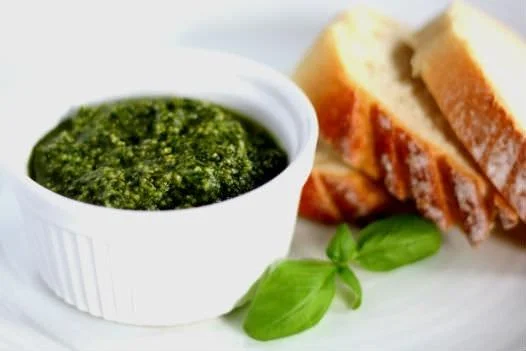
Pesto alla Genovese is a fresh, uncooked basil sauce blended with pine nuts, Parmesan, olive oil and garlic. Make it quickly to toss with pasta, spread in a sandwich or spoon over vegetables.
Ingredients
- 50 gfresh basil
- 15 gpine nuts
- 25 gfreshly grated Parmesan
- 100 mlgood-quality olive oil
- 1 clovegarlic
- to tastesalt and pepper
Instructions
- 1
Blend the ingredients
Put the basil, pine nuts, olive oil and garlic in a food processor, mini chopper or blender. Run it at full power until the mixture forms a coarse paste.
- 2
Use a mortar
Alternatively, pound the ingredients together in a mortar.
- 3
Season the pesto
Stir in the Parmesan, then season to taste with salt and pepper.
- 4
Chill until needed
Transfer the pesto to a jar and keep it in the fridge until ready to eat.
What is Pesto alla Genovese?
Pesto alla Genovese is a raw basil sauce from Genoa, in the Liguria region of north-west Italy. Its name refers to pounding ingredients together, traditionally in a mortar.
This version uses a food processor for speed, with a mortar offered as an alternative. Basil brings the fresh, herbal flavour, while pine nuts, Parmesan and olive oil give the sauce richness.
Nutrition and macros by portion
The nutrition label shows one serving as written: 257 calories, 5g protein, 2g carbs, 27g fat.
| Portion | Adjustment | kcal | Protein | Carbs | Fat |
|---|---|---|---|---|---|
| Lighter | Use less olive oil | 180 kcal | 4g | 1g | 19g |
| This serving | As written | 257 kcal | 5g | 2g | 27g |
| Hungry | Serve with more pasta | 386 kcal | 8g | 3g | 41g |
Most of the energy and fat come from the olive oil, with pine nuts and Parmesan adding further fat and some protein. Basil and garlic contribute comparatively little, while the cheese and any added salt contribute sodium. Balance a serving with vegetables or a side salad.
Choosing the ingredients
Basil: use fresh leaves with a bright colour and a clean, fragrant smell. Remove any tough stems before blending.
Pine nuts: these add a soft, buttery nuttiness. Measure them before blending so they complement rather than overwhelm the basil.
Parmesan: freshly grated cheese blends into the sauce more readily than larger pieces. Add it after blending the other ingredients, as directed.
Blending or pounding
Food processor: pulse or run the machine until the mixture is a coarse paste, stopping once the leaves and nuts are broken down. The recipe calls for full power, but avoid blending longer than needed.
Mortar: pound the ingredients together until they form a paste. This takes more effort, but gives you close control over the texture.
Getting the texture right
A coarse paste is the cue to stop blending; the method does not call for a completely smooth sauce. The olive oil helps bring the basil, nuts and garlic together.
Once the Parmesan is added, stir it through and taste the pesto. Adjust the salt and pepper to suit your preference.
Serving the pesto
Toss the pesto with freshly cooked pasta, or spoon it over cooked vegetables. It also works as a spread in a sandwich or as a finishing touch for soup.
For a fuller meal, serve it with pasta alongside a simple salad or vegetables. Add the pesto to hot food just before serving to keep its fresh basil character.
Timing and preparation
The method gives no total preparation time, but the sauce needs only blending or pounding followed by seasoning. Have the ingredients ready before you start.
Keep the texture coarse and taste after adding the cheese, before transferring the pesto to a jar. Refrigerate it until you are ready to serve.
Recipe notes & tips
- Use fresh basil leaves for the brightest flavour.
- Stop blending when the mixture is a coarse paste.
- Add the Parmesan after processing the other ingredients.
- Season gradually, as the Parmesan is already savoury.
- Use a clean, dry jar to store the pesto.
Variations
- Toast the pine nuts: cool them before blending for a deeper, nuttier flavour.
- Add lemon: stir in a little lemon zest for a fresher note.
- Use another hard cheese: replace the Parmesan with a similar finely grated cheese.
- Make it nut-free: leave out the pine nuts, knowing the sauce will be less rich.
- Adjust the garlic: use less for a gentler flavour or more for extra sharpness.
Common mistakes to avoid
- Blending too long: stop once the pesto is a coarse paste to avoid making it overly smooth.
- Adding the cheese too early: blend the other ingredients first, then stir in the Parmesan.
- Over-seasoning: taste after adding the cheese before adding more salt.
- Using wilted basil: choose fresh, fragrant leaves for a cleaner flavour.
- Leaving the pesto out: transfer it to a jar and refrigerate it until serving.
How to store
Store the pesto in a covered jar in the fridge and use it within 3–4 days. Stir before serving; if it has firmed up, let it stand briefly at room temperature. It is best used cold or stirred into hot food rather than reheated on its own.
Frequently asked questions
Can I make this without a food processor?
Yes. The method gives a mortar and pestle as an alternative; pound the ingredients together until they form a coarse paste.
Should I toast the pine nuts?
The recipe uses them without toasting. Toasting is optional, but let them cool before blending if you choose to do so.
How much pesto should I use for pasta?
Start with a spoonful per serving and add more to taste. Toss it through the pasta just before serving.
Can I freeze the pesto?
Yes, pesto can be frozen in small airtight portions. Thaw it in the fridge and stir it before use.
Why is my pesto bitter?
Basil that has been blended for too long can develop a harsher flavour. Blend only until the mixture becomes a coarse paste.
Cook it from the original
This recipe comes from foodfanatic.dk. Their page has the author’s own photos, notes and tips — the best place to cook it from.
Open the recipe on foodfanatic.dk