
Egg fried rice
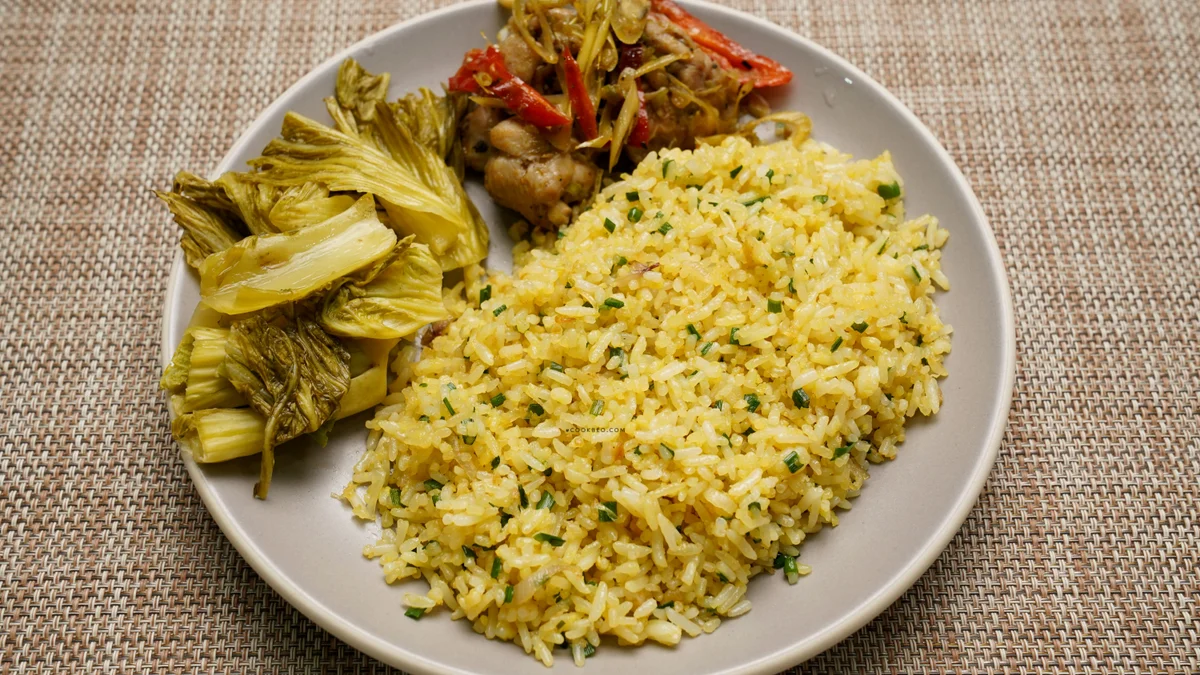
Vietnamese-style egg fried rice coats leftover rice with egg, then fries it with fragrant shallot and spring onion. It is a quick, adaptable way to turn cold rice into a filling meal with separate, lightly crisp grains.
Ingredients
- 1 bowlcold cooked rice
- 2–3eggs
- 1shallot
- to tastespring onion
- to tasteeveryday seasonings
- to serve, optionalpickled vegetables, sausage, braised meat, peanuts or other accompaniments
- 2 tablespoons (30 ml)cooking oil
- to tastefish sauce
- a littleseasoning powder
Instructions
- 1
Mix rice and egg
Beat the eggs into the cold rice and mix until the grains are coated. Rice that has been chilled in the fridge works especially well and tends to fry up firmer. Peel and slice the shallot, keeping the slices thick enough not to burn easily; rinse and finely slice the spring onion.
- 2
Fry until fragrant
Heat 2 tablespoons (30 ml) of oil in a pan over low heat. Add the shallot and fry until fragrant, then add the rice and egg mixture. The egg may set against the pan first and smell slightly eggy; keep frying and stirring, and the rice will start to loosen. Continue over medium or low heat until the grains feel firmer, then season with fish sauce and a little seasoning powder. Fry until the rice is dry and separate, adjusting the cooking time for softer or firmer rice. Stir in the spring onion just before turning off the heat, then serve with accompaniments such as pickles, crisp-edged braised meat or lemongrass chilli chicken.
What is Vietnamese egg fried rice?
Cơm rang trứng is a Vietnamese home-style fried rice made by frying cooked rice with egg and aromatics. Fried rice has many regional forms across Asia, and this simple version relies on everyday ingredients rather than a long list of sauces.
Coating the cold rice with beaten egg before it goes into the pan gives the grains an even layer of egg. Shallot adds fragrance, while spring onion brings a fresh finish.
Nutrition and macros by portion
The nutrition label shows one serving as written: 700 calories, 22g protein, 59g carbs, 41g fat.
| Portion | Adjustment | kcal | Protein | Carbs | Fat |
|---|---|---|---|---|---|
| Lighter | Use less cooking oil | 490 kcal | 15g | 41g | 29g |
| This serving | As written | 700 kcal | 22g | 59g | 41g |
| Hungry | Add an extra egg | 1050 kcal | 33g | 89g | 62g |
Most of the carbohydrates come from the rice, while the eggs provide much of the protein and some of the fat. The cooking oil is also a substantial source of fat; serve the rice with pickled vegetables or another vegetable side to balance the plate.
Why start with cold rice?
Cold rice: chilled grains are firmer and less likely to clump when stirred in the pan. If your rice has just been cooked, spread it out and let it cool before using it.
Egg coating: mix the egg through the rice before frying, as directed, so it can cook around the grains. Break up any compacted lumps as you mix.
Get the aromatics ready
Shallot: slice it thick enough to tolerate frying without burning quickly. Add it to gently heated oil and let it become fragrant before adding the rice.
Spring onion: wash and slice it while preparing the shallot. Add it at the end and stir briefly so it stays fresh-tasting.
Frying and seasoning
Gentle start: heat the oil over low heat and fry the shallot until fragrant. When the rice mixture first hits the pan, the egg may set against the base; keep stirring rather than stopping at this stage.
Season gradually: add fish sauce and a little seasoning powder once the rice has begun to firm up. The recipe gives no fixed quantities for these seasonings, so taste and adjust to suit your preference.
How to judge the texture
Separate grains: keep turning the rice until it looks dry and the grains are no longer sticking together. The cooked egg should cling to the rice rather than remain in wet patches.
Softer or firmer: the longer the rice fries, the drier and harder it becomes. Stop when it reaches the texture you like, then add the spring onion and take the pan off the heat.
What to serve alongside
Pickles: serve the rice with Vietnamese-style pickled vegetables or other pickles for a sharp, crunchy contrast. The listed accompaniments are suggestions, so use what you have.
Something savoury: sausage, braised meat, peanuts or lemongrass chilli chicken can make the plate more substantial. Add them alongside rather than mixing them into the rice if you want to keep its texture distinct.
Recipe notes & tips
- Use rice that is cold and firm so it is easier to separate in the pan.
- Slice the shallot thickly enough to reduce the chance of it burning.
- Keep stirring after adding the rice, especially while the egg is first setting.
- Add fish sauce and seasoning powder gradually, then taste before adding more.
- Stop frying when the grains reach your preferred level of dryness.
- Stir in the spring onion just before turning off the heat.
Variations
- Add peanuts: scatter them over the finished rice for a crunchy accompaniment.
- Serve with pickles: add a small side of pickled vegetables for a sharp contrast.
- Add sausage: fry sliced sausage separately and serve it alongside the rice.
- Use braised meat: serve leftover braised meat with the rice for a more substantial meal.
- Add chilli: serve fresh chilli or a chilli condiment on the side if you like heat.
Common mistakes to avoid
- Using clumpy rice: chill it first and break apart compacted lumps before frying.
- Slicing the shallot too thinly: cut thicker slices so they are less likely to burn.
- Stopping when the egg first sticks: keep stirring and frying so the mixture can loosen.
- Frying for too long: check the grains as they dry and stop when they reach your preferred texture.
- Adding spring onion too early: stir it in just before turning off the heat.
How to store
Refrigerate leftovers in a covered container and eat within 2 days. Reheat until steaming hot in a pan, stirring as needed; add a small splash of water if the rice has become too dry.
Frequently asked questions
Can I use freshly cooked rice?
Yes, but let it cool and firm up first. Chilled leftover rice is especially suitable because the grains are less likely to clump.
Why mix the egg into the rice before frying?
This method coats the grains with egg before they enter the pan. Stir thoroughly so the egg is distributed throughout the rice.
Why does the egg stick to the pan at first?
The egg can set against the pan before the rice starts to loosen. Keep stirring and frying; the recipe notes that the grains should begin to separate as they cook.
How do I make the rice softer?
Fry it for less time and take it off the heat once the grains have reached the texture you prefer. Longer frying makes it drier and firmer.
What can I serve with egg fried rice?
The recipe suggests pickled vegetables, sausage, braised meat, peanuts or lemongrass chilli chicken. Choose one or more accompaniments to suit what you have.
Cook it from the original
This recipe comes from cookbeo.com. Their page has the author’s own photos, notes and tips — the best place to cook it from.
Open the recipe on cookbeo.com