
Sweet and sour braised pork ribs
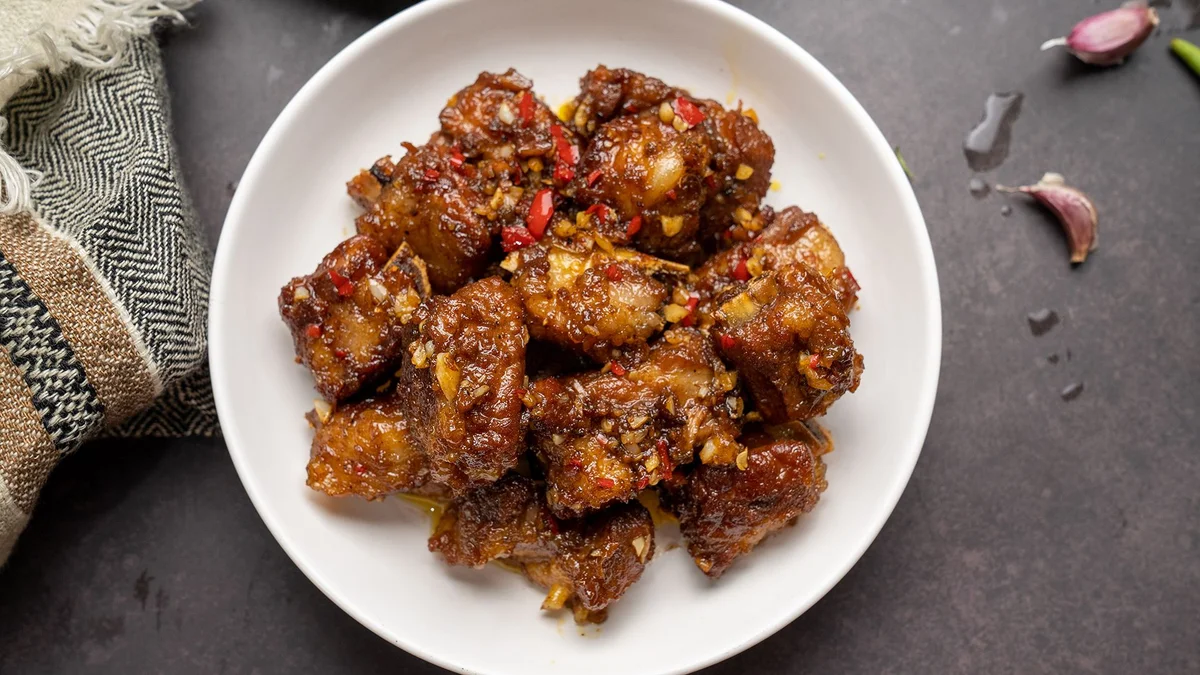
These Vietnamese sweet and sour braised pork ribs are simmered until tender in a savoury, tangy sauce that turns glossy and reddish brown. They make a flavourful main course for a rice-based meal, especially served hot with a simple vegetable side.
Ingredients
- 1 kgpork loin ribs
- 1 large bulbgarlic
- 1–2, if you like it hotchillies
- to taste; plus 1 spoonful for blanchingcoarse salt
- 1 spoonfulvinegar
- 1 spoonfulsugar
- 1 full spoonfulfish sauce
- ⅓ spoonfulground black pepper
- ½ spoonfulannatto oil
- ½ tablespooncooking caramel sauce
- ⅓ spoonfulMSG
- ½ spoonfulcooking oil
Instructions
- 1
1. Clean and blanch
Rub the ribs with coarse salt, rinse them well and drain. Cut them into serving-sized pieces. Bring a pan of water with 1 spoonful of coarse salt to a strong boil, then add the ribs and blanch uncovered for about 5 minutes. Drain, rinse thoroughly and leave the ribs to dry well. Peel and finely chop the garlic; rinse and chop the chillies.
- 2
2. Season the ribs
Put the ribs in a pan and add 1 full spoonful of fish sauce, 1 spoonful of vinegar, 1 spoonful of sugar, ⅓ spoonful of MSG, ⅓ spoonful of ground pepper, ½ spoonful of annatto oil, ½ spoonful of cooking oil and ½ tablespoon of cooking caramel sauce. Mix well and leave to marinate for about 30 minutes.
- 3
3. Braise gently
Set the pan over a slightly high heat and stir so the bubbling sauce coats the ribs. Once it comes to a boil, lower the heat, cover the pan and simmer gently for 30 minutes. Turn and stir the ribs occasionally so they cook and colour evenly.
- 4
4. Finish the sauce
When the ribs are tender, add the chopped garlic, raise the heat and stir continuously. Once the sauce has thickened and the ribs are glossy and reddish brown, turn off the heat and transfer them to a serving plate.
What are sweet and sour braised ribs?
This Vietnamese home-style dish, often called sườn rim chua ngọt, combines pork ribs with a sauce that balances savoury fish sauce, vinegar and sugar. The ribs are braised rather than roasted, so they take on the seasoning as they cook.
Here, annatto oil and caramel sauce give the ribs their distinctive glossy, reddish-brown colour. Garlic is added near the end to keep its aroma lively.
Nutrition and macros by portion
The nutrition label shows one serving as written: 560 calories, 34g protein, 12g carbs, 41g fat.
| Portion | Adjustment | kcal | Protein | Carbs | Fat |
|---|---|---|---|---|---|
| Lighter | Serve with extra okra | 392 kcal | 24g | 8g | 29g |
| This serving | As written | 560 kcal | 34g | 12g | 41g |
| Hungry | Add more rice | 840 kcal | 51g | 18g | 62g |
The ribs provide most of the protein and fat, while the sugar and any rice served alongside contribute carbohydrates. The sauce and seasonings also contribute sodium; pair a serving with plain rice and vegetables such as boiled okra for a more balanced plate.
Choosing and preparing the ribs
Rib pieces: Loin ribs give you individual portions with both meat and bone. Cut them into manageable pieces so they are easier to season and turn in the pan.
Blanching: The recipe calls for an uncovered 5-minute blanch, followed by a thorough rinse. Drain the ribs well afterwards so excess water does not dilute the braising sauce.
Getting the sweet and sour balance
Vinegar and sugar: These provide the tangy-sweet contrast, while fish sauce supplies the savoury depth. The listed spoonfuls are the recipe's measures, so taste the finished sauce before serving if you want to assess its balance.
Chilli: The 1–2 chillies are optional. Leave them out for a milder dish, or chop them finely for heat distributed through the sauce.
Why the ribs are cooked in stages
Initial heat: Starting over a slightly high heat brings the seasoned liquid to a boil and helps it coat the ribs. Keep an eye on the pan as it heats.
Gentle simmer: Cover the pan and cook at a low simmer for 30 minutes, turning the ribs occasionally. This gives them time to become tender without reducing the sauce too quickly.
Finishing with garlic
Late addition: Stir in the chopped garlic once the ribs are tender, then raise the heat and keep stirring. This final stage cooks the garlic while reducing the sauce.
Doneness cue: Look for a thickened, glossy coating and a reddish-brown colour. The recipe does not give a separate final cooking time, so use the sauce's consistency as your guide.
What to serve alongside
Rice: Plain rice is a natural partner for the strongly seasoned, sweet and sour sauce. Spoon a little of the sauce over the rice at the table.
Vegetables: The recipe suggests boiled okra as a simple side. Serve the ribs hot, since the meat can firm up as it cools.
Recipe notes & tips
- Rinse the ribs thoroughly after blanching to remove any residue.
- Let the blanched ribs drain well before adding the seasonings.
- Turn the ribs occasionally during the covered simmer so they colour evenly.
- Keep stirring during the final reduction to help prevent the sauce from catching.
- Serve the ribs hot while their texture is at its most tender.
Variations
- Adjust the heat: Leave out the chillies for a mild version or use both for more spice.
- Add ginger: Include a little finely chopped ginger with the garlic for a warming note.
- Use a different vinegar: Swap in another mild vinegar while keeping the recipe's spoonful measure.
- Serve with greens: Add boiled greens alongside the suggested okra.
- Make it less sweet: Reduce the sugar to suit your taste, knowing this changes the original balance.
Common mistakes to avoid
- Covering the blanching pan: Leave it uncovered during the 5-minute blanch as instructed.
- Skipping the rinse: Rinse the blanched ribs thoroughly before seasoning them.
- Starting the braise too gently: Begin over slightly high heat so the sauce comes to a boil and coats the ribs.
- Cooking at a rolling boil: Lower the heat after the sauce boils and simmer gently with the lid on.
- Adding garlic too early: Add it after the ribs are tender, then stir over higher heat.
- Reducing without stirring: Stir continuously in the final stage so the thickening sauce does not catch.
How to store
Refrigerate leftovers in a covered container and eat within 3 days. Reheat gently in a covered pan until piping hot, adding a small splash of water if the sauce has become too thick.
Frequently asked questions
How long should I blanch the ribs?
Blanch them for about 5 minutes in strongly boiling salted water, without covering the pan. Rinse them well afterwards and let them drain.
How long do the ribs need to marinate?
Leave them in the seasoning for about 30 minutes before cooking.
Can I leave out the chillies?
Yes. They are optional, so omit them for a milder result.
How do I know when the sauce is ready?
It should have thickened enough to cling to the ribs, which should look glossy and reddish brown.
Can I make the ribs ahead?
You can cook them ahead and refrigerate them, but they are best served hot. Reheat them gently, as the meat may become firmer when cold.
What should I serve with the ribs?
Serve them with plain rice and, following the recipe's suggestion, boiled okra or another simple vegetable side.
Cook it from the original
This recipe comes from cookbeo.com. Their page has the author’s own photos, notes and tips — the best place to cook it from.
Open the recipe on cookbeo.com