
Classic kalops (Scanian kalops)
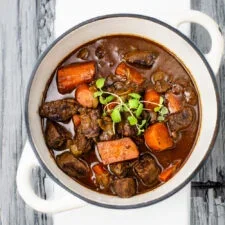
Classic kalops is a slow-braised Swedish beef stew with onions, carrots and a warmly spiced, savoury gravy. A long, gentle simmer makes a comparatively inexpensive cut tender, while the blended vegetables give the sauce body.
Ingredients
- 1 kgbeef chuck or blade, cut into stew-sized pieces
- to tastebutter, for frying
- to tastesalt and pepper
- 2yellow onions
- 2carrots
- 2 tbsp (30 ml)concentrated veal stock
- 500 mlwater
- 150 mlred wine
- 2 tbsp (30 ml)Japanese soy sauce, such as Kikkoman
- 2 tbsp (30 ml)tomato purée
- 2 tbsp (30 ml)dark balsamic vinegar
- 10allspice berries, crushed
- 4white peppercorns, crushed
- 2bay leaves
- to tasteboiled potatoes, to serve
- to tastepickled beetroot, to serve
Instructions
- 1
Brown the beef
Cut the beef into evenly sized 3 × 3 cm cubes and season with salt and pepper. Brown the pieces thoroughly in butter in batches, then transfer them to a heavy-based casserole.
- 2
Soften vegetables
Peel and cut the onions into wedges, then peel the carrots and slice them into rounds. Soften both in butter in a frying pan.
- 3
Add the ingredients
Transfer the vegetables to the casserole and add the remaining ingredients.
- 4
Simmer until tender
Bring the stew to a gentle simmer and cook for 2½ hours, until the beef is tender.
- 5
Blend the sauce
Lift out the beef, bay leaves and half the carrot pieces. Blend the remaining contents of the casserole with a stick blender until smooth, then return the beef and reserved carrots to the sauce and heat through before serving. This step can be skipped, but the sauce will then need thickening, for example with cornflour.
What is kalops?
Kalops is a Swedish beef stew, traditionally cooked slowly until the meat softens and the cooking liquid becomes a rich gravy. It is especially associated with home cooking in southern Sweden, including Scania.
This version combines beef with onion, carrot, allspice and peppercorns, then blends some of the vegetables into the sauce. Red wine, soy, tomato purée and balsamic add savoury depth and a little acidity.
Nutrition and macros by portion
The nutrition label shows one serving as written: 520 calories, 43g protein, 9g carbs, 34g fat.
| Portion | Adjustment | kcal | Protein | Carbs | Fat |
|---|---|---|---|---|---|
| Lighter | Less butter, more vegetables | 364 kcal | 30g | 6g | 24g |
| This serving | As written | 520 kcal | 43g | 9g | 34g |
| Hungry | Add extra potatoes | 780 kcal | 65g | 14g | 51g |
The beef provides most of the protein and much of the fat, while butter adds further fat; the onion, carrots and tomato purée contribute most of the stew’s carbohydrate. Boiled potatoes and pickled beetroot add further carbohydrate, so serve with a generous portion of green vegetables if you want to balance the plate.
Choosing the beef
Chuck or blade: these cuts have connective tissue that softens during a long, gentle braise. Cut the beef into even 3 cm cubes so the pieces cook at a similar rate.
Batch browning: give the pieces space in the pan and let each side colour well before turning. Crowding releases moisture and makes the beef steam rather than brown.
Building the flavour
Spices: crushed allspice and white pepper give the stew its distinctive warm, peppery character. Crush them roughly so their flavour spreads through the braising liquid.
Seasoning: stock concentrate and soy sauce both bring salt, so season the beef lightly at first and taste the sauce near the end. The wine, tomato and balsamic round out the savoury base.
Getting the sauce right
Blend part of the vegetables: removing half the carrots and the beef first lets the remaining vegetables turn into a smooth sauce without breaking up the meat. Return the reserved carrots for a little texture.
Skip blending: the method allows you to leave the sauce as it is, but it may be thinner. The recipe suggests thickening it with cornflour if you choose this option.
Slow, gentle cooking
Keep the stew at a low simmer for the full 2½ hours rather than letting it boil vigorously. A gentle heat gives the beef time to become tender without making the sauce reduce too quickly.
Check the beef towards the end of cooking: it should yield easily when pressed with a fork. If it is still firm, continue simmering until tender.
Serving the stew
Boiled potatoes are the classic accompaniment, catching the thick gravy and making the meal more substantial. Serve pickled beetroot alongside for a sharp, sweet contrast.
For a balanced plate, add a green vegetable such as cabbage or green beans. Keep extra salt in check at the table, as the gravy already includes stock and soy sauce.
Recipe notes & tips
- Pat the beef dry before browning to help it colour in the pan.
- Brown the meat in batches rather than crowding the pan.
- Use a heavy-based casserole to help maintain an even simmer.
- Taste the sauce before serving and adjust the seasoning carefully.
- Remove both bay leaves before blending the sauce.
Variations
- Use beef stock: replace the water and concentrated veal stock with an equivalent amount of beef stock.
- Add root vegetables: include extra carrot or some diced celeriac for a heartier stew.
- Skip the wine: use extra water or stock in its place.
- Keep it chunky: leave the vegetables unblended and thicken the sauce with cornflour if needed.
- Add fresh herbs: finish with chopped parsley for a fresh note.
Common mistakes to avoid
- Crowding the pan: the beef steams instead of browning, so cook it in batches.
- Boiling too hard: the liquid can reduce quickly and the meat may cook unevenly; keep it at a gentle simmer.
- Cutting uneven cubes: pieces may finish at different times, so aim for 3 cm cubes throughout.
- Blending with the bay leaves: remove them first, as they are not meant to be blended into the sauce.
- Over-seasoning early: stock and soy are salty, so taste and adjust the gravy near the end.
How to store
Cool leftovers promptly and refrigerate in a covered container for up to 3 days. Reheat gently in a saucepan until piping hot, adding a splash of water if the gravy has thickened; cooked potatoes and beetroot are best stored separately.
Frequently asked questions
Can I make kalops ahead?
Yes. Cook the stew, cool it promptly and refrigerate it, then reheat gently until piping hot. The sauce may thicken as it stands, so loosen it with a little water if needed.
How do I know when the beef is tender?
After simmering for 2½ hours, test a piece with a fork. It should be easy to pierce and yield readily; if not, keep cooking gently.
Can I leave the sauce unblended?
Yes. The recipe says the blending step can be skipped, though the sauce may be thinner. Thicken it with cornflour if you prefer a more substantial gravy.
What should I serve with kalops?
Serve it with boiled potatoes and pickled beetroot, as listed in the recipe. Green beans, cabbage or another green vegetable also go well alongside.
Can I use a different cut of beef?
Choose a braising cut such as chuck or blade that benefits from long, slow cooking. Lean, quick-cooking cuts are less suited to this method and may turn dry.
Cook it from the original
This recipe comes from 56kilo.se. Their page has the author’s own photos, notes and tips — the best place to cook it from.
Open the recipe on 56kilo.se