
Baked rice with pork sausage and chicken
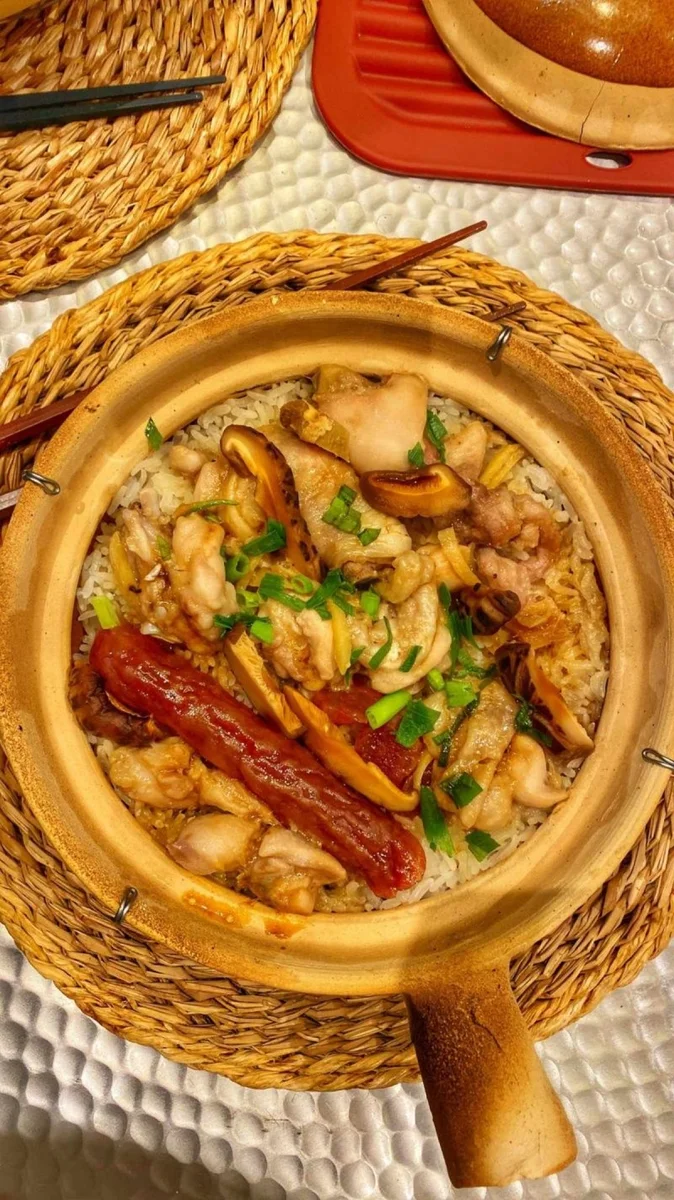
This Chinese-style one-pot rice layers chicken and lap cheong over rice, then cooks it until the bottom develops a crisp, golden crust. It makes a warming meal with savoury, slightly sweet flavours and plenty of chicken.
Ingredients
- As neededWhite rice
- 1Pork sausage (lap cheong)
- 300 gChicken
- 2Shiitake mushrooms
- As neededGinger, thinly sliced
- 15 ml (1 tbsp)Light soy sauce
- 30 ml (2 tbsp)Oyster sauce
- 15 ml (1 tbsp)Chinese cooking wine
- 5 ml (1 tsp)Sugar
- 5 ml (1 tsp)Cornflour
Instructions
- 1
Marinate the chicken
Cut the chicken into small pieces. Add the mushrooms and sliced ginger, then mix with the marinade seasonings. Leave to marinate for 2 hours.
- 2
Rinse the rice
Wash the rice thoroughly, soak it in water for 30 minutes, then drain.
- 3
Start cooking
Lightly oil a pot and add the rice and water, using a rice-to-water ratio of 1:0.9 because the rice has already absorbed water during soaking. Cover and cook over low to medium-low heat until about half the water has been absorbed.
- 4
Add the toppings
Place the pork sausage and chicken on top of the rice and cover the pot again. Drizzle oil around the inside edge of the pot and cook over low heat for 10 minutes, occasionally turning the pot so the heat distributes evenly.
- 5
Crisp and rest
For a thicker rice crust, raise the heat to medium-high and cook for 1–2 minutes. Take the pot off the heat, leave it to stand for 5 minutes, then serve.
What is baked rice with pork sausage and chicken?
This Chinese-style rice dish cooks chicken and lap cheong on top of rice in a covered pot. Although it is called baked rice, this method uses the hob rather than an oven.
The rice absorbs the savoury marinade as it cooks, while a final burst of higher heat helps form a crisp base. The combination of tender chicken and rich sausage makes it a hearty one-pot meal.
Nutrition and macros by portion
The nutrition label shows one serving as written: 574 calories, 49g protein, 18g carbs, 34g fat.
| Portion | Adjustment | kcal | Protein | Carbs | Fat |
|---|---|---|---|---|---|
| Lighter | Use less sausage | 402 kcal | 35g | 12g | 24g |
| This serving | As written | 574 kcal | 49g | 18g | 34g |
| Hungry | Add more rice | 861 kcal | 74g | 27g | 51g |
The rice supplies most of the carbohydrates, while the pork sausage and cooking oil contribute much of the fat. Chicken provides much of the protein, with the sauces also contributing flavour and sodium. Balance the meal with a serving of greens or another vegetable on the side.
The ingredients that build flavour
Lap cheong: this cured pork sausage brings a distinctive savoury-sweet flavour and releases fat as it heats. Slice it before adding if you would like the sausage distributed more evenly.
Marinating the chicken
Marinade: soy sauce, oyster sauce, cooking wine, sugar and cornflour season the chicken and give the juices body. Mix them thoroughly with the chicken, mushrooms and ginger so the pieces are evenly coated.
Timing: the method calls for a 2-hour marinade, so allow for that time alongside the 30-minute rice soak. Both are separate from the stated 30-minute cooking time.
Why soak and drain the rice?
Soaking: rinsing removes loose surface starch, and the 30-minute soak gives the grains a head start absorbing water. Drain the rice well before measuring the cooking water.
Water ratio: use 0.9 parts water for each part rice, as the grains have already taken up some moisture. The amount of rice is given as needed, so measure the water in proportion to what you use.
Getting the rice crust right
First stage: cook covered over low to medium-low heat until about half the water has been absorbed, then add the toppings. Keep the heat gentle during the 10-minute cooking stage to cook the chicken without scorching the rice too early.
Final stage: raise the heat to medium-high for just 1–2 minutes if you want more crust. Turn the pot occasionally during cooking for more even heat, and let the dish stand off the heat for 5 minutes before serving.
What to serve alongside it
Greens: steamed or quickly stir-fried greens make a fresh contrast to the rich sausage and savoury rice. Serve them alongside rather than mixing them into the pot, so the rice can keep its crust.
Soup: a light broth is another simple accompaniment. Bring it to the table separately to keep the rice toppings and base intact.
Recipe notes & tips
- Cut the chicken into similarly sized small pieces so they cook evenly.
- Drain the soaked rice thoroughly before adding it to the pot.
- Measure the water against the amount of rice you actually use, keeping the 1:0.9 ratio.
- Keep the lid on during cooking so steam can cook the rice and toppings.
- For a crispier base, use the optional 1–2-minute higher-heat finish and watch closely.
Variations
- Add spring onion: scatter sliced spring onion over the dish just before serving.
- Use another mushroom: substitute a similar quantity of a firm mushroom if shiitake is unavailable.
- Slice the sausage: cut the lap cheong into coins before cooking for more evenly distributed bites.
- Add leafy greens: serve steamed greens alongside for a fresh contrast.
- Adjust the ginger: use more or less thinly sliced ginger to suit your preference.
Common mistakes to avoid
- Skipping the soak: the recipe relies on soaked rice, so allow 30 minutes and drain it before cooking.
- Using too much water: account for the moisture absorbed during soaking and keep the rice-to-water ratio at 1:0.9.
- Cooking too hot at first: the base can scorch before the rice cooks; start over low to medium-low heat.
- Leaving the crust unattended: the final 1–2 minutes can darken the rice quickly, so keep an eye on the pot.
- Serving immediately: let the pot stand off the heat for 5 minutes before serving.
How to store
Refrigerate leftovers in a covered container and use within 2 days. Reheat until steaming hot throughout; a covered pan with a splash of water helps warm the rice without drying it out.
Frequently asked questions
Can I make this without soaking the rice?
The method specifies a 30-minute soak and uses less water because the rice absorbs some during that time. Skipping the soak would change the water balance and cooking time.
How much rice should I use?
The recipe lists white rice as needed rather than giving a weight. Measure the rice you want and use 0.9 parts water for each part of rice after soaking and draining.
Can I use a different pot?
Use a pot with a close-fitting lid that can be heated safely on the hob. A heavy-based pot can help distribute heat more evenly.
How do I know when the chicken is cooked?
Check that the largest chicken pieces are cooked through, with no raw-looking centre. If needed, continue cooking gently with the lid on before attempting to crisp the rice.
How do I get a thicker rice crust?
After the main cooking stage, raise the heat to medium-high and cook for 1–2 minutes. Watch closely, since the rice can scorch if left too long.
Cook it from the original
This recipe comes from cook1cook.com. Their page has the author’s own photos, notes and tips — the best place to cook it from.
Open the recipe on cook1cook.com