
Garlic butter bread
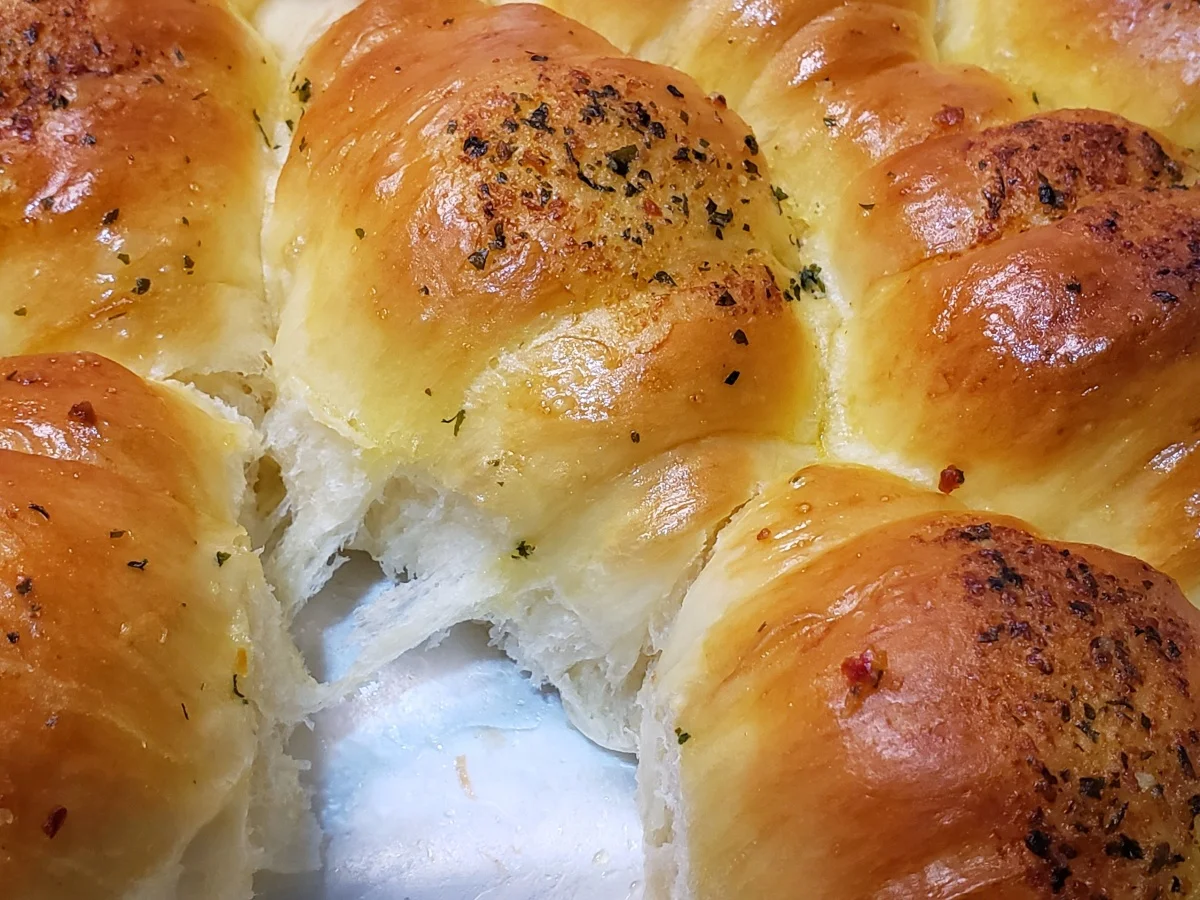
Soft, enriched bread rolls with garlic butter added before and after baking, filling the kitchen with a savoury aroma. The dough is straightforward to mix and shape, though it needs time to rise.
Ingredients
- 200 gstrong white bread flour
- 20 gsugar
- 2 gsalt
- 3 gyeast
- 40 gegg
- 95 g total (47.5 g each)milk and water
- 20 gbutter
Instructions
- 1
Mix the dough
Mix all the ingredients except the butter and leave the mixture to rest for 30 minutes. Once the dough has come together, add the butter. Leave it to prove for about 1 hour.
- 2
Shape the portions
Turn out the dough and press out the gas. Divide it into equal portions and round each one, then leave the dough to rest for 15 minutes.
- 3
Arrange and prove
Shape the portions and place them in a baking tin. Leave them to prove for about 1 hour.
- 4
Add the toppings
Brush the dough with beaten egg and place garlic butter on top.
- 5
Bake the bread
Bake in an oven preheated to 170°C for 25 minutes. When the bread is baked, brush it with garlic butter.
What is garlic butter bread?
This is a soft, enriched bread made with a simple yeast dough and finished with garlic butter. Its Chinese-style framing comes from the supplied recipe; the method itself focuses on mixing, proving, shaping and baking individual portions.
Egg, milk and butter give the dough richness, while garlic butter provides the savoury finish. Applying it both before and after baking layers the flavour across the crust.
Nutrition and macros by portion
The nutrition label shows one serving as written: 135 calories, 4g protein, 23g carbs, 3g fat.
| Portion | Adjustment | kcal | Protein | Carbs | Fat |
|---|---|---|---|---|---|
| Lighter | Less garlic butter | 95 kcal | 3g | 16g | 2g |
| This serving | As written | 135 kcal | 4g | 23g | 3g |
| Hungry | Larger portion | 203 kcal | 6g | 34g | 5g |
The flour and sugar provide most of the carbohydrates, while the egg and milk contribute protein. Butter and garlic butter contribute fat; pair a portion with vegetables and a protein-rich dish to make it part of a more balanced meal.
The dough ingredients
Flour and yeast: strong bread flour gives the rolls structure, while yeast raises the dough during the two longer proving stages.
Milk, water and egg: the split milk-and-water mixture hydrates the flour, and the egg enriches the dough and is also used for brushing before baking.
Butter and garlic butter: the listed butter goes into the dough after it comes together. Garlic butter is called for as a topping in the method, but its quantity is not specified in the ingredient list.
Adding the butter
Rest first: the recipe has you mix everything except the butter and leave the mixture for 30 minutes. Add the butter once the dough has come together, as directed.
Work it in: knead or fold until the butter is incorporated and the dough looks cohesive. Avoid adding extra flour unless the dough is genuinely too sticky to handle.
Proving and shaping
First rise: allow about 1 hour for the dough to prove. The recipe does not specify a temperature, so use a comfortably warm place and judge the dough by its rise rather than the clock alone.
Portions: press out the gas, divide the dough evenly and round each piece. Rest the portions for 15 minutes before shaping, then arrange them in the tin for a second prove of about 1 hour.
Baking and doneness
Egg wash: brush the shaped dough with beaten egg just before baking for a coloured, glossy finish.
Oven: bake at 170°C for 25 minutes. The recipe gives time and temperature but no additional doneness test, so check that the rolls are baked through before taking them out.
Garlic butter: add it on top before baking, then brush the baked bread with more as the final step. The recipe does not give a quantity, so apply it to taste.
Serving the bread
Serve the rolls warm, when the garlic butter is fragrant and the bread is soft. They work alongside soup, a savoury meal or other breads and snacks.
For a more rounded plate, pair a roll with a source of protein and a vegetable side. The bread is also easy to share while still warm.
Recipe notes & tips
- Measure the milk and water separately so they are equal parts of the 95 g total.
- Add the dough butter only after the initial rest, following the method.
- Divide the dough evenly so the portions bake at a similar rate.
- Allow the shaped portions their full second prove before baking.
- Brush the baked bread with garlic butter while it is still warm.
Variations
- More garlic: add extra garlic butter to taste after baking.
- Herb finish: mix chopped herbs into the garlic butter before brushing it on.
- Cheesy topping: scatter a little grated cheese over the garlic butter before baking.
- Smaller rolls: divide the dough into more portions and check them as they bake.
- Plain finish: omit the garlic butter topping for a simple enriched roll.
Common mistakes to avoid
- Adding butter too soon: follow the method and mix it in once the dough has come together.
- Skipping the rests: keep the 30-minute rest and 15-minute dough rest for easier handling.
- Uneven portions: divide the dough as evenly as possible so the rolls bake consistently.
- Rushing the second prove: give the shaped dough about 1 hour before it goes into the oven.
- Forgetting the final brush: apply garlic butter after baking as well as before it.
How to store
Once cool, store the bread in an airtight container at room temperature and eat within 2 days. Warm it briefly in a low oven before serving; add a fresh brush of garlic butter if desired.
Frequently asked questions
How long does the dough need to prove?
The method gives about 1 hour for the first prove and about 1 hour for the second. It also includes a 30-minute initial rest and a 15-minute rest after dividing the dough.
How much garlic butter should I use?
The method calls for garlic butter before and after baking, but the ingredient list does not state a quantity. Use it to taste and spread it evenly over the rolls.
Can I make the rolls without a tin?
The method says to place the shaped dough in a tin. If you do not have one, arrange the portions on a baking tray, allowing space for them to rise.
Can I prepare the dough ahead?
The supplied method does not include an overnight or chilled prove. For best results, follow its room-temperature resting and proving stages.
How do I know the bread is ready?
Bake at 170°C for 25 minutes as directed and check that the rolls are baked through. The recipe does not give a separate doneness cue.
Cook it from the original
This recipe comes from cook1cook.com. Their page has the author’s own photos, notes and tips — the best place to cook it from.
Open the recipe on cook1cook.com