
Chicken stir-fry with peanut sauce and basmati rice
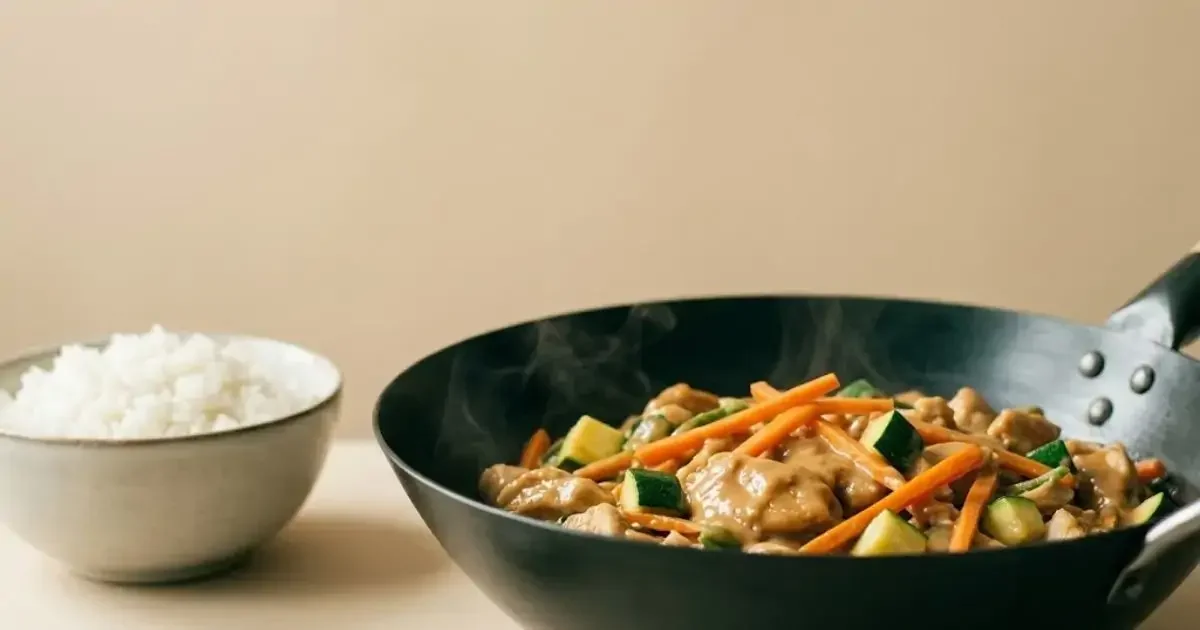
This chicken stir-fry pairs crisp vegetables and a smooth peanut sauce with basmati rice. Cook the chicken and vegetables quickly over high heat, then turn the heat down before stirring in the sauce to keep it creamy.
Ingredients
- 4 pieceschicken fillets
- 190 g (1 cup)basmati rice
- 2courgettes
- 3carrots
- 1fresh red pepper
- 60 g (4 tbsp)peanut butter
- 60 ml (4 tbsp)soy sauce
- 30 ml (2 tbsp)olive oil
- 180 ml (3/4 cup)water
- 7.5 ml (1.5 tsp)ground sweet paprika
- 5 ml (1 tsp)ground black pepper
- 3.75 ml (3/4 tsp)salt
Instructions
- 1
Cook the rice
Rinse the rice in cold water until the water runs clear. Cook it in plenty of water, using a ratio of 1 part rice to 6 parts water, as you would pasta. When tender, drain it and discard the cooking water. Cool it in the fridge for at least 12 hours; this helps the grains stay separate when stir-fried.
- 2
Chop the vegetables
Cut the carrots into thin sticks about 3 mm thick, and dice the courgettes and pepper into 1 cm pieces. The carrots need about twice as long to soften, so they go into the pan first.
- 3
Brown the chicken
Slice the chicken into strips. Heat a pan with half the oil and fry the chicken over high heat for about 6 minutes, until golden. Transfer it to a plate and set aside so it does not dry out while the vegetables cook.
- 4
Stir-fry vegetables
Add the remaining oil to the same pan and fry the carrots for 3 to 4 minutes. Add the courgettes and pepper, then fry for another 2 minutes. Keep the vegetables crisp in the centre so they do not release excess water into the sauce.
- 5
Finish the sauce
Turn the heat to low and return the chicken to the pan. Add the peanut butter, tamari and 3 tablespoons of water, then stir briskly for about 2 minutes, until the sauce is smooth and coats every piece. Keep the heat low to prevent the peanut butter separating.
What is chicken stir-fry with peanut sauce?
Stir-frying is a quick way of cooking small pieces of food over high heat, commonly associated with Chinese cooking and now used in many home kitchens. This version brings chicken and crisp vegetables together with a rich peanut sauce, served alongside basmati rice.
The method depends on cooking each part for the right length of time: carrots go in first, while the softer vegetables need only a short spell in the pan. Turning the heat down before adding the peanut butter helps it form a smooth coating.
Nutrition and macros by portion
The nutrition label shows one serving as written: 600 calories, 52g protein, 57g carbs, 19g fat.
| Portion | Adjustment | kcal | Protein | Carbs | Fat |
|---|---|---|---|---|---|
| Lighter | Use less peanut butter | 420 kcal | 36g | 40g | 13g |
| This serving | As written | 600 kcal | 52g | 57g | 19g |
| Hungry | Add extra rice | 900 kcal | 78g | 86g | 29g |
The rice supplies most of the carbohydrates, while the peanut butter and olive oil contribute much of the fat. Chicken provides most of the protein, with additional fat and sodium coming from the peanut butter and soy sauce. Serve with extra vegetables if you want to balance the rice and sauce with more produce.
Prepare the rice ahead
Rinse the rice until the water runs clear, then cook it in a generous amount of water at a ratio of 1 part rice to 6 parts water. Drain it as soon as it is tender and chill it for at least 12 hours, as directed in the method.
That chilling time makes this a planned-ahead meal rather than a complete 30-minute recipe. Cold rice is also easier to handle in a hot pan without crushing the grains.
Cut for even cooking
Carrot sticks: keep them about 3 mm thick so they cook in the time allowed. They are denser than the other vegetables, which is why they start first.
Courgette and pepper: cut these into 1 cm dice. Their smaller, softer pieces need less time and should retain some bite.
Brown the chicken in batches if needed
Chicken strips: give them space in the pan and cook over high heat for about 6 minutes, until golden. If the pan is crowded, the meat may steam rather than brown.
Resting: transfer the cooked chicken to a plate while the vegetables fry. Return it to the pan for the final saucing so it stays juicy.
Keep the vegetables crisp
Fry the carrots for 3 to 4 minutes before adding the courgette and pepper for a further 2 minutes. The vegetables should still have a little firmness in the centre.
Avoid cooking them until soft: they can release water, which thins the peanut sauce and makes the dish less like a quick stir-fry.
Make a smooth peanut sauce
Lower the heat before adding the peanut butter, tamari and 3 tablespoons of water. Stir briskly for about 2 minutes, until the sauce looks smooth and clings to the chicken and vegetables.
The ingredient list also includes 180 ml water, while the method specifies 3 tablespoons for the sauce. Follow the method's 3 tablespoons for the pan; the remaining listed water is not assigned a use in the supplied method.
Serve with basmati rice
Serve the stir-fry with the chilled, cooked rice. Its separate grains make a good base for the creamy sauce, while the vegetables add colour and crunch.
For a fuller plate, add another portion of vegetables on the side. A squeeze of lime or fresh herbs can also bring a fresh contrast to the savoury peanut sauce.
Recipe notes & tips
- Chill the cooked rice for at least 12 hours as directed, so it is ready for the stir-fry.
- Cut the carrots to roughly 3 mm thick to help them cook evenly.
- Use a wide, hot pan and avoid overcrowding it when browning the chicken.
- Take the chicken out of the pan while the vegetables cook to help keep it tender.
- Lower the heat before adding the peanut butter to help the sauce stay smooth.
- Keep the courgette and pepper slightly crisp rather than cooking them until soft.
Variations
- Add ginger: stir a little finely grated ginger into the pan with the vegetables.
- Use tamari: swap the listed soy sauce for tamari if that is what you have to hand.
- Add chilli: include sliced fresh chilli for a hotter sauce.
- Change the vegetables: use broccoli florets in place of some of the courgette.
- Finish with lime: squeeze lime juice over the dish just before serving for a fresh, sharp note.
Common mistakes to avoid
- Crowding the chicken: it can steam instead of browning; cook it in batches if the pan is small.
- Adding the peanut butter over high heat: it may separate; turn the heat to low first.
- Overcooking the vegetables: they can soften and release water; keep to the short frying times.
- Skipping the rice chill: warm rice may break up more easily; prepare and chill it at least 12 hours ahead.
- Cutting the carrots too thick: they may stay firm when the other vegetables are ready; aim for sticks about 3 mm thick.
How to store
Refrigerate leftovers in an airtight container and use within 3 days. Reheat in a pan over medium-low heat, stirring until piping hot; add a splash of water if the sauce has thickened. Chill cooked rice promptly and do not leave it at room temperature for extended periods.
Frequently asked questions
Can I make this in 30 minutes?
The chicken and vegetables take about 30 minutes, but the method calls for chilling the cooked rice for at least 12 hours. Cook and chill the rice ahead of time.
Why is the rice cooked like pasta?
The method uses plenty of water, at a ratio of 1 part rice to 6 parts water, then drains it. This makes it easy to cook the rice without relying on absorption.
Can I use freshly cooked rice?
The method specifically recommends chilling the rice for at least 12 hours so it stays separate in the wok. If you use freshly cooked rice, it may be softer and more likely to break up.
How do I stop the peanut sauce splitting?
Lower the heat before adding the peanut butter, tamari and 3 tablespoons of water. Stir briskly until the sauce is smooth and coats the ingredients.
Which goes into the pan first, carrots or courgettes?
Start with the carrots and fry them for 3 to 4 minutes. Add the courgettes and pepper afterwards, as they need only another 2 minutes.
Can I use tamari instead of soy sauce?
Yes. The method names tamari, while the ingredient list specifies soy sauce, so tamari can be used in its place.
Cook it from the original
This recipe comes from coolinarika.com. Their page has the author’s own photos, notes and tips — the best place to cook it from.
Open the recipe on coolinarika.com