
Korean bibimbap
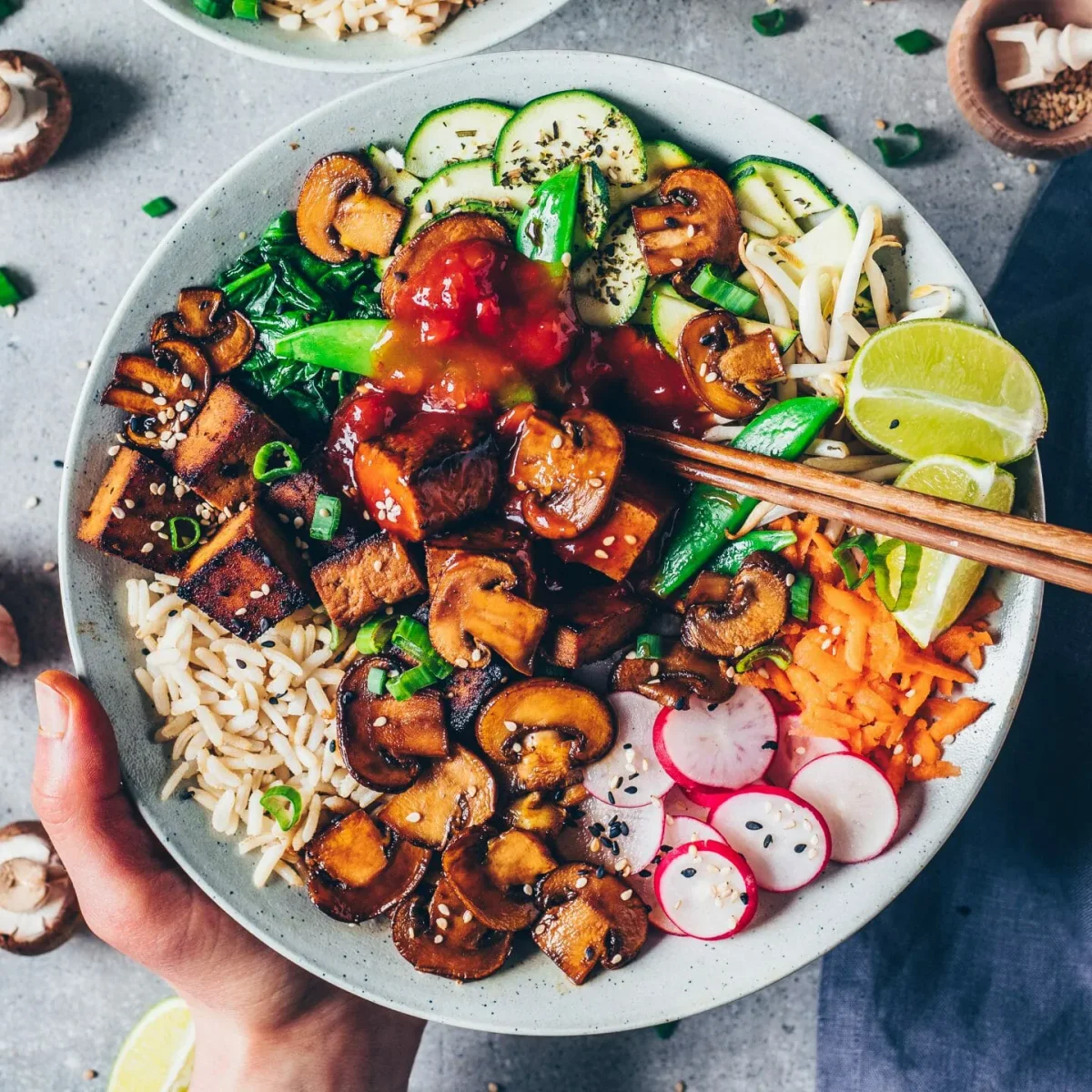
Bibimbap is a Korean rice bowl topped with colourful vegetables, tofu and a punchy gochujang sauce. This vegan version combines crisp fresh vegetables with golden tofu and mushrooms for a quick, customisable meal.
Ingredients
- 1carrot, grated
- 4–6radishes, thinly sliced
- 1 small, or ½ cucumbercourgette, thinly sliced
- 1spring onion, thinly sliced
- 100 gspinach
- 100 gsugar snap peas
- 50 gmung bean sprouts
- 250 gfirm tofu, cut into cubes
- ½ tsp (2.5 ml), optionalumami seasoning
- 15 mlsoy sauce or tamari
- 30 mlpeanut oil or another oil
- 150 gmushrooms, sliced
- 30 mlgochujang paste or another pepper-chilli paste
- 15 mlsesame oil
- 15 mlsoy sauce or tamari
- 15 mlagave syrup
- 10 mlrice vinegar
- 1 clovegarlic, grated
- 1 packet (125 g)rice, any variety
- to taste, optionallime
- to taste, optionalsesame seeds
Instructions
- 1
Cook the rice
Cook the rice according to the packet instructions, then drain it and set it aside. Fluff it with a fork from time to time if needed to stop it sticking together.
- 2
Prepare the vegetables
Wash and cut the vegetables into small pieces. Grate the carrot and use a vegetable slicer for the courgette and radishes if you have one.
- 3
Marinate the tofu
Drain the tofu well, wrap it in kitchen paper and press out excess moisture. Cut it into cubes and coat with the umami seasoning and soy sauce.
- 4
Fry the tofu
Heat 15 ml of the oil in a large frying pan. Fry the tofu until crisp on all sides, then take it out of the pan.
- 5
Brown the mushrooms
Heat the remaining oil in the same pan and fry the mushrooms until golden. Season to taste with a little umami seasoning or soy sauce, then remove them and set them with the tofu.
- 6
Wilt the spinach
Add the spinach to the pan while still wet and cook for 1–2 minutes, until wilted.
- 7
Mix the sauce
Stir together the gochujang, sesame oil, soy sauce, agave syrup, rice vinegar and garlic.
- 8
Assemble the bowls
Divide the rice between 2 bowls. Arrange the fresh vegetables and spinach on top, then place the crisp tofu and mushrooms in the centre. Finish with spring onion, sesame seeds or other toppings, and serve with the gochujang sauce and fresh lime on the side.
- 9
Serve the bibimbap
Enjoy straight away.
What is bibimbap?
Bibimbap is a Korean rice dish served with an assortment of toppings, often vegetables, and a savoury or spicy sauce. The name is commonly understood as “mixed rice”, and diners can stir the toppings through the rice before eating.
This vegan version pairs rice with tofu, mushrooms and a mix of fresh and quickly cooked vegetables. Keeping some vegetables raw gives the bowl contrast in colour and texture.
Nutrition and macros by portion
The nutrition label shows one serving as written: 675 calories, 22g protein, 91g carbs, 26g fat.
| Portion | Adjustment | kcal | Protein | Carbs | Fat |
|---|---|---|---|---|---|
| Lighter | Use less oil | 472 kcal | 15g | 64g | 18g |
| This serving | As written | 675 kcal | 22g | 91g | 26g |
| Hungry | Add more rice | 1013 kcal | 33g | 137g | 39g |
Rice and the agave syrup provide most of the carbohydrates; tofu contributes much of the protein, while the peanut and sesame oils provide most of the fat. For a more balanced plate, keep the rice portion measured and fill the rest of the bowl generously with the vegetables.
Build the bowl with contrasting vegetables
Fresh toppings: Thinly sliced radishes and courgette, grated carrot, sugar snap peas and sprouts bring crunch and freshness. Cut them evenly so they are easy to arrange and eat.
Cooked greens: Spinach needs only a brief stint in the pan. Adding it while wet helps it wilt without needing a long cooking time.
Get crisp tofu and browned mushrooms
Dry tofu: Pressing excess moisture from the tofu helps it brown rather than steam. Give the cubes room in the pan and turn them so each side gets colour.
Brown mushrooms: Fry the mushrooms in the same pan after the tofu. Their golden surface adds savoury depth to the bowl.
Keep an eye on the cooking order
Rice first: Cook the rice according to its packet, then set it aside while you prepare the toppings. Fluffing it occasionally helps keep it from clumping.
Quick finish: The tofu and mushrooms can be cooked while the vegetables are prepared; the spinach takes just 1–2 minutes. Mix the sauce before assembling so the bowls can be served promptly.
Mix a balanced gochujang sauce
Chilli and savoury notes: Gochujang brings heat and depth, while soy sauce and garlic add savoury flavour. Agave syrup and rice vinegar balance the sauce with sweetness and acidity.
Adjust at the table: Serve the sauce alongside the bowls, as directed, so each person can add as much as they like. Lime offers a bright, tangy finish.
Serve and mix to taste
Arrange the toppings over the rice before serving, with tofu and mushrooms in the centre. Spring onion and sesame seeds make simple finishing touches.
For a more traditional bibimbap-style eating experience, stir the toppings and sauce through the rice in the bowl. Serve as a complete meal, or add a light soup on the side.
Recipe notes & tips
- Press the tofu thoroughly before cutting it so it can brown more readily.
- Use a large frying pan and cook the tofu in a single layer for better browning.
- Prepare and slice the vegetables before you start frying.
- Fluff the cooked rice with a fork to separate the grains.
- Serve the sauce on the side so everyone can adjust the heat.
- Add the lime just before eating for a fresh citrus note.
Variations
- Use cucumber: Swap the courgette for ½ cucumber, as suggested in the ingredient list.
- Change the chilli paste: Use another pepper-chilli paste if gochujang is unavailable.
- Swap the soy sauce: Use tamari in either of the sauce or tofu portions.
- Choose another rice: Use any variety of rice you prefer, following its packet directions.
- Add extra toppings: Finish with sesame seeds, spring onion or lime to taste.
Common mistakes to avoid
- Wet tofu: It can steam instead of crisping; drain and press it well before frying.
- Crowded pan: The tofu may not brown evenly; use a large pan and leave space around the cubes.
- Overcooked spinach: It can lose its fresh texture; stop cooking as soon as it wilts.
- Clumpy rice: It is harder to arrange in the bowl; fluff it with a fork after cooking.
- Sauce added too early: It can soften the fresh toppings; serve it alongside the assembled bowls.
How to store
Store leftover rice, vegetables, tofu, mushrooms and sauce in separate airtight containers in the fridge and use within 3 days. Reheat the rice, tofu and mushrooms until piping hot, then add the fresh vegetables and sauce just before serving.
Frequently asked questions
Can I use cucumber instead of courgette?
Yes. The recipe lists ½ cucumber as an alternative to the small courgette; slice it thinly.
How do I make the tofu crisp?
Drain and press it well, then fry the cubes in a single layer until golden on all sides. Avoid overcrowding the pan.
Can I prepare the vegetables in advance?
Yes. You can wash and cut them ahead of time and keep them covered in the fridge. Add the spinach to the pan shortly before serving.
Is gochujang essential?
No. The recipe allows another pepper-chilli paste instead, though the flavour and heat may differ.
How spicy is the sauce?
Its heat depends on the gochujang or alternative chilli paste you use. Serve it on the side so each person can add it to taste.
Can I use another type of rice?
Yes. The recipe allows any variety; cook it according to the packet instructions.
Cook it from the original
This recipe comes from biancazapatka.com. Their page has the author’s own photos, notes and tips — the best place to cook it from.
Open the recipe on biancazapatka.com