
Panettone
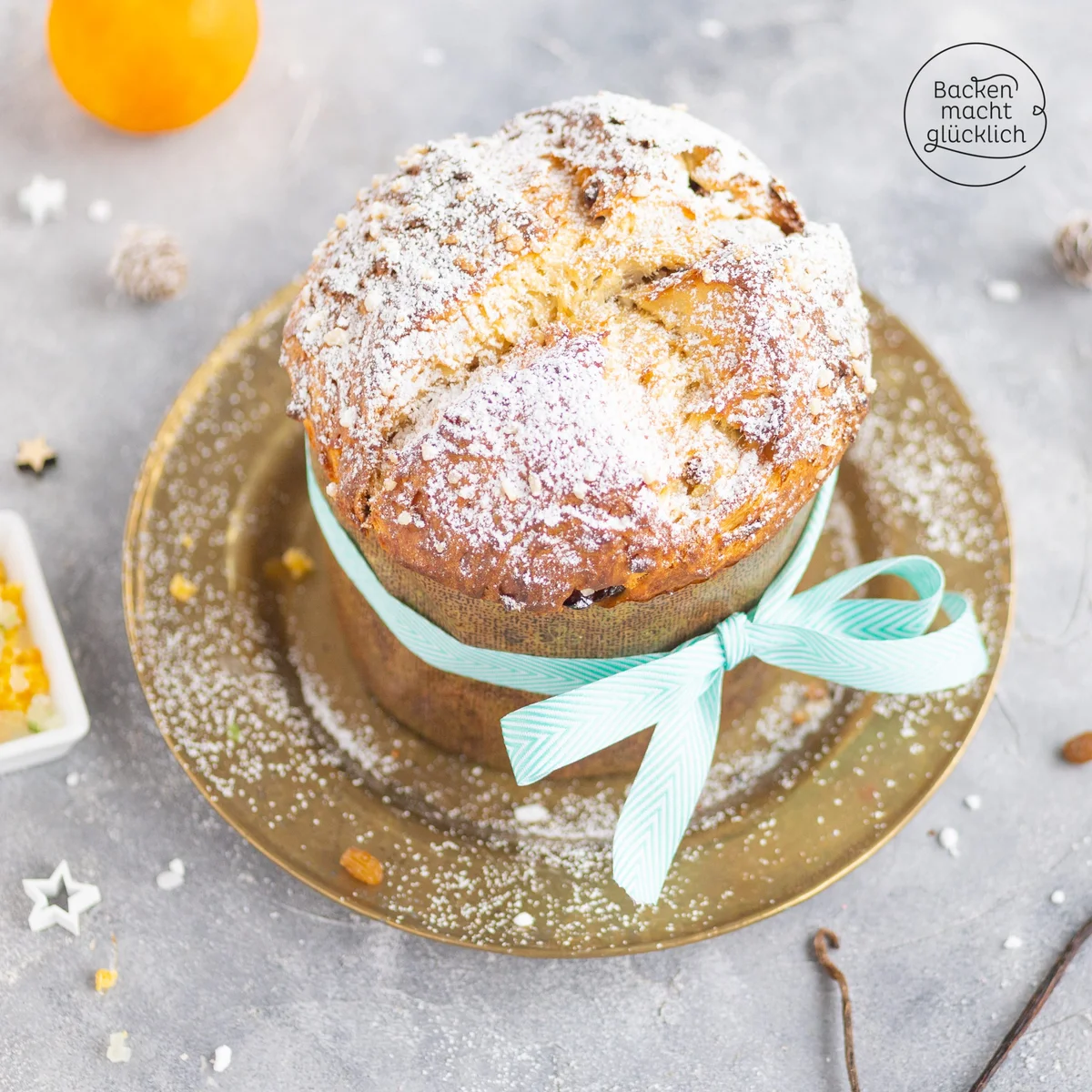
Panettone is a tall, soft Italian sweet bread filled with rum-soaked raisins and candied citrus peel. This homemade version takes time to rise, but makes two fragrant loaves with a buttery, tender crumb.
Ingredients
- 750 gItalian type 00 flour
- 14 gdried yeast
- 150 g, or moresugar
- 50 gdried wheat sourdough starter
- 270 ml (approximate)milk
- 2eggs
- 3egg yolks
- 7 gpanettone flavouring (optional)
- 2.5 ml (½ teaspoon)vanilla paste
- 2.5 ml (½ teaspoon)salt
- 250 g, softenedbutter
- 50 gcandied orange peel
- 50 gcandied lemon peel
- 200 grum-soaked raisins
- 15 ml (1 tablespoon)butter
- 15 ml (1 tablespoon)pearl sugar
Instructions
- 1
Prepare the fruit
Mix the finely chopped candied orange and lemon peel with the rum-soaked raisins and set aside. You can do this the night before.
- 2
Mix the ingredients
Put the flour, yeast, sourdough starter, sugar and salt in a large mixing bowl and combine. Add the lukewarm milk, eggs, softened butter, vanilla paste and, if using, the panettone flavouring.
- 3
Knead and prove
Knead the ingredients for about 10 minutes to make a fairly soft dough. Cover and leave it in a warm place to rise for about 45 minutes.
- 4
Add the fruit
Drain the fruit and knead it into the dough. Cover and leave to rise for about 2 hours at room temperature or overnight in the fridge.
- 5
Shape the dough
Divide the dough into 2 portions. On a very lightly floured surface, shape each into a large, smooth ball without kneading it much further: gently stretch each portion and fold the sides inwards.
- 6
Prove in moulds
Turn each ball so the seam is underneath, then carefully place it in a panettone paper mould about 15–16 cm wide. Cover and leave to rise for another 1–2 hours, until the dough is nearly as high as the mould.
- 7
Heat and score
Preheat the oven to 180°C, using conventional top and bottom heat. Lightly score a cross in each dough top with a very sharp knife or razor blade.
- 8
Butter the tops
Put a small piece of butter in the centre of each cross and brush the rest of the surface very thinly with melted butter. Sprinkle with pearl sugar if you like.
- 9
Bake the loaves
Bake the panettone side by side on the middle shelf for about 50 minutes. After about 30 minutes, cover the tops so they do not get too dark. Check with a skewer if needed to see whether the cakes are baked through.
What is panettone?
Panettone is a tall Italian sweet bread traditionally associated with Christmas, enriched with butter and eggs and studded with dried and candied fruit. Its characteristic light, stretchy crumb comes from a soft dough that is given time to rise.
This version uses dried yeast and dried wheat sourdough starter, with rum-soaked raisins, candied citrus and optional panettone flavouring. The two moulds help the loaves keep their height as they bake.
Nutrition and macros by portion
The nutrition label shows one serving as written: 3650 calories, 51g protein, 500g carbs, 115g fat.
| Portion | Adjustment | kcal | Protein | Carbs | Fat |
|---|---|---|---|---|---|
| Lighter | Use less butter | 2555 kcal | 36g | 350g | 81g |
| This serving | As written | 3650 kcal | 51g | 500g | 115g |
| Hungry | Serve a larger slice | 5475 kcal | 77g | 750g | 173g |
The flour, sugar, raisins and candied peel provide most of the carbohydrates, while butter supplies much of the fat. Flour, eggs, yolks and milk contribute protein. Pair a slice with fresh fruit or plain yoghurt for a more balanced plate.
The dough ingredients
Flour and starter: type 00 flour gives a fine-textured dough, while the dried starter contributes a sourdough element. The recipe also uses dried yeast to help the dough rise.
Enrichment: eggs, yolks and softened butter make the dough rich, while milk brings it together. The stated 270 ml of milk is approximate, so the finished dough is intended to remain fairly soft.
Prepare the fruit
Citrus peel: chop the candied orange and lemon finely so it is easier to distribute through the dough. Mixing it with the raisins ahead of time also lets you get this task out of the way before baking.
Raisins: the recipe calls for rum-soaked raisins and says to drain the fruit before adding it. Set the drained fruit aside until the first rise is complete.
Give the dough time
First rise: after roughly 10 minutes of kneading, cover the soft dough and leave it somewhere warm for about 45 minutes. The recipe does not give a specific volume target for this rise.
Second rise: once the fruit is incorporated, choose a room-temperature rise of about 2 hours or a rise overnight in the fridge. After shaping, allow another 1–2 hours in the moulds, until the dough is nearly level with their tops.
Shape without overworking
Smooth balls: divide the risen dough into two portions and use a lightly floured surface. Stretch each portion gently and fold the sides towards the centre, rather than kneading it extensively.
Seam underneath: turn each shaped ball over before placing it in its paper mould. This leaves the smoother side facing up for scoring and baking.
Score and bake
Cross-cut: use a very sharp knife or razor blade to make a light cross in each top. Put a small piece of butter in the centre, then brush the surface with a thin layer of melted butter.
Even baking: bake the two loaves together on the middle shelf at 180°C for about 50 minutes. Cover them after about 30 minutes if their tops are becoming too dark, and use a skewer to check the centre if you are unsure whether they are done.
Serving ideas
Let the baked loaves cool before slicing so the soft crumb has time to settle. Serve slices on their own or alongside coffee or tea.
For a more substantial festive plate, pair a slice with fresh fruit or plain yoghurt. The citrus and rum-soaked raisins already bring plenty of sweetness and flavour.
Recipe notes & tips
- Have the butter softened before mixing so it incorporates more readily into the dough.
- Chop the candied peel finely to help it spread evenly through the loaf.
- Use only a very light dusting of flour when shaping, as the dough should remain soft.
- Check the dough height during the final rise; it should be nearly level with the mould before baking.
- Cover the loaves after about 30 minutes in the oven if the tops are colouring too quickly.
- Use a skewer to check the centre if the panettone looks done on the outside but you are uncertain about the middle.
Variations
- Skip the flavouring: leave out the optional panettone flavouring for a simpler citrus-and-vanilla aroma.
- Adjust the sweetness: use more than 150 g sugar if you prefer a sweeter loaf.
- Change the fruit balance: use different proportions of the listed candied peel and rum-soaked raisins while keeping the total fruit amount the same.
- Add pearl sugar: sprinkle it over the buttered tops before baking for a crisp, sweet finish.
- Choose the cold rise: refrigerate the fruit-filled dough overnight instead of leaving it at room temperature for about 2 hours.
Common mistakes to avoid
- Adding undrained fruit: drain the fruit before kneading it into the dough, as the method directs.
- Overworking the shaped dough: stretch and fold the portions gently rather than kneading them extensively.
- Skipping the final rise: wait until the dough is nearly level with the mould before baking.
- Scoring too deeply: make a light cross with a very sharp blade rather than cutting far into the dough.
- Letting the tops get too dark: cover the loaves after about 30 minutes if they are browning quickly.
- Guessing at doneness: check with a skewer if needed to confirm the centre is baked through.
How to store
Once completely cool, keep the panettone wrapped or in an airtight container at room temperature. The recipe does not specify a storage life; rewarm slices briefly in a low oven if you would like to serve them warm.
Frequently asked questions
Can I prepare the fruit the night before?
Yes. Mix the finely chopped candied orange and lemon peel with the rum-soaked raisins and set them aside; the method says this can be done the evening before.
Can the second rise happen in the fridge?
Yes. After mixing the fruit into the dough, cover it and leave it overnight in the fridge instead of rising it for about 2 hours at room temperature.
How do I know when the final rise is complete?
The dough should have risen until it is nearly as high as the paper mould. The recipe gives a timing of 1–2 hours, but also uses the dough height as the cue.
What if I do not have panettone flavouring?
It is optional, so you can leave it out. Vanilla paste, citrus peel and rum-soaked raisins still flavour the dough.
How can I tell whether the panettone is baked through?
Bake for about 50 minutes, covering the tops after about 30 minutes if they are getting too dark. If in doubt, check the centre with a skewer.
Why does this recipe make two loaves?
The method divides the dough into 2 portions and places each in its own panettone paper mould, about 15–16 cm wide.
Cook it from the original
This recipe comes from backenmachtgluecklich.de. Their page has the author’s own photos, notes and tips — the best place to cook it from.
Open the recipe on backenmachtgluecklich.de