
Pavlova
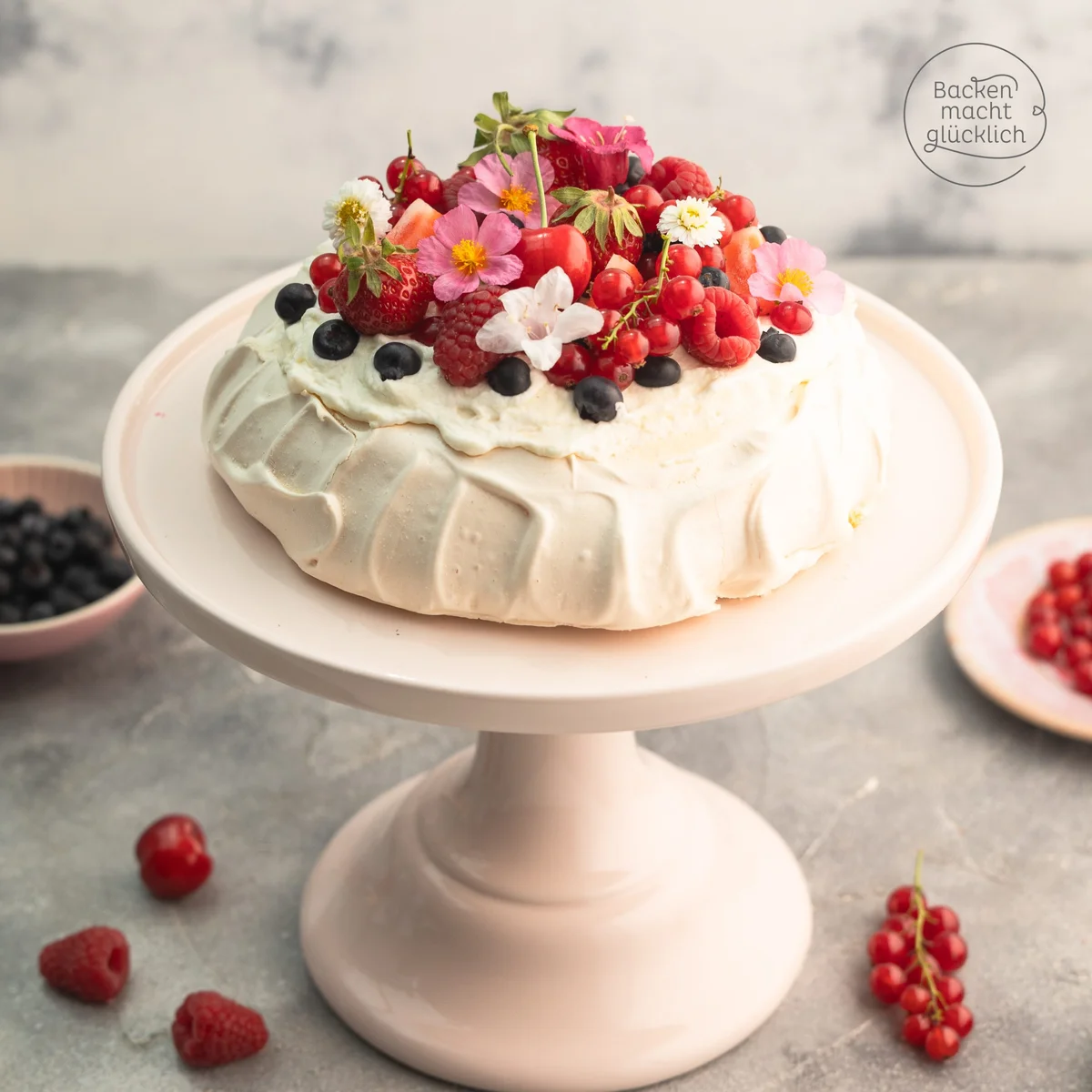
Pavlova is a crisp, delicate meringue with a soft, marshmallow-like centre, topped with whipped cream and berries. It makes a celebratory centrepiece, and the slow bake and cool help the shell keep its shape.
Ingredients
- 4 medium (about 140 g)egg whites
- 1 pinchsalt
- 1 teaspoonlemon juice or white wine vinegar
- 200 gcaster sugar, if possible
- 2 level teaspoonscornflour
- 300 gcold double cream
- 1 packetwhipped cream stabiliser
- 20 gicing sugar or vanilla sugar
- 250 g, or to tasteberries
Instructions
- 1
Whisk the meringue
In a completely clean, grease-free bowl, whisk the egg whites with the salt, starting slowly and then increasing to the highest speed until foamy. Add the lemon juice or vinegar and continue whisking until half-stiff. Gradually add the sugar, one spoonful at a time, while whisking; continue for about 6–8 minutes, until the sugar has dissolved and the mixture is stiff and glossy. Briefly and gently fold in the cornflour.
- 2
Shape the pavlova
Meanwhile, preheat the oven to 100°C conventional heat. Draw a circle about 20–22 cm across on baking paper, using a springform tin base as a guide if helpful, and place the paper on a baking tray. Spoon the meringue into the centre and spread it within the circle, shaping it into a slight dome. Make patterns around the edge or pull the meringue upwards if you like, and form a shallow dip in the middle for the topping if desired. The shape need not be exact, but keep the meringue about 3–4 cm high or less so it can dry through.
- 3
Bake and dry
Bake, or rather dry, the pavlova at 100°C for about 100–120 minutes. Do not open the oven door at the beginning. Towards the end, check that the base lifts slightly from the baking paper and the outside is dry, crisp and matt but still white. If unsure, carefully scrape a tiny piece from the centre: the inside should no longer be liquid, though it can and should remain chewy and soft like marshmallow.
- 4
Cool in oven
Switch off the oven and leave the door open a crack. Let the pavlova cool completely inside for at least 2 hours, or longer or overnight.
- 5
Top and serve
Wash, prepare and pat dry the fruit, cutting it into smaller pieces if needed. Whip the cold cream until half-stiff, then add the stabiliser and sugar gradually while whisking, and beat until fully stiff. Carefully transfer the pavlova to a serving plate. Spoon the cream into the middle and spread it gently, as the meringue may be fragile. Add the fruit and serve straight away, cutting with a large, very sharp knife.
What is pavlova?
Pavlova is a meringue-based dessert associated with Australia and New Zealand, named for the Russian ballerina Anna Pavlova. Its defining contrast is a crisp shell around a soft, chewy centre.
This version is baked at a low temperature and topped with whipped cream and berries. A little cornflour helps give the inside its characteristic soft texture.
Nutrition and macros by portion
The nutrition label shows one serving as written: 2540 calories, 39g protein, 290g carbs, 136g fat.
| Portion | Adjustment | kcal | Protein | Carbs | Fat |
|---|---|---|---|---|---|
| Lighter | Less cream, more berries | 1778 kcal | 27g | 203g | 95g |
| This serving | As written | 2540 kcal | 39g | 290g | 136g |
| Hungry | Larger slice | 3810 kcal | 59g | 435g | 204g |
Most of the carbohydrates come from the sugar in the meringue and the icing sugar, with some also in the berries; the cream supplies most of the fat. Egg whites and cream contribute protein, though the dessert is not especially protein-led. Balance a slice with a serving of fresh fruit and a lighter main meal.
Build a stable meringue
Clean bowl: even a trace of grease can stop the whites whipping properly, so use a thoroughly clean, grease-free bowl and whisk.
Slow sugar addition: add the sugar a spoonful at a time and keep whisking for 6–8 minutes. The finished meringue should look glossy and hold stiff peaks, with the sugar dissolved.
Shape for even drying
Even height: spread the meringue into a 20–22 cm circle and keep it no more than 3–4 cm high. A shallow dip in the centre gives the cream and fruit somewhere to sit.
Decorative edge: ridges made with a spoon or small palette knife are optional. Keep the overall shape fairly even so the pavlova dries consistently.
Read the texture cues
Outside: look for a dry, crisp, matt surface that is still white, and check that the base lifts slightly from the paper.
Centre: the middle should not be liquid, but it does not need to be dry and crunchy. A soft, marshmallow-like chew is the desired texture.
Allow time to cool
Gentle bake: the low 100°C oven dries the meringue rather than browning it. Keep the door closed at the start, as a sudden change can unsettle the shell.
Slow cooling: leave the pavlova in the switched-off oven with the door open a crack for at least 2 hours, or overnight. This cooling time is separate from the 100–120 minutes of baking.
Finish just before serving
Dry fruit: wash and dry the berries well so extra water does not soften the meringue.
Gentle topping: spread the stiffly whipped cream carefully over the centre, then add the fruit. Assemble shortly before serving, since cream and berries gradually soften the shell.
Serve with berries
A mix of berries adds tartness to the sweet meringue and rich cream. Use whichever berries are ripe and available, cutting larger fruit into manageable pieces.
For a simple spread, serve alongside tea or coffee and keep other accompaniments light. Use a large, sharp knife when portioning, as the shell is delicate.
Recipe notes & tips
- Use caster sugar if available, as its fine grains dissolve more readily in the meringue.
- Check that the sugar has dissolved before stopping the whisk; the mixture should feel smooth rather than grainy.
- Keep the meringue no higher than 3–4 cm so it has a chance to dry through.
- Leave the oven door shut at the beginning of baking.
- Dry the berries thoroughly before adding them to the cream-topped pavlova.
- Assemble the pavlova shortly before serving for the crispest shell.
Variations
- Mixed berries: use a combination of berries for varied colour and tartness.
- Vanilla sugar: use vanilla sugar instead of icing sugar to flavour the cream.
- Citrus note: use lemon juice in the meringue for a subtle tang.
- White wine vinegar: replace the lemon juice with the same amount of vinegar.
- Fruit choice: top with another ripe fruit, prepared and patted dry before using.
Common mistakes to avoid
- Greasy bowl: the whites may not whip properly; clean and dry the bowl and whisk thoroughly before starting.
- Sugar added too quickly: the meringue can remain grainy; add it gradually, one spoonful at a time.
- Meringue too tall: the centre may not dry properly; keep it about 3–4 cm high or less.
- Opening the oven early: the meringue can be disturbed; keep the door closed at the start of baking.
- Overbaking for a dry centre: pavlova should remain soft and chewy inside; use the exterior cues and check that the centre is no longer liquid.
- Wet fruit: extra moisture can soften the shell; pat the berries dry before topping.
How to store
Keep the unfilled pavlova in an airtight container in a cool, dry place for up to 2 days; humidity can soften it. Once topped with cream and berries, refrigerate and eat within a day, though the shell will soften. Pavlova is best served at room temperature and is not suited to reheating.
Frequently asked questions
Can I make the meringue ahead?
Yes. Bake it, cool it completely in the oven, then store the unfilled shell in an airtight container in a cool, dry place for up to 2 days.
Why is the middle still soft?
A soft, chewy, marshmallow-like centre is characteristic of pavlova. It should not be liquid, but it does not need to be crisp throughout.
How can I tell when it is baked?
The outside should be dry, crisp and matt, still white, and the base should lift slightly from the baking paper. If needed, check a tiny piece from the centre to make sure it is no longer liquid.
Can I use frozen berries?
Fresh berries are preferable because thawed berries release liquid, which can soften the shell. If using frozen fruit, thaw and drain it well, then pat it dry.
When should I add the cream?
Add the cream and berries shortly before serving. Once topped, the pavlova gradually softens.
Why did my pavlova crack?
Pavlova is fragile and may crack as it cools; small cracks are normal. Cooling it slowly in the switched-off oven helps, and the cream and berries cover minor imperfections.
Cook it from the original
This recipe comes from backenmachtgluecklich.de. Their page has the author’s own photos, notes and tips — the best place to cook it from.
Open the recipe on backenmachtgluecklich.de