
Greek Marinated Octopus In Vinegar (Htapodi Ksydato)
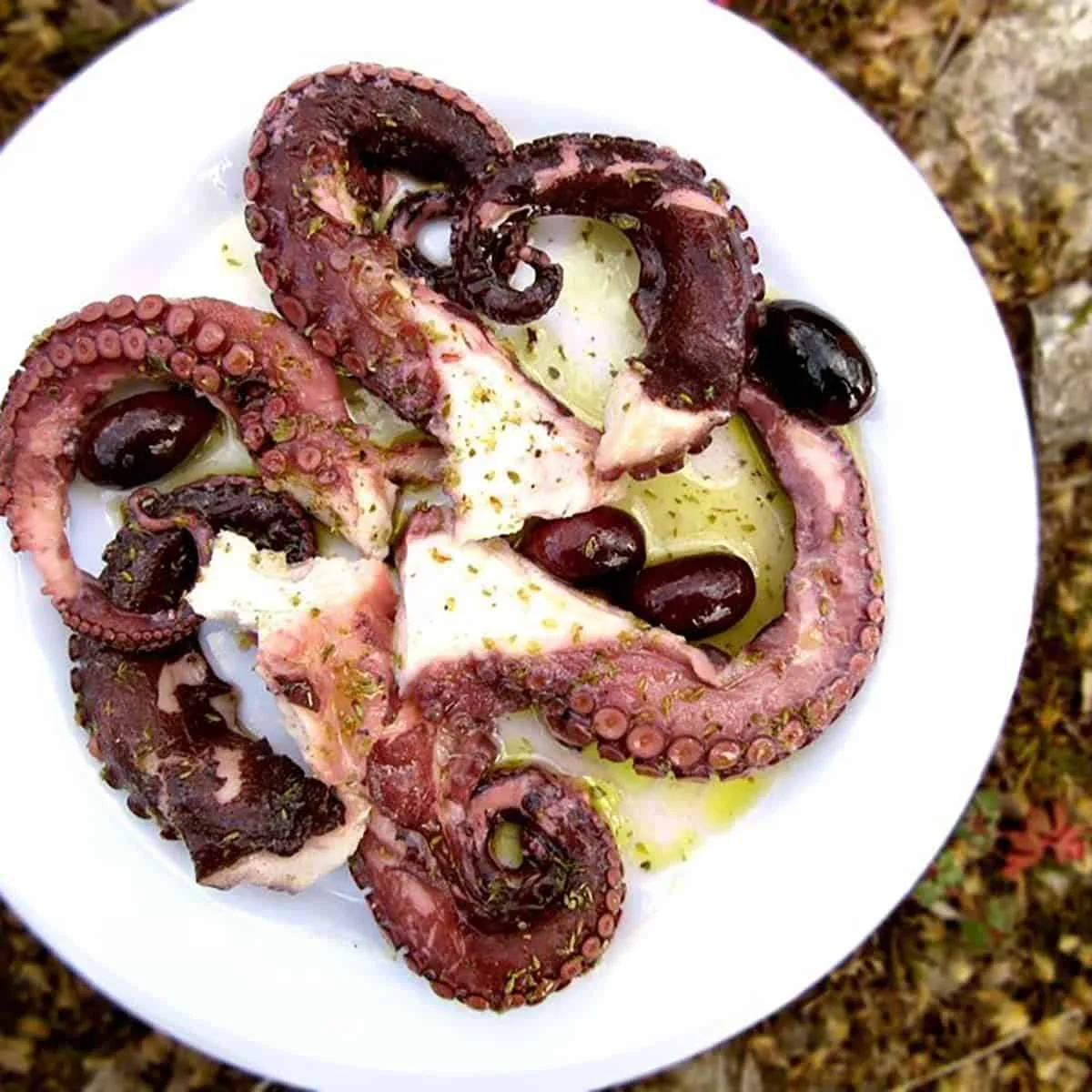
Greek marinated octopus is gently simmered until tender, then dressed with red wine vinegar, olive oil and oregano. Make it ahead so the marinade has time to season the octopus, and serve it with Kalamata olives and grilled bread.
Ingredients
- 1–1.5 kg (2.2–3.3 lb)octopus
- 2 Lwater
- 150 ml (10 tablespoons)red wine vinegar
- 60 ml (4 tablespoons)red wine vinegar
- 90 ml (6 tablespoons)olive oil
- 10 ml (2 teaspoons)dried oregano
- to tasteground pepper
- ½ clove, optionalgarlic, minced
- to serveKalamata olives
Instructions
- 1
Boil the octopus
Put the octopus in a large cooking pot and cover it with 2 litres of water. Add 10 tablespoons of the vinegar and bring to the boil. Lower the heat to medium and cook for about 50 minutes to 1 hour, until a knife can pierce the octopus easily.
- 2
Cool the octopus
Lift the octopus out of the pot with a slotted spoon or cooking tongs. Set it on a plate and leave it to cool to room temperature.
- 3
Cut into pieces
Separate the legs from the body for larger pieces, or cut the octopus smaller. Slice the thicker parts of the legs into pieces about ½ cm thick and leave the thinner parts whole. Remove everything from inside the head, then slice or cut it as well.
- 4
Marinate the octopus
Transfer the octopus to a food container, or to a serving plate if you plan to serve it the same day. Add the remaining 4 tablespoons of vinegar, the oregano and olive oil, then season lightly with pepper. Leave to marinate for 2 hours or, ideally, overnight. If using garlic, mix it in now.
- 5
Store it safely
Keep the octopus in an airtight food container in the fridge for up to a week. Ideally, it should be submerged in the vinegar and olive oil; drizzle over extra olive oil if needed to cover it.
- 6
Serve with olives
Serve with Kalamata olives and crusty grilled bread.
What is Greek marinated octopus?
Htapodi ksydato is octopus cooked until tender and served after marinating in vinegar, olive oil and herbs. It is a Greek-style preparation that suits a leisurely mezze spread or a simple starter.
This version keeps the flavourings spare, so the octopus remains the focus. Simmering it before marinating gives the vinegar and oregano a tender surface to season.
Nutrition and macros by portion
The nutrition label shows one serving as written: 403 calories, 37g protein, 6g carbs, 24g fat.
| Portion | Adjustment | kcal | Protein | Carbs | Fat |
|---|---|---|---|---|---|
| Lighter | Use less olive oil | 282 kcal | 26g | 4g | 17g |
| This serving | As written | 403 kcal | 37g | 6g | 24g |
| Hungry | Add more octopus | 605 kcal | 56g | 9g | 36g |
The octopus provides most of the protein, while the olive oil supplies most of the fat. The small amount of carbohydrate comes mainly from the vinegar and oregano. Serve it with a generous portion of vegetables and grilled bread to make a more rounded plate.
The vinegar does two jobs
Cooking vinegar: the first 10 tablespoons go into the pot with the water, adding acidity as the octopus simmers.
Marinating vinegar: the remaining 4 tablespoons are added after cooking, where their sharper flavour stays more prominent alongside the oil and oregano.
Cook until tender
Gentle simmer: once the water boils, reduce the heat to medium and cook the octopus for about 50 minutes to 1 hour. The recipe’s practical doneness cue is that a knife should pierce it easily.
Even cooking: use a large pot and make sure the octopus is covered with the 2 litres of water. Check tenderness near the end of the cooking time rather than relying on the clock alone.
Cut for an even marinade
Thick sections: slice the thicker parts of the legs into pieces about ½ cm thick so they are easier to eat and expose more surface to the dressing.
Smaller sections: leave the thinner parts whole, or cut everything into larger pieces by separating the legs from the body. Clean out the head before slicing or cutting it.
Give it time to marinate
Short rest: marinating for 2 hours gives the octopus time to take on the vinegar, oil and oregano.
Overnight rest: for the recipe’s preferred result, leave it overnight in the fridge. If it will be stored, keep it in an airtight container and aim to have the pieces covered by the vinegar and olive oil.
How to serve it
For a Greek-inspired spread, serve the octopus with Kalamata olives and crusty grilled bread, as the recipe suggests. The bread is handy for scooping up some of the aromatic oil and vinegar.
Bring the octopus out as a starter or part of a mezze-style meal. Keep it chilled until serving if it has been marinating overnight.
Recipe notes & tips
- Use a pot large enough for the octopus to sit under the 2 litres of water.
- Test the thicker parts with a knife towards the end of cooking.
- Let the octopus cool to room temperature before cutting and dressing it.
- Slice the thicker leg sections about ½ cm thick and leave the thinner sections whole.
- Use a serving plate for marinating only if you plan to serve the octopus the same day.
- Add extra olive oil if needed to keep the stored octopus covered.
Variations
- Add garlic: mix in the optional minced half-clove when you add the marinade.
- Coarser cuts: separate the legs from the body and serve them in larger pieces.
- Smaller bites: cut the octopus into smaller pieces for a mezze platter.
- More oregano: increase the dried oregano to taste for a more pronounced herbal note.
Common mistakes to avoid
- Stopping too soon: if a knife does not pierce the octopus easily, continue simmering and check again.
- Cutting every section the same way: slice the thicker leg parts and leave the thinner parts whole, as directed.
- Marinating for too little time: allow at least 2 hours, or leave it overnight for the preferred result.
- Leaving stored pieces uncovered: add a drizzle of olive oil if needed so the octopus is submerged in the dressing.
- Adding the garlic too early: if using it, mix it into the marinade after the octopus has been cooked and cut.
How to store
Store the marinated octopus in an airtight container in the fridge for up to a week, ideally submerged in vinegar and olive oil. Add a little extra olive oil if needed to cover it; the recipe does not specify a reheating method.
Frequently asked questions
How do I know when the octopus is cooked?
After about 50 minutes to 1 hour at a medium simmer, prick it with a knife. It is ready when the knife pierces it easily.
Can I marinate it overnight?
Yes. The recipe recommends marinating for 2 hours or, ideally, overnight.
Can I leave out the garlic?
Yes. Garlic is optional; the recipe’s main marinade uses vinegar, olive oil and oregano.
How should I cut the octopus?
Separate the legs from the body for larger pieces, or cut it smaller. Slice the thicker leg sections about ½ cm thick and leave the thinner parts whole.
How long does it keep?
Keep it in an airtight food container in the fridge for up to a week. For best storage, keep the pieces submerged in the vinegar and oil.
What should I serve with it?
Serve it with Kalamata olives and crusty grilled bread, as suggested in the recipe.
Cook it from the original
This recipe comes from realgreekrecipes.com. Their page has the author’s own photos, notes and tips — the best place to cook it from.
Open the recipe on realgreekrecipes.com