
Spaghetti With Olive Oil, Garlic, And Olives
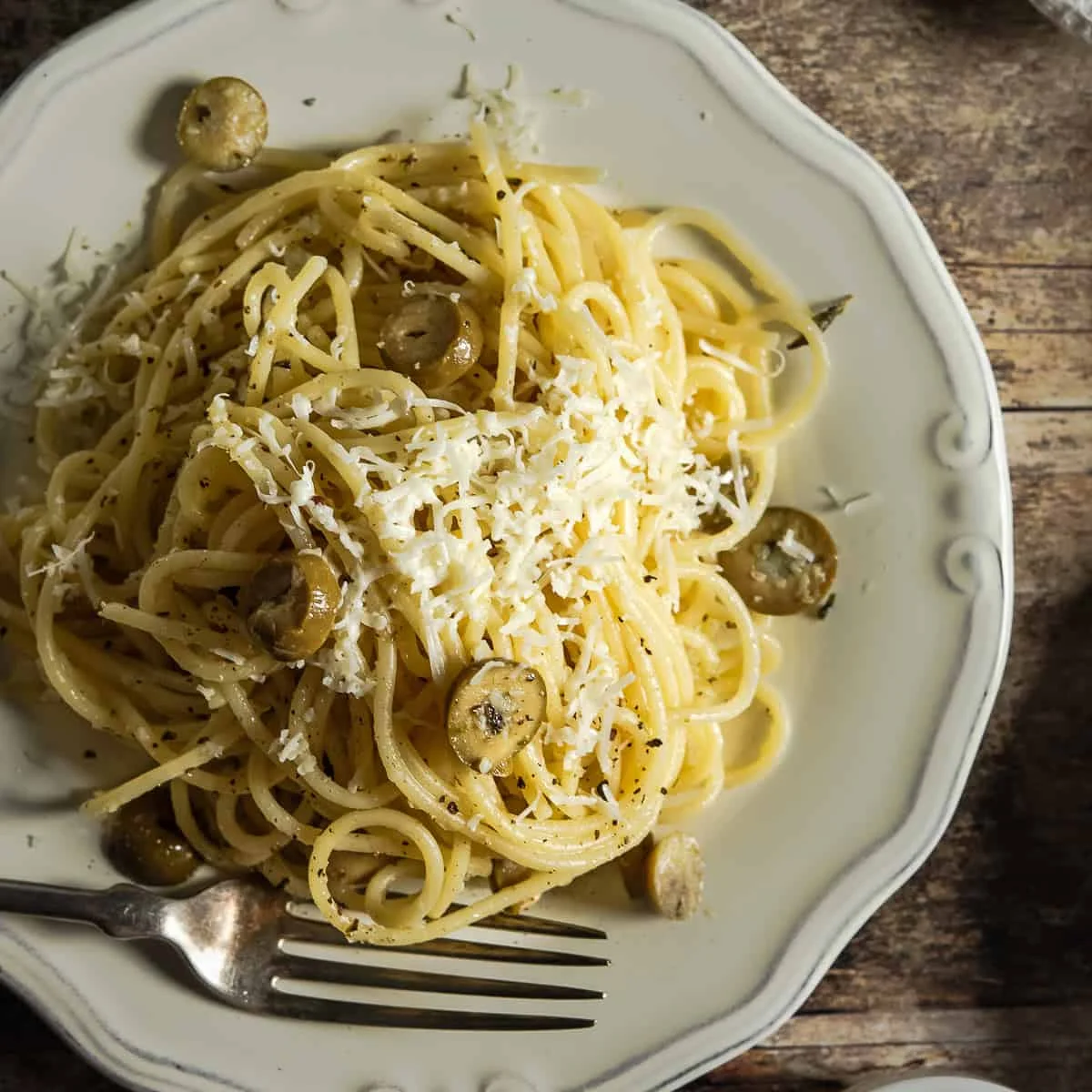
This Greek-inspired spaghetti brings together garlic, green olives, oregano and extra virgin olive oil in a quick, savoury sauce. It is ready in about 20 minutes, with pasta water helping the ingredients cling to the spaghetti.
Ingredients
- 250 g (8.8 oz)spaghetti
- 7 cloves, mincedgarlic
- 45 mlextra virgin olive oil
- 50 g (1.7 oz)sliced green olives
- 2 teaspoonsdried oregano
- to servegrated Kefalotyri or Parmesan
- to tastefreshly ground black pepper
Instructions
- 1
Cook the spaghetti
Cook the spaghetti in plenty of salted water for 2 minutes less than the packet instructions, so it remains very al dente. Before draining, reserve 125 ml (½ cup) of the pasta water.
- 2
Combine the sauce
Pour the reserved pasta water into a non-stick pan and add all the remaining ingredients except the spaghetti.
- 3
Simmer briefly
Heat the pan over a medium heat. Once the mixture starts to simmer, cook it for no more than 2 minutes.
- 4
Toss with pasta
Add the spaghetti and cook for a further 2 minutes, stirring occasionally with a wooden spoon.
- 5
Finish and serve
Serve with freshly ground pepper and plenty of grated Kefalotyri or Parmesan on top.
What is spaghetti with olive oil, garlic and olives?
This is a simple Greek-inspired pasta dish built around olive oil, garlic, green olives and dried oregano. It is not a heavy, thick sauce: pasta water brings the ingredients together while keeping the spaghetti lightly coated.
The version here works quickly because the olives, herbs and garlic warm briefly in the pan while the pasta finishes cooking. A salty, grated cheese topping adds a savoury finish.
Nutrition and macros by portion
The nutrition label shows one serving as written: 742 calories, 21g protein, 99g carbs, 29g fat.
| Portion | Adjustment | kcal | Protein | Carbs | Fat |
|---|---|---|---|---|---|
| Lighter | Less oil, more salad | 519 kcal | 15g | 69g | 20g |
| This serving | As written | 742 kcal | 21g | 99g | 29g |
| Hungry | Larger spaghetti portion | 1113 kcal | 32g | 149g | 44g |
Most of the carbohydrates come from the spaghetti, while the olive oil supplies much of the fat. The pasta and cheese contribute protein, with the cheese also adding fat and salt. Pair a serving with a generous side of vegetables or salad for a more balanced plate.
Choosing the key ingredients
Green olives: use sliced olives so they are easy to distribute through the spaghetti. Their briny flavour seasons the sauce, so taste before adding any extra salt beyond the pasta water.
Cheese: Kefalotyri gives the dish a Greek-style finish, while Parmesan is the stated alternative. Grate it over the pasta just before serving.
Why the pasta water matters
Starchy pasta water helps the oil and other sauce ingredients coat the strands rather than sitting separately in the pan. Save the specified 125 ml before draining, as it is easier than trying to recover water afterwards.
The recipe adds the water to the pan with the other ingredients, then simmers the mixture briefly. Keep the heat moderate and watch for the start of a simmer.
Keep the garlic gentle
The minced garlic is cooked in the sauce for a short time rather than fried on its own. This suits the method and gives it less chance to brown before the pasta is added.
Use medium heat and keep an eye on the pan. If the mixture starts bubbling vigorously, reduce the heat so it stays at a gentle simmer.
Getting the texture right
Very al dente spaghetti is important because it cooks for another 2 minutes in the pan. Starting with pasta cooked to its usual finished texture can leave it too soft after tossing.
Stir occasionally with a wooden spoon as directed, lifting and turning the strands so they meet the olive and garlic mixture. The finished pasta should be coated, with the strands still holding their shape.
Timing the final minutes
Start the sauce once you have reserved the pasta water and the spaghetti is nearly ready. The sauce simmers for no more than 2 minutes, followed by 2 more minutes with the pasta.
Have the serving cheese and pepper ready before the final toss. That lets you bring the dish straight to the table while it is hot.
What to serve alongside
Serve the spaghetti as written, with grated cheese and freshly ground pepper. A crisp green salad or simply dressed vegetables can make a fresh contrast to the salty olives and rich oil.
Because the recipe is a pasta-based main, keep any side dish straightforward. Avoid heavily seasoning it if the olives and cheese are already quite salty.
Recipe notes & tips
- Salt the pasta water well, as the recipe relies on it to season the spaghetti.
- Set a timer to remove the spaghetti 2 minutes before the packet's suggested cooking time.
- Measure out 125 ml of pasta water before draining.
- Use a non-stick pan large enough to toss the spaghetti comfortably.
- Grate the cheese shortly before serving for a fresh topping.
Variations
- Use Kalamata olives: swap them for the green olives for a deeper, fruitier flavour.
- Add chilli flakes: stir a pinch into the pan with the garlic and olives for gentle heat.
- Use another hard cheese: finely grated Pecorino can stand in for the listed cheese choices.
- Add fresh parsley: scatter chopped parsley over the finished pasta for a fresh herbal note.
- Include lemon zest: grate a little over the dish just before serving for a bright finish.
Common mistakes to avoid
- Cooking the pasta fully at first: it has another 2 minutes in the pan, so stop 2 minutes short of the packet time.
- Forgetting the pasta water: reserve 125 ml before draining so you can make the sauce as directed.
- Boiling the sauce hard: lower the heat once it simmers and keep its first cooking stage to no more than 2 minutes.
- Leaving the garlic unattended: minced garlic can brown quickly, so watch the pan as it heats.
- Adding the cheese too early: grate it over the pasta at the end, as the recipe directs.
How to store
Refrigerate leftovers in an airtight container and eat within 2 days. Reheat gently in a pan with a small splash of water, stirring until hot; the pasta may be softer after storing.
Frequently asked questions
Can I use a different type of pasta?
Yes. Long pasta such as linguine is a close substitute, though cooking times vary, so use the packet timing and stop 2 minutes early.
Can I use black olives instead?
Yes. They will give the dish a different, usually fruitier olive flavour, but can be used in the same quantity.
Why reserve pasta water?
The recipe uses 125 ml in the pan with the other sauce ingredients. Its starch helps the sauce coat the spaghetti.
Which cheese should I choose?
Use grated Kefalotyri for the Greek-style option or Parmesan as the alternative listed in the recipe.
How do I know when the spaghetti is ready?
It should be very al dente when drained, since it cooks for a further 2 minutes in the pan. Follow the packet time, subtracting 2 minutes.
Cook it from the original
This recipe comes from realgreekrecipes.com. Their page has the author’s own photos, notes and tips — the best place to cook it from.
Open the recipe on realgreekrecipes.com