
Best Greek Salad
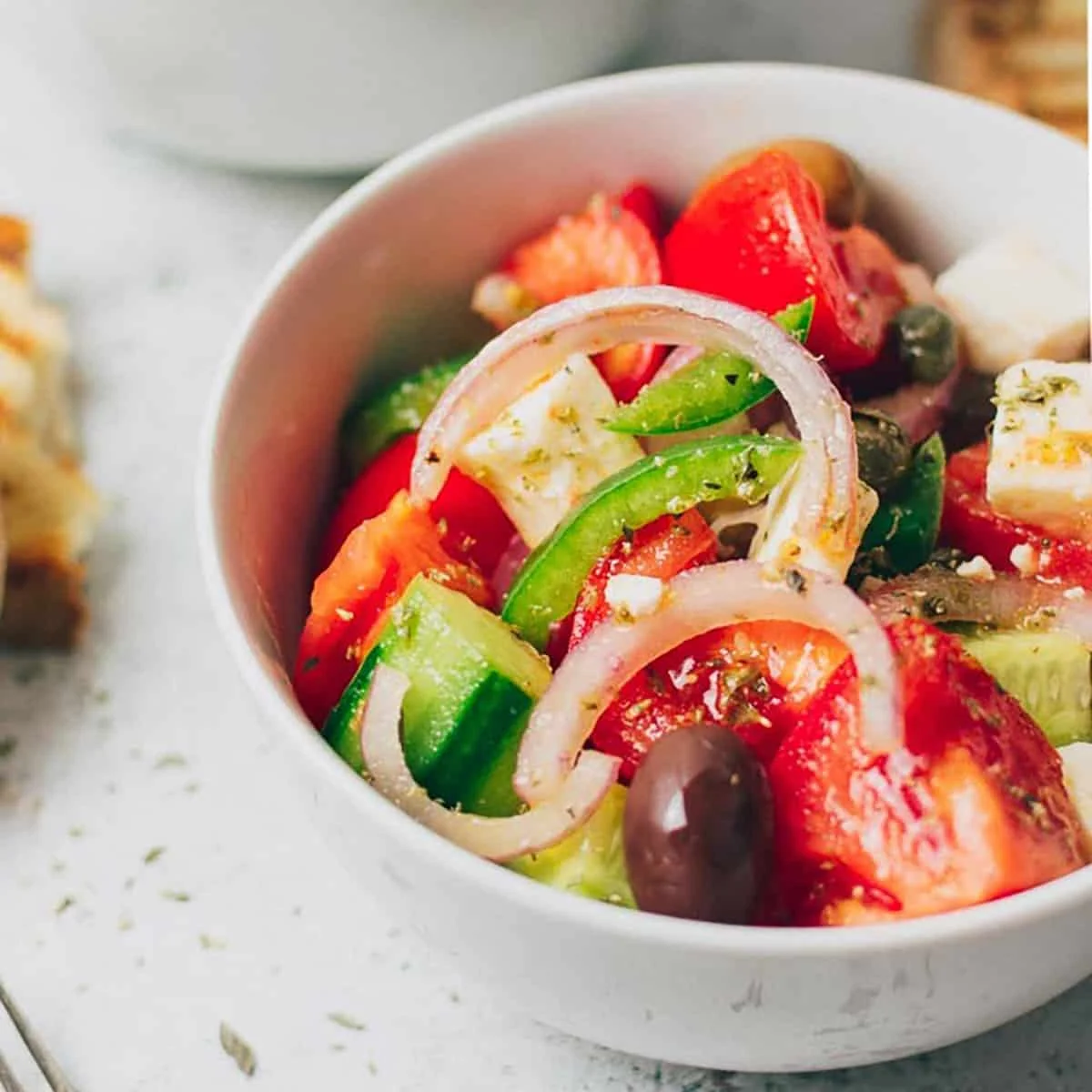
This Greek salad combines ripe tomatoes, cucumber, onion, green pepper, olives, capers and feta with an oregano, olive oil and red wine vinegar dressing. A short rest lets the flavours mingle, making it an easy side to serve with grilled bread or a main course.
Ingredients
- 2 mediumripe tomatoes
- 1/2cucumber
- 1/2red onion
- 1/2green pepper
- 12olives, preferably Kalamata or another Greek variety
- 10–12capers
- 1 block (about 100 g)feta cheese
- 5 ml (1 teaspoon)dried Greek oregano
- 90 ml (6 tablespoons)extra virgin olive oil
- 5 ml (1 teaspoon)red wine vinegar
- to tastekosher salt and freshly ground black pepper
Instructions
- 1
Chop the tomatoes
Halve the tomatoes, cut each half into 6 bite-sized pieces, and put them in a salad bowl.
- 2
Prepare the cucumber
Use a vegetable peeler to remove half the cucumber skin; leave it as it is or peel it completely if preferred. Cut it lengthways into 4 sticks, chop into bite-sized pieces and add to the bowl.
- 3
Slice the vegetables
Thinly slice the onion and green pepper, then add them to the bowl.
- 4
Add feta and olives
Cut the feta into 1 cm squares and add it to the bowl with the capers and olives.
- 5
Dress and season
Drizzle over the olive oil and vinegar. Season with kosher salt, freshly ground pepper and dried oregano, then mix well for about 1–2 minutes, preferably by hand. For the best flavour, let the salad rest for 15 minutes.
- 6
Serve the salad
Transfer to 2 small bowls, or serve from the salad bowl with grilled bread.
What is Greek salad?
Greek salad, often called horiatiki, is a Greek combination of fresh vegetables, olives and feta, dressed simply with olive oil and oregano. It is known for its bold, salty and refreshing mix rather than a leafy base.
This version keeps the vegetables in generous pieces and includes capers for an extra briny note. Letting everything stand briefly gives the dressing time to mingle with the tomato juices.
Nutrition and macros by portion
The nutrition label shows one serving as written: 757 calories, 19g protein, 17g carbs, 70g fat.
| Portion | Adjustment | kcal | Protein | Carbs | Fat |
|---|---|---|---|---|---|
| Lighter | Use less olive oil | 530 kcal | 13g | 12g | 49g |
| This serving | As written | 757 kcal | 19g | 17g | 70g |
| Hungry | Add grilled bread | 1136 kcal | 28g | 25g | 105g |
Feta and olive oil contribute most of the fat, while the feta also supplies much of the protein; the vegetables provide most of the carbohydrates. For a more balanced plate, serve a portion alongside grilled bread and a lean protein such as grilled chicken.
Choose ripe tomatoes
Tomatoes: Choose ripe but still firm tomatoes so they taste sweet and hold their shape when mixed. Cutting each half into six pieces makes them easy to eat without turning them to mush.
Cucumber: Peeling half the skin keeps some of its fresh bite while softening the overall texture. You can leave the skin on or peel it all off to suit your preference.
Keep the cuts generous
Onion and pepper: Thin slices distribute their sharper flavours through the bowl without overwhelming each bite. If you prefer a gentler onion flavour, slice it especially finely.
Feta: Cut the cheese into 1 cm squares and handle it carefully when mixing. The pieces should remain distinct rather than dissolving into the dressing.
Mix without crushing
Hands: The method suggests mixing by hand for 1–2 minutes, which helps coat the vegetables while keeping them intact. Use a light touch, especially around the feta.
Rest: Give the dressed salad 15 minutes to let the flavours blend. The vegetables will release some juice, which joins the oil and vinegar at the bottom of the bowl.
Balance the dressing
Olive oil: Extra virgin olive oil provides most of the dressing's richness, while red wine vinegar adds a sharper edge. Measure both before adding, then season with salt and pepper to taste.
Oregano: Dried Greek oregano brings an earthy, savoury note. Sprinkle it over the salad with the seasoning so it can mix through the dressing.
Serve with something to dip
Bread: Grilled bread makes a fitting accompaniment and can be used to scoop up the dressing and tomato juices. Serve the salad as a side or as a simple meal with bread.
Recipe notes & tips
- Use ripe, firm tomatoes for a juicy salad that still holds its shape.
- Cut the feta into even 1 cm pieces so it is easy to distribute.
- Mix gently to keep the feta cubes and vegetables intact.
- Rest the dressed salad for 15 minutes if you have time.
- Taste before adding salt, as the feta, olives and capers are already salty.
Variations
- Use black olives: Choose another Greek-style olive if Kalamata olives are unavailable.
- Adjust the cucumber: Leave all the skin on or peel it completely to suit your preference.
- Change the vinegar: Use a little more or less red wine vinegar to suit your taste.
- Add grilled bread: Serve slices alongside to scoop up the dressing.
- Make it a meal: Serve with grilled chicken for a more substantial plate.
Common mistakes to avoid
- Overmixing: The feta can break apart; toss gently and stop once the dressing coats the ingredients.
- Salting too soon: The olives, capers and feta bring plenty of salt; season lightly, then taste.
- Using soft tomatoes: They can collapse when cut and mixed; choose ripe tomatoes that are still firm.
- Skipping the rest: The flavours have less time to blend; leave the dressed salad for 15 minutes when possible.
- Cutting the onion thickly: Its flavour can dominate; slice it thinly as directed.
How to store
Store leftovers in an airtight container in the fridge and eat within 1 day for the best texture. The vegetables will soften as they sit, so this salad is best served fresh; stir gently before serving leftovers.
Frequently asked questions
Can I make this Greek salad ahead of time?
You can chop the vegetables ahead, but for the best texture, dress and mix the salad shortly before serving. The recipe recommends resting it for 15 minutes after dressing.
Should I peel the cucumber?
Peel half the skin as described, or leave it on or remove it completely. Choose the amount of peel based on the texture you prefer.
Can I use a different type of olive?
Yes. Kalamata or another Greek olive is suggested, but another olive can be used if that is what you have.
How long should the salad rest?
Let it sit for 15 minutes if possible, so the flavours have time to mingle.
What should I serve with Greek salad?
The recipe suggests grilled bread, which works well for scooping up the dressing and juices. It can also be served alongside a main course.
Can I prepare the salad without a bowl?
Mix it in a salad bowl, then either transfer it to 2 small bowls or serve it from the same bowl.
Cook it from the original
This recipe comes from realgreekrecipes.com. Their page has the author’s own photos, notes and tips — the best place to cook it from.
Open the recipe on realgreekrecipes.com