
The Easiest Greek Roast Chicken Recipe
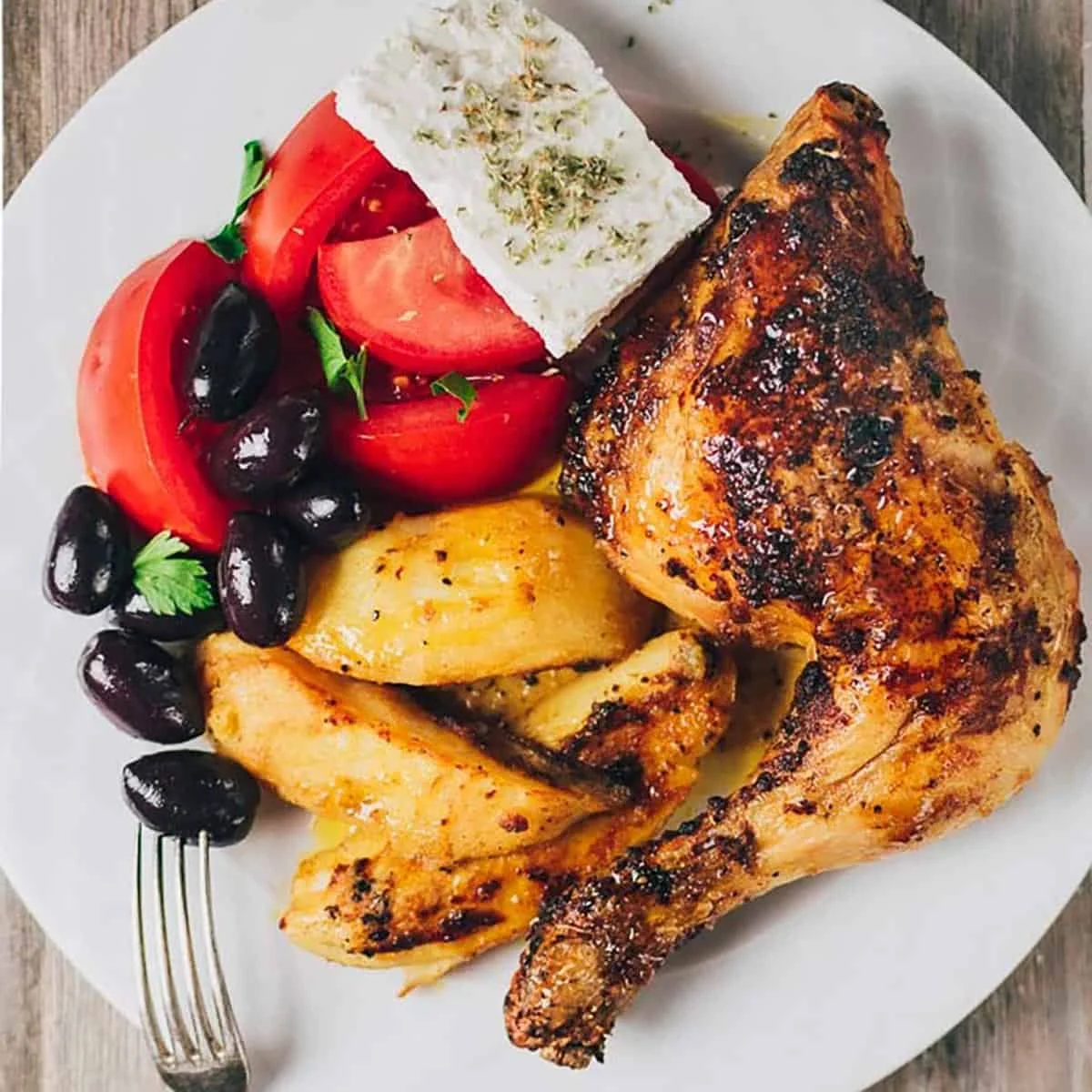
This Greek-style roast chicken is baked with potatoes in a lemon, oregano and mustard mixture until the skin is browned and the potatoes are tender. It makes a generous one-pan meal, with savoury juices to spoon over the chicken and potatoes.
Ingredients
- 2 kg (4 lb)chicken, cut into 4 parts
- 5 mediumpotatoes, peeled and cut into wedges
- 4 clovesgarlic, chopped
- 120 ml (8 tablespoons)olive oil
- 45 ml (3 tablespoons)mustard powder
- 15 ml (1 tablespoon)sweet paprika
- juice of ½lemon
- 30 ml (2 tablespoons)dried Greek oregano
- to tastesalt
- to tasteblack pepper
- enough to cover the pan by 2 cm (1 inch)water
Instructions
- 1
Mix the mustard
Whisk the ingredients for the mustard mixture together in a small bowl until combined, then set it aside.
- 2
Preheat the oven
Heat the oven to 220°C (428°F).
- 3
Arrange the chicken
Put the chicken pieces in a large roasting pan, skin-side up, and add the potato wedges.
- 4
Coat everything
Pour over the mustard mixture and rub it across the chicken and potatoes.
- 5
Season the pan
Season with salt and pepper, scatter the chopped garlic around the pan, then add enough water to cover by 2 cm (1 inch).
- 6
Roast and turn
Bake for about 30 minutes, or until the chicken is deep golden brown. Turn the chicken pieces and bake for another 30 minutes. During baking, make sure the water still covers the bottom of the pan so the sauce does not reduce too much and burn.
- 7
Finish roasting
Turn the chicken pieces once more and cook for a final 10 minutes.
- 8
Serve the chicken
Remove the pan from the oven and serve with Greek salad and tzatziki.
What is Greek roast chicken?
Greek roast chicken is a home-style dish of chicken cooked with potatoes and flavours such as lemon, garlic and oregano. This version bakes the pieces together in one pan, so the potatoes take on the savoury juices as they cook.
The mustard powder, paprika and olive oil form a strongly seasoned coating, while added water keeps liquid in the pan for the sauce.
Nutrition and macros by portion
The nutrition label shows one serving as written: 908 calories, 51g protein, 42g carbs, 60g fat.
| Portion | Adjustment | kcal | Protein | Carbs | Fat |
|---|---|---|---|---|---|
| Lighter | Less oil, more salad | 636 kcal | 36g | 29g | 42g |
| This serving | As written | 908 kcal | 51g | 42g | 60g |
| Hungry | Add another potato | 1362 kcal | 77g | 63g | 90g |
The potatoes provide most of the carbohydrates, while the chicken contributes much of the protein. Olive oil and the chicken skin are major sources of fat. Serve with Greek salad for a fresh vegetable side, and use a moderate spoonful of pan juices.
The mustard mixture
Seasoning base: whisk the mustard powder, olive oil, paprika, lemon juice and oregano thoroughly before pouring it over the chicken and potatoes. A smooth mixture is easier to spread evenly.
Garlic: the method adds the chopped garlic around the pan rather than into the mustard mixture. This lets it roast in the cooking liquid alongside the potatoes.
Set up the pan well
Chicken placement: arrange the pieces skin-side up at the start, with room for the potatoes around them. This gives the skin a chance to brown before the pieces are turned.
Water level: add enough water to cover the pan by 2 cm (1 inch), as directed. Check during roasting that the bottom of the pan remains covered to help prevent the sauce from reducing too far and burning.
Watch the browning and doneness
First roast: the chicken cooks for about 30 minutes before its first turn; use the stated deep-golden colour as the cue to turn it. Return it to the oven for another 30 minutes, then turn it once more for the final 10 minutes.
Potatoes: wedges should be tender when pierced, and the chicken should be cooked through. If the chicken is ready before the potatoes, check the potatoes again as they continue to roast.
Keep the sauce savoury
The pan liquid combines water with the lemon, herbs and juices from the chicken and potatoes. Keep an eye on the pan as it cooks and top up the water if the base is no longer covered.
Spoon some of the juices over the chicken and potatoes when serving. Avoid letting the liquid cook away completely, as the recipe relies on it to keep the sauce from becoming too thick or scorching.
What to serve alongside
The recipe suggests Greek salad and tzatziki, which bring crisp vegetables and a cool, tangy contrast to the hot roast. Serve the chicken and potatoes straight from the pan with some of its savoury sauce.
The potatoes make the meal substantial; if adding bread, consider serving a smaller amount of potatoes to keep the overall plate balanced.
Recipe notes & tips
- Cut the potatoes into wedges of similar size so they cook at a similar pace.
- Rub the mustard mixture over the surfaces of both the chicken and the potatoes.
- Keep the chicken skin facing upwards when you first arrange the pieces.
- Check the pan during roasting and add water if its bottom is no longer covered.
- Serve the pan juices with the chicken and potatoes rather than letting them go to waste.
Variations
- Add thyme: use it alongside the oregano for another herbal note.
- Add onion: tuck wedges of onion into the pan with the potatoes.
- Use chicken thighs: choose skin-on pieces and check that they are cooked through.
- Make it spicier: add a pinch of chilli flakes to the mustard mixture.
- Change the potatoes: cut smaller potatoes into chunks instead of wedges.
Common mistakes to avoid
- Dry pan: check the liquid during roasting and add water if the bottom is no longer covered.
- Uneven wedges: cut the potatoes to a similar size so they finish at about the same time.
- Patchy coating: whisk the mustard mixture until combined and rub it over all the chicken and potatoes.
- Skipping the turns: turn the chicken at the stated intervals so each side gets time against the pan.
- Over-reducing the sauce: keep water covering the pan bottom as the recipe directs to help prevent it burning.
How to store
Cool leftovers promptly and store the chicken, potatoes and sauce in a covered container in the fridge for up to 3 days. Reheat until piping hot throughout, adding a splash of water if the sauce has thickened.
Frequently asked questions
Can I use chicken pieces instead of a whole chicken cut into four?
Yes, use pieces of a similar size so they cook more evenly. Keep the skin on if you want the browned skin described in the recipe.
How do I know when the chicken is cooked?
Check that the thickest part is cooked through, with no pink meat remaining. The recipe also uses deep golden browning as the cue for the first turn.
Can I prepare the mustard mixture ahead?
You can whisk it ahead and keep it covered in the fridge. Stir it again before using, then coat the chicken and potatoes as directed.
Why does the recipe add water to the pan?
The water keeps liquid at the bottom of the pan while the chicken and potatoes roast. The method says to maintain enough to cover the pan base so the sauce does not reduce too much or burn.
What can I serve with this chicken?
Greek salad and tzatziki are the suggested accompaniments. They add a fresh, cool contrast to the roast chicken, potatoes and pan sauce.
Cook it from the original
This recipe comes from realgreekrecipes.com. Their page has the author’s own photos, notes and tips — the best place to cook it from.
Open the recipe on realgreekrecipes.com